

Abstract
1 Introduction
Hydrographic surveying is a field that historically, and currently, has a high level of male involvement. This research project, ‘Breaking Waves’, is a case-study that investigated women in hydrography in the South-West Pacific and the barriers faced by these women during their studies and careers. The work focuses on the experiences of women and other professionals in hydrography.
For this research, the term “hydrographer” refers to all people involved in the work of hydrographic surveying or hydrography; “the branch of applied sciences which deals with the measurement and description of the physical features of oceans, seas, coastal areas, lakes and rivers, as well as with the prediction of their change over time, for the primary purpose of safety of navigation and in support of all other marine activities, including economic development, security and defence, scientific research, and environmental protection.” (IHO, 2023b). “Women” refers to those who identified as “female” in our questionnaire responses and in other analysis. “Surveying” has been used as this is common in Aotearoa New Zealand but may be “geomatics” in other countries (e.g. as in Gagnon, 1996 (Canada); Krawczyk, 2002 (Poland); Abd-Elrahman et al., 2019 (USA); Trinder & Fraser, 2019 (Australia)).
1.1 Background
Only a small body of research and information about women in hydrography exists. One of the main sources is the International Hydrographic Organization (IHO). In April 2021, the IHO and the Canadian Hydrographic Service (CHS) set up the Empowering Women in Hydrography (EWH) project with aims to empower women and to see more women in hydrographic leadership positions (IHO, 2024, 2023a). In 2022, EWH surveyed IHO Member States and found that women hold 20 % of leadership roles and make up approximately 25 % of total staff in hydrographic offices (IHO, 2024). Through the EWH initiative, articles published in the International Hydrographic Review (IHR) journal have highlighted issues with safety equipment designed on a “Reference Man” as well as unsuitable living quarters and equipment design (Stewart et al., 2022). Considerations of the phenomenon of “The Leaking Pipeline” in hydrography – where women face career progression barriers and leave the profession at higher rates than their male colleagues – has also been emphasised by Bhatia et al. (2022). Recommendations include leadership, collaborative efforts and policy changes both specific to hydrography (Steward et al., 2022), but also across all Science, Technology, Engineering, and Mathematics (STEM) fields (Bhatia et al., 2022).
Other EHW publications indicate similarities around the world. From 1980–83 Cormier (who worked as part of the CHS) studied Geomatics Technology with 4 other female students (20 %; Cormier, 2021), while in 2023 in Aotearoa New Zealand, first author Emily Harrex had 18 % female classmates in her Bachelor of Surveying final year class. The Hydrographic and Oceanographic Service of the Chilean Navy (SHOA) saw women cartographers in the mid-1960s, and the first female participant in hydrographic officer training in 2010, with 12 graduates by 2020 (SHOA, 2022). In Aotearoa New Zealand the Royal New Zealand Navy (RNZN), which has a hydrography division, undertook a Women at Sea Pilot Study in 1986 with 13 participants (Air Force Museum, 2021).
Historically, hydrography was a task primarily carried out by navies for safety of navigation. Today, while navies still play a role, economic reforms mean that government agencies partnered with private companies are now responsible for nautical charting in Australia and New Zealand and there are many other hydrographic companies working in other fields such as oil and gas, research, construction and environmental monitoring (S+SNZ, 2024).
Current research primarily focuses on specific information (e.g. career-paths, safety, historical involvement) about women involved in hydrography. This case-study adds a variety of responses from women at different stages of their careers, employer information, and a student voice from the South-West Pacific – a region that has not yet featured specifically in EWH publications in the IHR. This regional investigation does not intend to represent the global state of women in hydrography or a detailed history (see earlier publications mentioned that contain more information on this), hence the use of wording ‘case-study’ and ‘snapshot’ throughout. In Section 5 we discuss future research ideas, and the hope that this ‘snapshot’ it is a useful baseline that could be expanded on by others around the world.
1.2 Snapshot framing
This snapshot of women in hydrography was captured through three main “lenses” for an undergraduate project during 2023:
- That of women in hydrography in the South-West Pacific;
- From employers at hydrographic companies and firms in Aotearoa New Zealand; and,
- From first author Emily Harrex, a final-year undergraduate surveying student in 2023.
To gather our information, we sent out 56 questionnaires to women in hydrography and their employers (see Appendix), undertook further investigations through online searches and background reading, and analysed recurring themes that arose.
1.3 Scope of research
This case-study presents a point in time, snapshot view of women in hydrography in the South-West Pacific, thus, the research was constrained. There are three main points to note:
- The location of interest was the South-West Pacific region. This includes Aotearoa New Zealand, Australia, and the Pacific Islands. This setting was a natural choice given the need to restrict our study to an undergraduate project size and scope, and our location, and was aided by an active Empowering Women in Hydrography Group (49 members at the time of the case-study), in the South-West Pacific.
- The demographic is women currently working in the hydrographic industry in the region. This a small population to begin with; as an indication of women in hydrography in the region, we consulted the record of women hydrographers certified by the FIG/IHO/ICA recognised Australasian Hydrographic Surveyors Certification Panel (AHSCP). The most recent list of those certified shows that only 5 of 96 certified Level 1 surveyors were women (5 %) and 3 of 77 were certified Level 2 (4 %) at the time of our study in 2023 (AHSCP, 2025). This group was too small to focus on, so we worked with the SWP Empowering Women in Hydrography Group.
- We approached hydrographic operating companies in Aotearoa New Zealand sourced through membership of the Australasian Hydrographic Society (AHS), which numbered seven at the time of the questionnaire. We did not include independent contractors or those unknown to the Society membership.
- The targeting of participants in 2. and 3. prior mean that our approach used a combination of convenience and purposive sampling. While this may result in biases from the selection process, it is nevertheless useful as a preliminary case-study and for qualitative research, particularly allowing “focusing on specific people with rare knowledge or experiences” (Ahmed, 2024).
- Diversity is a broad topic, and many approaches can be taken to investigate elements of workplace diversity. This research looked specifically at gender.
2 Methods
This case-study used a mixed methods approach on questionnaire results and further investigations to determine recurring themes and link our findings, discussion and recommendations for future work.
2.1 Questionnaires
Questionnaires form a large component of this case-study. The first was a general questionnaire of 26 questions to women working in hydrography who were part of the Empowering Women in Hydrography South-West Pacific Group, to gather their demographic information, personal experiences and opinions (Appendix A1). The second questionnaire of seven questions was aimed at hydrographic companies in Aotearoa New Zealand and asked for employers’ experiences and opinions (Appendix A2). The questionnaires used multichoice and open text responses. Both questionnaires are included in an appendix to this manuscript. For both, University of Otago Category B Ethics approval was gained and the university’s Qualtrics system was used to collect responses during April 2023. Margin of error calculations were not used due to our targeted sampling approach and small sample size (Webster, 2021). This means that care must be taken when analysing the small numbers of responses, which are instead used as a wider thematic steer for this case-study.
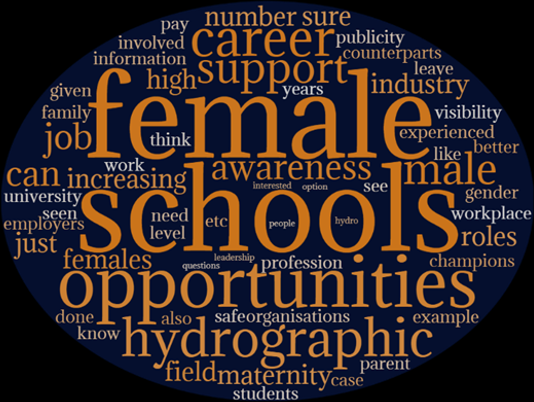
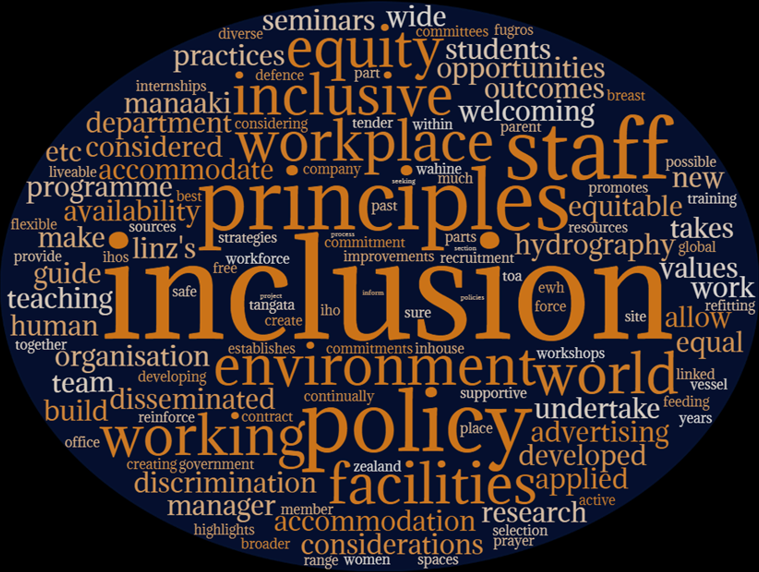
The responses to both questionnaires were analysed with graphs of quantifiable data from multichoice answers, and conventional and summative content analysis on open text responses (Hsieh & Shannon, 2005). Conventional analysis enabled us to start with no predetermined themes, and to see what arose as we worked through the texts. We used word clouds for summative and visual analysis by pasting text answers into wordclouds.com, along with user-defined rules such as the removal of keywords from the question being analysed, consistent font and colour, and removal of words that only appear once. The result was a series of graphical outputs highlighting word frequency through size and shading of words displayed in the resulting word clouds (Figs. 3, 8, 9 and 12). Note that these word clouds are not a statistical analysis but are used to indicate any key themes in the responses, which we then analysed further (following the recommendation by McNaught & Lam (2010)). Not all questions asked are included in the results discussed in this manuscript, but all were used to guide the following further investigations.
2.2 Education and career investigations
Further investigations were guided by responses from the questionnaires. A common theme across many answers was that there needed to be more information and support at schools and universities. Another common theme was that there were not enough examples of women hydrographers working on the job, so further investigations looked at the information available on the internet to people who may be looking at surveying as a career. This included websites such as Careers NZ, The New Zealand Curriculum Online, New Zealand Women in STEM, and the University of Otago School of Surveying website and determining what information regarding surveying and hydrographic surveying was available and how easy this information was to find. Information about what was found and not found on these sites was recorded. Any information mentioning women in hydrography or surveying was noted.
3 Results
3.1 Women in hydrography questionnaire
From 49 members of Empowering Women in Hydrography South-West Pacific group, 24 questionnaire responses were received (response rate of 49 %). For context, recent studies indicate average response rates of 44.1 % in education research (Wu et al., 2022), 48–68 % in broader research (Holtom et al., 2022), 38–76 % in medical research (Toy & Guris, 2022). For our questionnaire, it would not be appropriate to consider the margin of error as our targeted sampling (Section 1.3) means we have not selected our participants truly at random, and our small sample size would make any calculations where responses are ≤15 for a single category misleading (Webster, 2021).
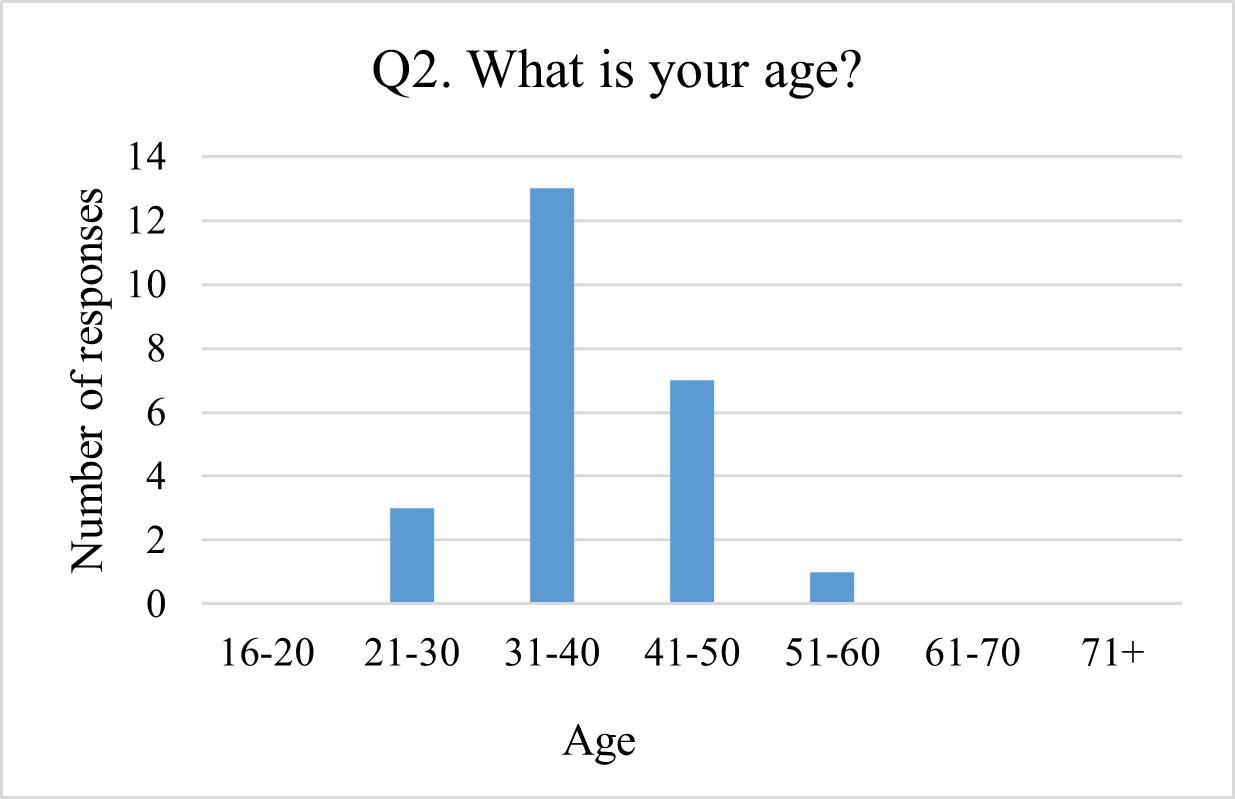
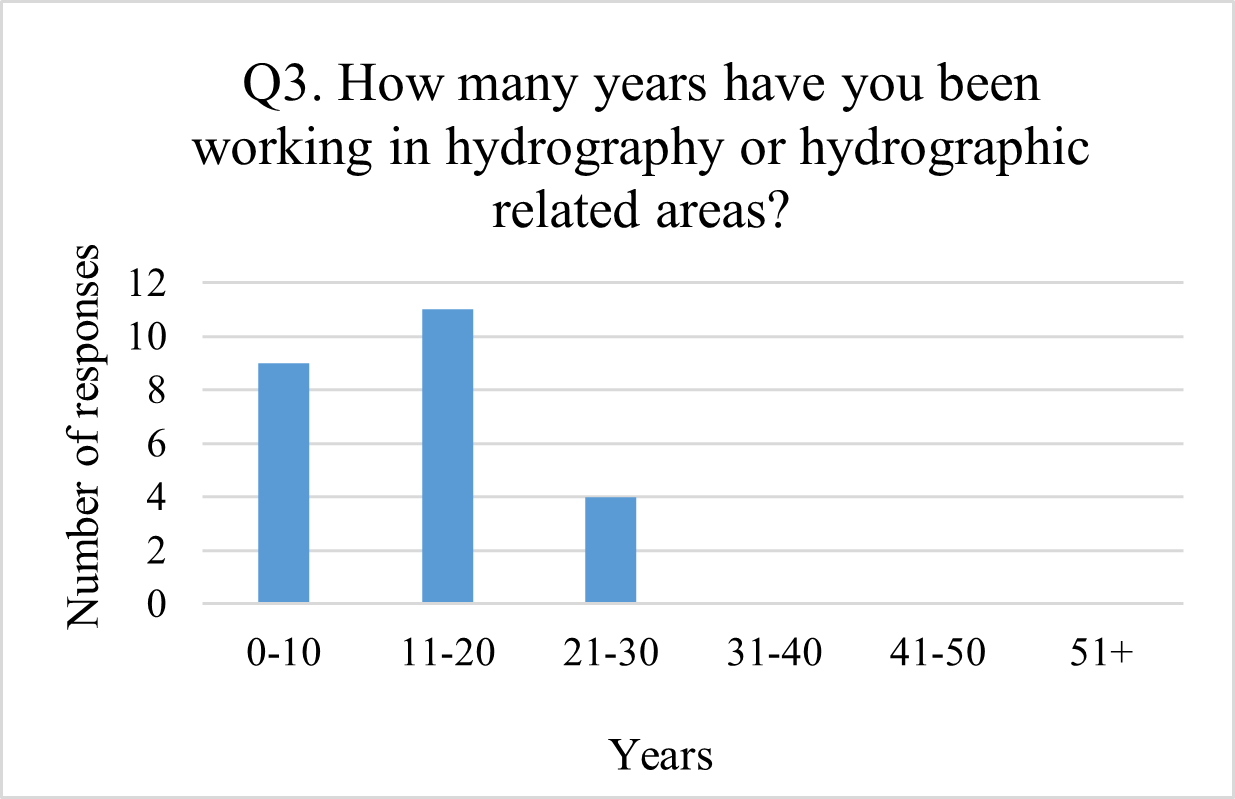
All of our respondents identified as female, were aged between 21 and 60, and have been working in hydrography between zero and 30 years. Of these people, 88 % were employees, and 11 of these provided work email addresses when given an option at the end for further contact. The remaining responses were students, employers and others. The distribution of responses is shown in Figs. 1 and 2.
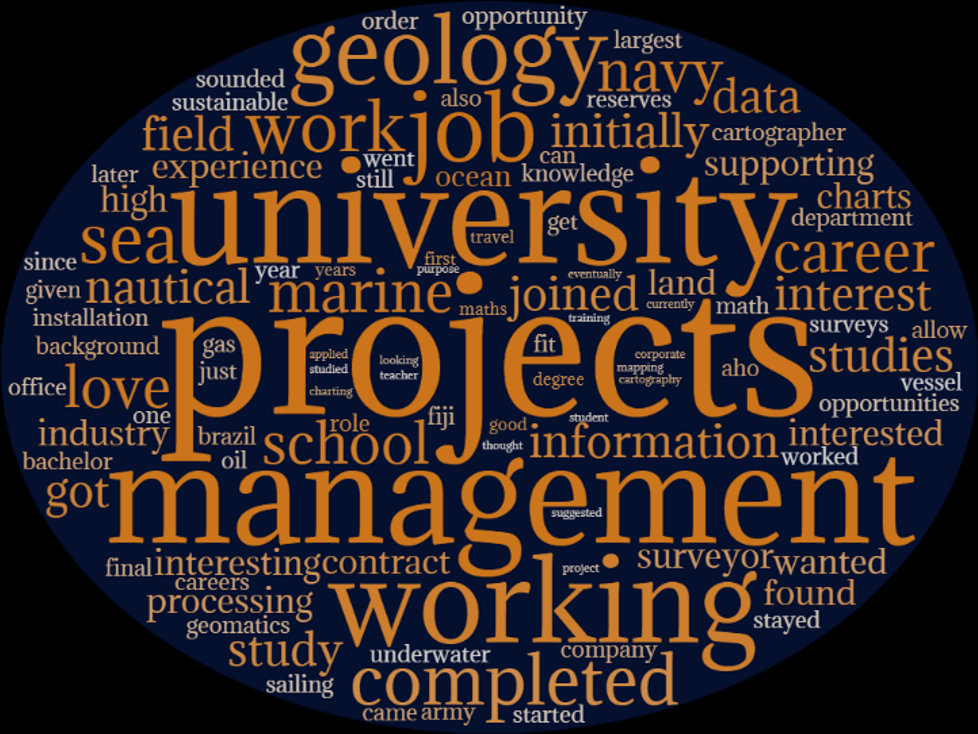
Fig. 3 shows a word cloud with the responses to question six: “How and why did you get into hydrographic surveying?”. The most common words are “projects”, “university” and “management”, then “job”, “working” and “geology”. In full answers, these words were used in the context of learning on the job or project. Many respondents had an interest in the ocean and ended up in hydrography after taking certain university papers or joining the Navy. This begins a theme across 42 % of responses to this question as well as featuring in other question responses (Q11, Q12, Q13): many people did not know about, or set out to study and work specifically in hydrography, but rather discovered the field along the way. In question six, respondents used comments such as “it wasnt [sic] on purpose, it just happened”, “I was looking for a job that was local that had some relation to my studies”, “By accident, found a job…”.
3.1.1 Diversity
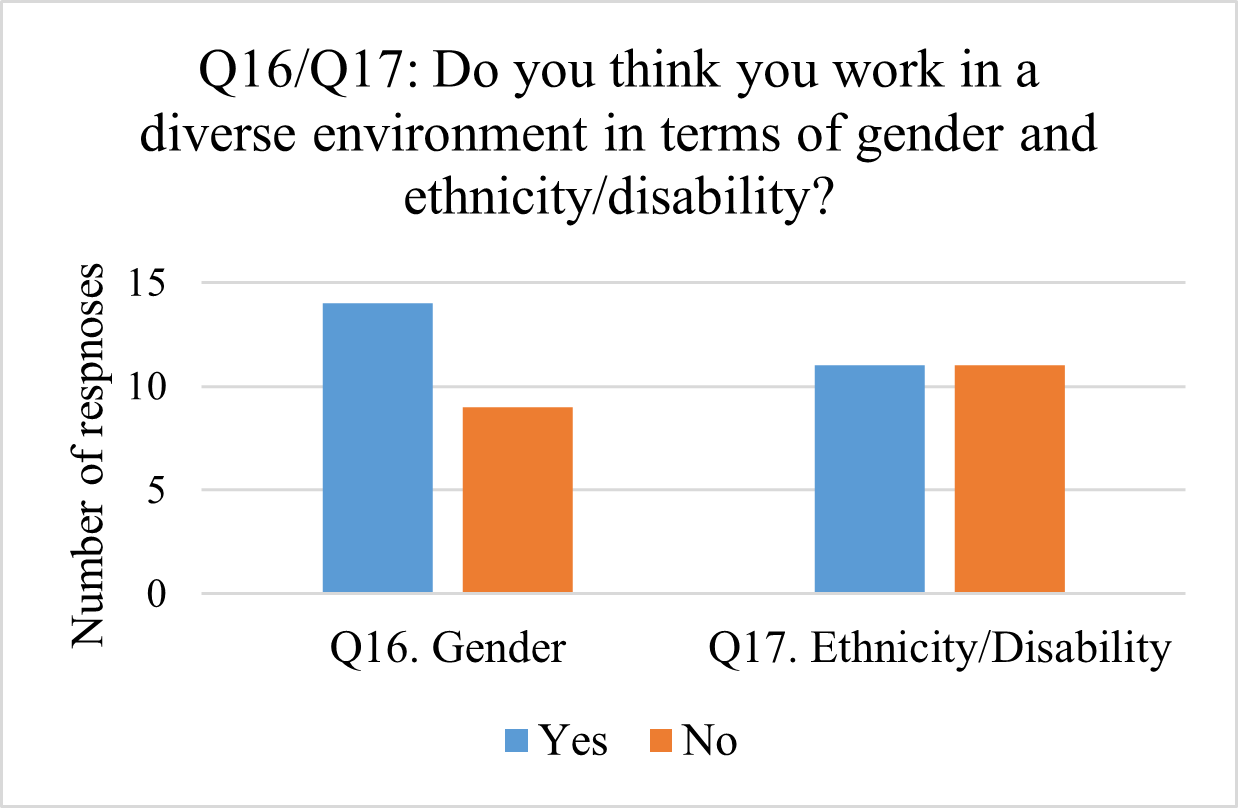
To assess perceptions of diversity in the workplace, we asked the questions shown in Fig. 4 which shows 14 people (61 %) believed they worked in a gender diverse environment and 9 (39 %) thought they did not. When asked to choose on a continuum (1–5) the perceived importance of gender diversity is in the workplace from not (1/5) to extremely (5/5) important, everyone said it was moderately (3/5) to extremely (5/5) important. The following question asked for an explanation. In these responses common themes were seen, such as gender diversity bringing different approaches, creating more balanced workplaces, and that all benefit.
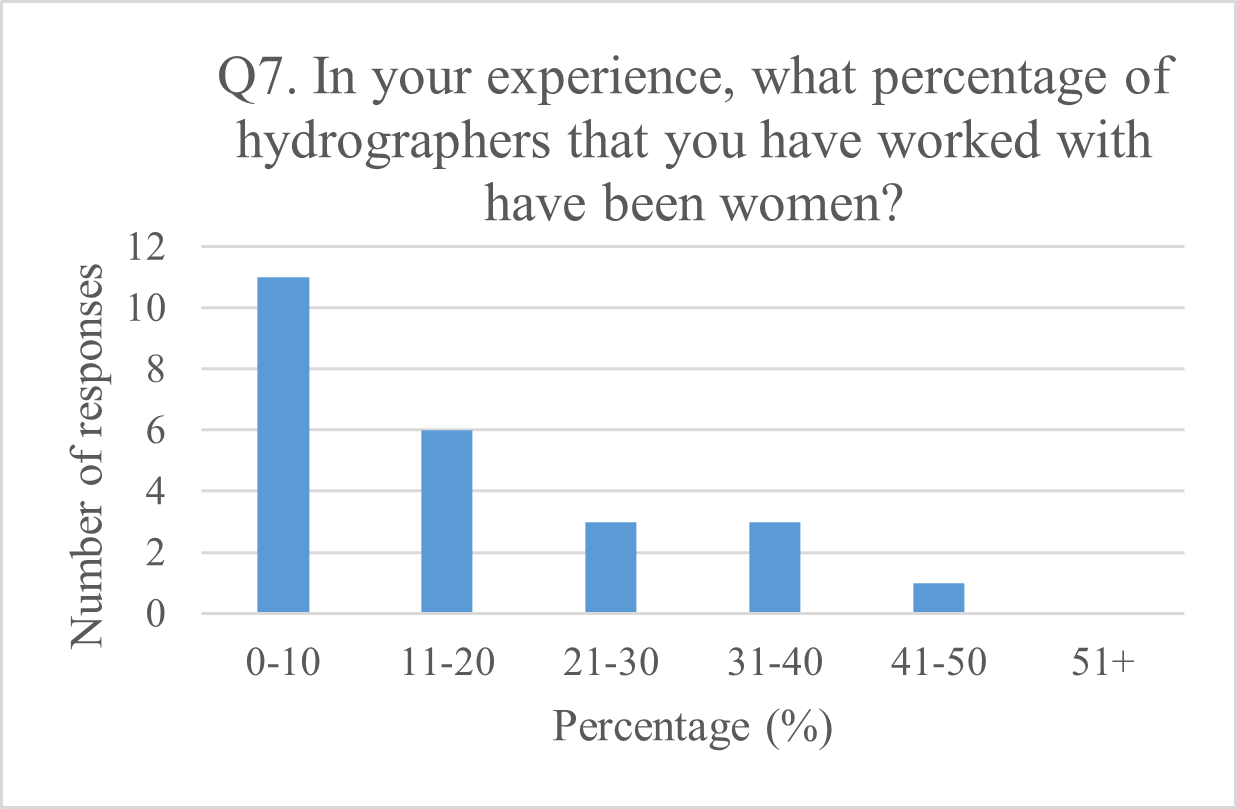
We asked people what percentage of hydrographers they have worked with have been women. Fig. 5 shows that (74 %) 0–10 % and 11–20 % were the most common answers, and no-one has worked with more than 50 % women. In further questions 21 people (95 %) would like to see more women in hydrography and 19 (85 %) think it is important to increase the number of women in hydrography as it brings “skills, knowledge and experiences to a team… increased collaboration, consultation… [and] knowledge sharing”. 4 people (17 %) said this was not an important focus and 1 was concerned about “interpersonal issues” if there were more women.
3.1.2 Barriers
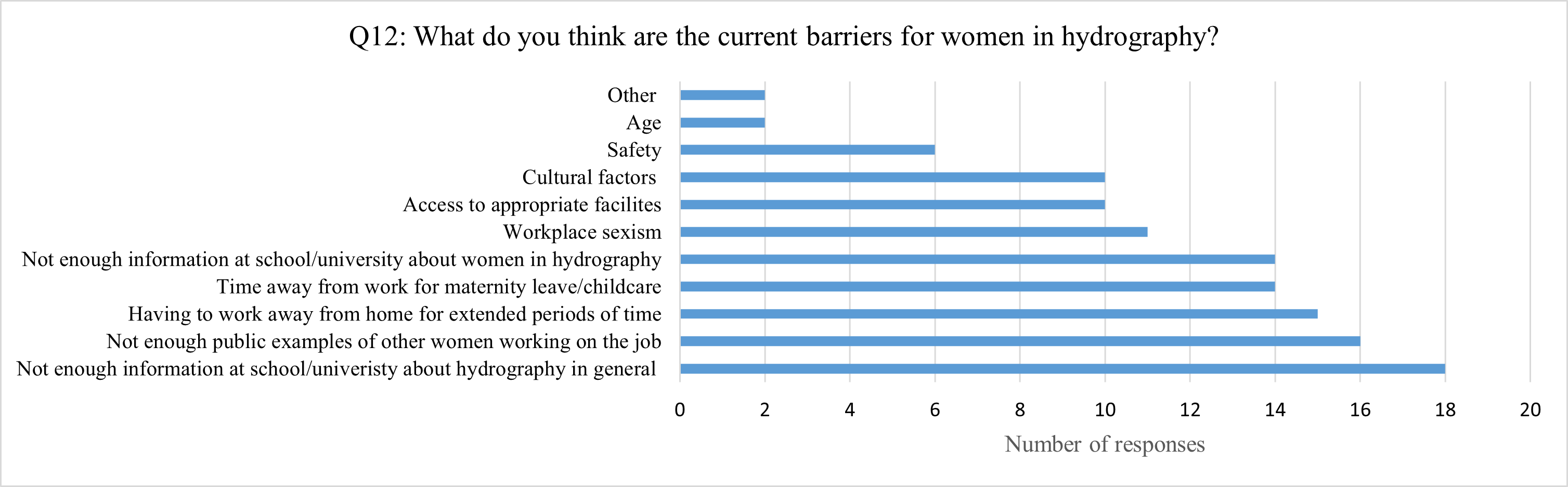
The IHO states that 25 % of people qualified in hydrography are women (IHO, 2023a). Respondents were asked why they thought this was. A common theme across responses was there is little exposure to hydrography for people in high school or university. Many people also said that gender stereotypes still exist, and that hydrography can be marketed as a “male” profession. Fig. 7 shows barriers that prevent women from pursuing a career in hydrography.
The “other” option was chosen by two people who mentioned aspects such as: no interest from women, women being guided into teaching, nursing, and designing, childcare, not being able to work due to cultural issues and being told there are not enough/suitable facilities for women.
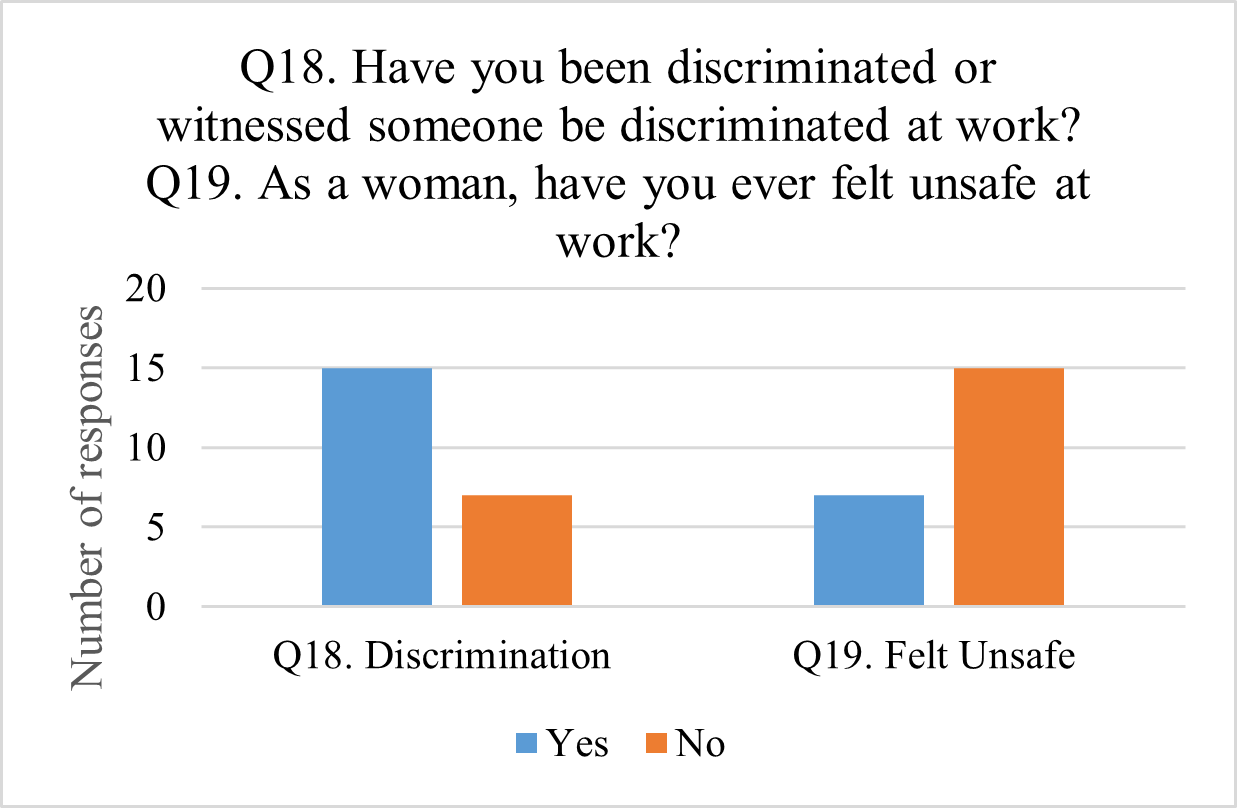
Safety and workplace sexism are two of the barriers identified. Further questions asked participants if they had witnessed or experienced discrimination, and if they had ever felt unsafe at work. These results are shown in Fig. 6 where the results of questions were a mirror reflection of each other showing our female participants have encountered discrimination more than they have felt unsafe while working. It is important to note the limits of our small sample size here again – nevertheless it is concerning as our respondents were from at least 11 companies, so with a result of 15/24 for this case-study we can say that it has occurred in more than one workplace.
If respondents felt comfortable, they were asked to describe their experiences. Responses showed that encounters with discrimination and feeling unsafe tend to occur when working offshore or in the field, rather than in an office environment. In terms of safety, all responses explained issues of unwanted sexual attention and harassment.
When asked what their experience as a woman working in hydrography had been almost all respondents spoke well of their experiences and said that they have felt supported. However, several people highlighted that work has also come with negative experiences. One person wrote the following statement in response to the challenges they had encountered: “Besides the unwanted sexual attention, [the challenge has been] getting my voice heard in a room of white old men”.
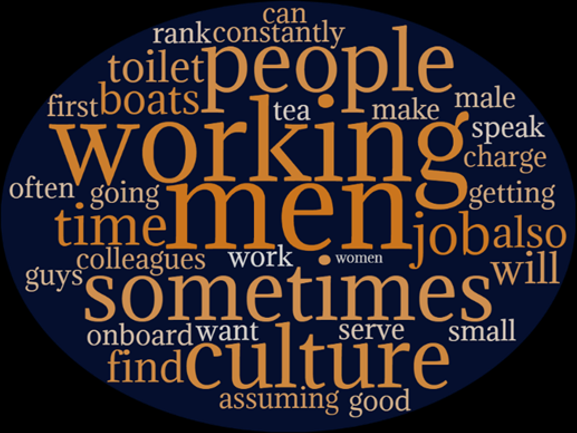
Fig. 8 shows the most common words included in the responses to the question “What have you found challenging about being a woman in hydrography?” were “working” and “men”. Aside from this, other prominent words include “culture” and “assumptions”. These words were used in the context of working with men who assume the woman is not in charge of the survey team and a culture where women always have to justify themselves. When asked how they had overcome or worked through the challenges they had described, respondents mentioned “doing the best you can”, “gaining different experiences”, “showing that you have the right experience” for the job as well as trying to highlight the “cultural changes” needed.
3.1.3 The future
We finished our questionnaire with inquiries on the future and ways that hydrography can be better promoted to women. When asked: “What would you like to see change in the workplace to be able to help improve the experience of others?” responses alluded to a need for more understanding and support within organisations. Many respondents wrote that they would like to see stereotypes broken with an understanding of what people are good at, irrespective of their gender. “Appropriate” is also a word that appeared many times and respondents linked this back with their responses to Q12 when 42 % identified “access to appropriate facilities” as a current barrier for women in hydrography. Specific examples indicate this is during field operations. For the future they state the need to change: “Working long days on the water with no appropriate toilet facilities on small boats.” perhaps by “Encourage[ing] a break throughout the day at appropriate facilities if we are close by.”
Fig. 9 highlights a need for there to be more information and support for people at high school and university. “Opportunities” and “awareness” were commonly used words along with “career” and “support”. These words are used in the context of increasing awareness for high school and university students, providing more opportunities for women at this level but also for those already working in the industry. “Champions” was a word used in some responses.
3.2 Employer questionnaire
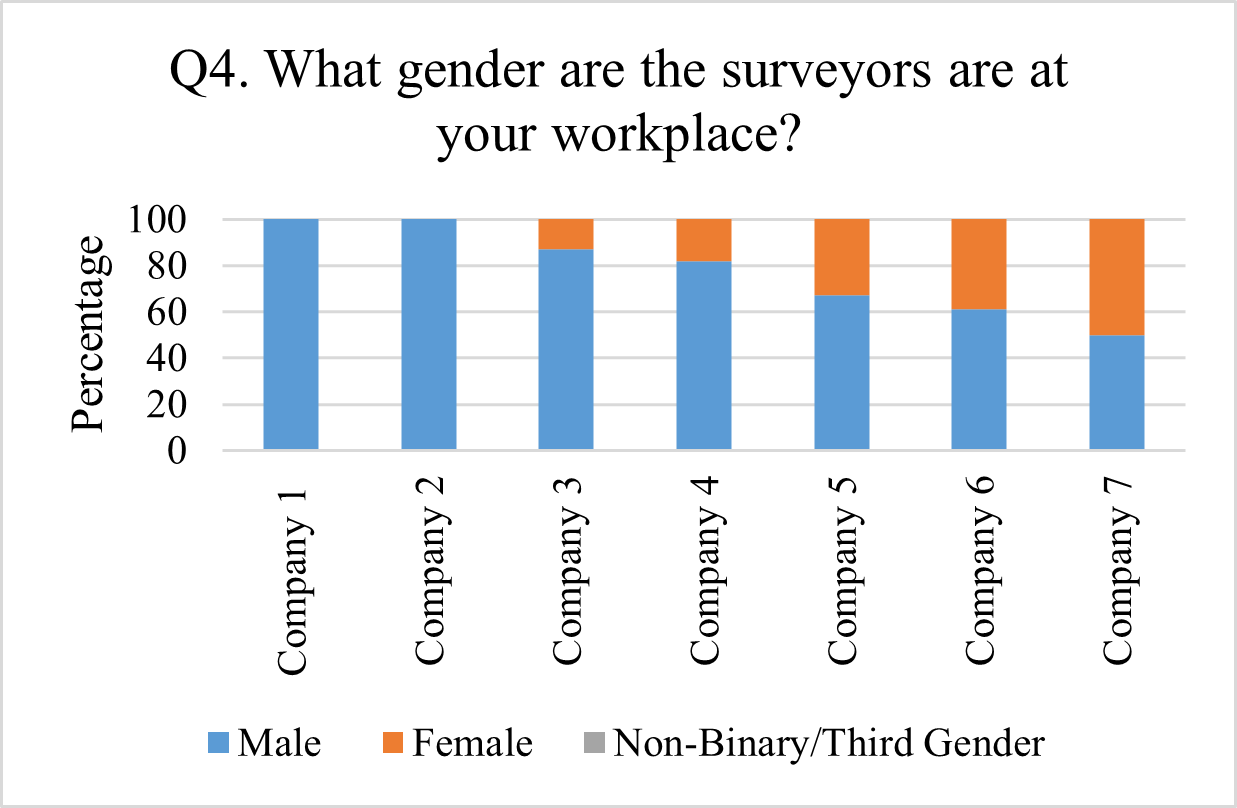
The responses to the employer questionnaire provide a snapshot of data from seven different companies. All respondents were male and were department managers, CEOs, or managing directors for their companies. To understand the diversity of their different workplaces, we asked the total number of surveyors by gender (i.e. also including land surveyors; Fig. 10) and the current number of hydrography or hydrography-related employees at your workplace (Fig. 11).
The results show that of the companies questioned, two have an entirely male surveying team, four have survey teams where female members are between 13–39 % and one company has an even split of male and female surveyors (though note that this company only has two surveyors: one male and one female!). No company has more female surveyors than male surveyors. Most companies questioned have between one and 20 hydrographic employees.
We asked “Do you recruit and employ people with diversity (not just gender) in mind?” and “As an employer do you work to create a more diverse workplace?”, all respondents answered in the affirmative to these two questions. Six respondents said that they work to create a more diverse workspace (one did not answer).
Fig. 12 shows the most common words used in response to how employers work to create a more diverse workplace. Here, “inclusion” and “principles” are the most frequently used words. Looking at the full written responses, these words relate mainly to company diversity and inclusion policies and principles.

3.3 Student hydrographer
Similarly to many questionnaire participants, first author Emily Harrex did not know about hydrography at school. She learned about surveying in general during her last year of high school when a careers advisor – who had personal links to the School of Surveying – that suggested the subject to her. Once at university, it took several years until Emily Harrex learned more about, and had the option to, study hydrography as part of her degree. Like many of our participants she too never “planned” to study hydrographic surveying and has instead “fallen into it”. In 2024 she started employment as an offshore surveyor in Europe.
On talking informally with fellow university students, it seems most either considered fields such as architecture or engineering before settling on surveying, have family members or friends who are surveyors, or were recommended studying surveying by a career advisor. It was also common to hear of young women who had investigated surveying while in high school, but decided that it was a job for men and continued looking at other career options. Emily Harrex’s 2023 final year surveying class is male dominated. Of 50 students, 9 are female (18 %). The smaller hydrographic-specific surveying class typically has 30 or fewer students, and in her year there were 5 females (17 %).
3.4 Education and career investigations
As questionnaire responses mentioned that there needs to be more information and support at schools and universities, information was gathered from the perspective of a high school student curious about hydrography and looking online at their options for careers and study. The use of the Google search engine occurred in September 2023 on the first author’s computer directly after wiping the browser history to attempt unbiased search pathways.
The curriculum resources section of the New Zealand Curriculum Online website was the first result of the Google search “resources for Year 13 career choices” (MoE, 2021). The link “resources to explore job ideas” was followed, opening a “jobs by interest” option, which opened a document that broke down potential interests into possible industries and jobs. A search of the document for “surveyor” returned three results. A surveying job was classified under the interest heading of architectural and technical design. “Quantity surveyor” and “building surveyor” were options under the construction interest heading. A search of the document for “hydrographer”, “hydrography” and “cartography” returned no results. As “surveying” is not a subject taught explicitly at high school we also used a Google search of “geography related careers” returned a list of 24 professions that had been pulled from sources across the internet. “Cartographer” was the first option. “Surveyor” was also an option at number 18 on the list. It is possible some high-school students may learn of surveying through this route.
For high school students in Aotearoa New Zealand, the Careers New Zealand website is a primary source of information when investigating career options (Careers New Zealand, 2022). On this website you can search for different careers. A search of “hydrographer”, “hydrographic” and “hydrography” all returned “surveyor” as the only career option. A search for “hydrographic surveyor” again returned “surveyor” along with nine other options, including building surveyor, civil engineer, naval architect, marine engineer, and ship’s master. Using the link to “surveyor” we find “hydrographic surveyor” is mentioned on the page. However, it is located 80 % of the way down the page, and after the list of sources and references. Given most people read around 20 % (Nielsen, 2008) of a webpage, it is likely most people will not see this.
With these searches not providing much information about women in hydrography, or hydrography at all, a broader Google search was made for “women in STEM”. The first site to appear was the New Zealand Women in STEM website (WISTEM, n.d.). Under the “engineering” tab there was some information about women in surveying but nothing specific to hydrography. The information was in the form of a video, with women talking about their experiences and a typical day in the life of a surveyor. This is a great source of information for high school students but is perhaps something that students are not aware of if they don’t explicitly search for it.
A further source of information investigated was the University of Otago School of Surveying website. The “About Surveying” page provides an overview of research skills and interests that staff have. Hydrographic Surveying is included in this list. The “Study Surveying” page is comprehensive and talks through the entire Bachelor of Surveying degree. The word “hydrographic surveying” is included throughout this page, often in lists with other surveying pathways. Under these two headings, there is no description of what hydrographic surveying or indeed what any other branch of surveying is. The only blurb about hydrographic surveying is included under the “Research at Surveying” heading. This is not an intuitive place for high school students to discover information about different aspects of surveying. Another observation is that there are very few photos of students studying surveying or people working in surveying jobs.
Most of the information presented above relates to land-based surveying careers. There is little information accessible to high school students about hydrographic surveying and it seems that a high school student considering a career in STEM would be very unlikely to come across the career of hydrography during career investigations.
A knowledgeable person may look online for hydrographic qualifications and so come across the IHO Special Publication C-47 ‘Training Courses in Hydrography and Nautical Cartography’, which contains entries for Australia and New Zealand. In Australia it highlights naval training, and for New Zealand lists the degree options at the University of Otago (IHO, 2011). This document did not come up in our searches. The document “List of Recognized Hydrography Programmes” from the FIG/IHO/ICA International Board of Standards of Competence for Hydrographic Surveyors and Nautical Cartographers (IBSC; IBSC, 2024) shows the Royal Australian Navy Cat B course and no others in the South-West Pacific. The region does also contain the Australasian Hydrographic Surveyors Certification Panel (AHSCP), and the document indicates that there was once Cat A training in Australia and New Zealand, but that these courses are no longer recognised (i.e. certified by the IBSC).
4 Discussion
Case-study results have highlighted the challenges and barriers faced by women in hydrography as shared by those working in the profession, those in leadership positions and from the perspective of a student. The targeted sample size means that interesting results have been gained from a group that can share their unique knowledge and experiences, providing a baseline of understanding that now needs to be scaled to provide international and robust statistical analysis. Here we consider each of our study lenses to form our “snapshot” of women in hydrography in the South-West Pacific.
4.1 Women in hydrography
There is a lack of gender diversity in hydrography. Interestingly, in our respondents there is a gap between those who support there being more women in hydrography (95 %) and those who believe it is an important focus (85 %), suggesting other areas of importance for four participants. The reported experiences of our women in hydrography demonstrate the importance of gender diversity with responses highlighting a need to create balanced workplaces that call on different perspectives and utilise the strengths and skills that women bring to the hydrographic industry.
There are multiple instances of women suggesting a lack of promotion of hydrography as a career with many women “falling” into studying hydrography. One said they ended up in hydrography “by accident, [when I] found a job when I was at university”. These responses highlight a need for better information and awareness of hydrography at high school and university, especially for young women. This lack of information is further emphasised by the barriers identified. The largest barrier to entry, in the opinion of our women hydrographers, was a lack of information about hydrography in schools and universities. The biggest change these women want to see is improvement in publicity about hydrography as a career for both men and women. Crucially, this requires support for those already in the profession too, with one respondent raising the point: “If women feel they are better supported and have the same opportunities as men, they are more likely to encourage more women into the industry.”. Therefore, there should be more support both for women in the industry and for those looking at hydrography as a career option. Following the lack of information and role models, Fig. 7 shows time away from home and maternity or childcare considerations as another barrier. This indicates a need to consider all aspects of the hydrographic profession – including the many roles that are not offshore for long periods, and perhaps the continuing development of remote operating facilities – and how these are portrayed in current information about the career.
Discrimination is a factor 15 of our women respondents had experienced or witnessed while working at more than one workplace, which was more than the seven who had felt unsafe at work. This may demonstrate that some physical safety matters such as inadequate PPE, inadequate quartering and unsuitable equipment design (Stewart et al., 2022) are starting to be addressed, or are ‘easier’ to begin to resolve than less visible aspects such as discrimination or unwanted sexual attention. The questionnaire responses showed that these negative experiences tend to occur more in offshore or field situations and should be of concern to employers who have legal and moral obligations to their staff regardless of their location.
Despite these challenges, we perceive the overall experience of the women respondents as positive with some feelings of frustration. This frustration is captured by one respondent who said, “I have found the constant interrogation of my skills and experience the most challenging”. More specifically having to “answer questions on often random details of a system/ piece of equipment/ process that someone chooses as a ‘test’ for me before I can get on with the job”. Several women spoke of the constant interrogation of their skills being one of the biggest challenges and suggests an underlying culture of stereotypes considering “men’s” or “women’s” jobs.
4.2 Hydrography employers
The employer questionnaire findings add a different perspective to the topic of women in hydrography. Notably these employer responses do not include any women, confirming the IHO identified gender imbalance in management and leadership positions (IHO, 2023a). This finding alone highlights a need for investigation of the underlying factors that contribute to fewer women holding these positions, likely to include aspects such as historical training of male hydrographers (Section 1.1), gender stereotyping (as in Fox-Turnbull et al. (2023) and Huddleson (2017)) and time away from work for maternity leave and childcare (with associated issues such as the leaky pipeline as in Bhatia et al. (2022) and Jackson (2021) and return-to-work challenges as in Green (2023)). The under-representation of women in hydrographic leadership positions may influence women already working in hydrography as well as women looking to pursue a career in hydrography. This relates to the idea of “champions” mentioned throughout the individual questionnaire responses, in Emily Harrex’s discussion with fellow students, and the quotable “if you can see it you can be it”. If women do not see other women holding leadership roles within hydrographic organisations, it may be that women do not see value in or want to strive for these positions. In terms of high school students, if they do not see women in hydrography leadership positions, they may conclude it is a job for men only. The impact and significance should not be underestimated.
The composition of different workplaces is varied. In our responses, most companies have a relatively small number of hydrographic employees and either none or a smaller percentage of women. The company with an even split of males and females could be somewhat misleading as there are only two staff. Every employer said that they work to create more diverse and inclusive spaces and that the use of diversity and inclusion policies helps this. Hopefully shedding light on the challenges and barriers faced by women will inspire employers to revisit their policies and consider more ways in which they can better support their entire existing, and future, team. Additionally, the development and use of thoughtfully updated policies should promote further diversity in workplaces.
4.3 Student considerations
Comments from first author Emily Harrex indicate that while she was a minority as a female in a male-dominated degree, she nevertheless felt well supported and respected by both staff and peers. On mandatory summer work experience she reported never finding being a woman an issue and that she was lucky to undertake summer work in an office of a land surveying firm where about 40 % of the team were women. The use of the word “lucky” indicating the value placed by students on working in a company with different ratios to their university classes.
It is disheartening that the overall women surveying undergraduate numbers experienced by Emily Harrex in the 2020’s reflects what Cormier experienced when studying Geomatics Technology in 1980, showing little growth or change over this time (Cormier, 2021). In the case of SHOA in Chile, it is suggested that the inclusion of women in hydrography has been slow due to the lack of universities courses (SHOA, 2022). Would more hydrographic courses help increase the number of women in hydrography? Not necessarily. There is already a lack of women in surveying/geomatics courses, so it seems improving the gender ratios in existing courses is the first most important step.
The sustained ratio of just under 20 % women in Emily Harrex’s smaller, optional, hydrographic class is interesting. One suggestion for this is the possible influence of the fact that the hydrographic surveying lecturer is one of only three women lecturers out of 17 academic staff in the School of Surveying, perhaps filling one of the aforementioned “champion” roles for undergraduates.
When searching online for information for students interested in hydrography, the resulting lack of presence, or small amount of promotion of the profession is obvious. It is notable that this is the result of ‘knowledgeable’ searches, so the profession must do more to share what it does on a wider scale, particularly to school students.
The IBSC currently recognise 55 hydrography programmes, and nine nautical cartography programmes worldwide (IBSC, 2024). Many of these are naval programmes which may not accept civilian students. There are currently no non-naval, residential (i.e. not online) programmes in the South-West Pacific. The lack of training options in the region (and indeed worldwide) may also be a contributor to the lack of awareness regarding hydrography as a career path.
4.4 Snapshot
Through its many lenses, this case-study shows an overall lack of information and awareness about hydrographic surveying that leads on to the lack of women in training, hydrographic employment and leadership positions. Those women in the industry generally enjoy their profession, although more is needed to continue improvements in aspects of safety, culture and making “champions” visible. It is hoped that this small-scale investigation can be used to generate hypotheses for more wide-scale, and thus more rigorous, understanding of the challenges for women in hydrography.
4.5 Recommendations
Encouraging more women to become involved in hydrography and seeing more women in hydrographic leadership positions is no small feat. We think it will require sustained focus, improved training and collaboration in the following three elements:
Promotion of the hydrographic industry: More work is needed to develop and align marketing approaches from hydrographers (individuals and companies), universities, and surveying bodies. Revisiting websites using a student “lens” would be an easy win, in many cases requiring only small additions or updating of text about hydrography, and the inclusion of diverse photos. The use of graduate profiles of all genders is encouraged. Engagement with related professions is also recommended, to showcase hydrography to those in fields such as teaching, sciences and geography. This is recommended as many current surveying students have a direct link to someone who knows the profession. Our findings also indicate the need to show the many options available to work as a hydrographer, so that time away from home and maternity and childcare considerations do not become a barrier wherever possible.
Hydrographic “champions”: Develop ways to demonstrate to young people that hydrography is not targeted or designed for one gender. This might involve working on greater visibility of women hydrographers, including women who manage work and other responsibilities such as being a parent. Professional bodies seem a logical place to showcase these people, with recognition through awards, presentations and articles.
Hydrographic industry considerations: As shown in our questionnaire results, continuing to improve facilities and safety for women is important, but focus should also be on ensuring discrimination and stereotyping is monitored and acted upon. Fostering safe ways for staff to report concerns and considering policies such as questionnaires to gauge the wellbeing of employees, or project wrap-ups that also consider how empowering women in hydrography was incorporated into jobs are recommended.
5 Future research
As an undergraduate project, sample size limited our investigation. For future research we suggest:
- Interact with high school careers advisors to determine the information they receive regarding career options and how they make students aware of different pathways, including hydrography. If guests are invited to the school what professions are most usually engaged with and how could hydrography be added?
- Consider students in their final years of high school to determine which professions students hear about most and what resources they are using to investigate career options after school.
- Investigate the number of women in university surveying classes over time to gain context on the fluctuations of enrolments and compare these with other related STEM subjects such as engineering. Find out how students come to surveying, and any barriers they have faced so far.
- This research is specific to the South-West Pacific region and companies in Aotearoa New Zealand. We hope as a ‘snapshot’ it is a useful beginning that could be expanded by others around the world, thus increasing sample size and allowing robust statistical analysis to take place. Those wishing to build upon the questionnaire in this case-study should consult the appendix.
6 Conclusions
Breaking Waves was a project investigating the topic of women in hydrography and the barriers that prevent women from pursuing a career in this field. This research has been conducted to provide a case-study or “snapshot” of women in hydrography through three different lenses:
- That of women in hydrography in the South-West Pacific;
- From employers at hydrographic companies and firms in Aotearoa New Zealand; and,
- From Emily Harrex, first author of this article, a final-year undergraduate surveying student in 2023.
Through questionnaires and further investigations, we have found there is a lack of information in schools and universities regarding hydrography, as well as surveying in general. This was identified as the largest barrier to women choosing hydrography as a career. Women in the hydrographic industry expressed a desire to see more awareness and promotion of hydrography in schools and universities. Further investigations confirmed this lack of easily accessible information for students investigating career options.
Other challenges highlighted by women include a culture of stereotyping within the industry, not enough “champions” or public examples of women in hydrography, and having to work away from home for extended periods of time. In addition, more women who responded to the questionnaire had experienced discrimination at work than had felt unsafe, both highlighting important concerns (discrimination and safety), but possible areas of recent progress (safety).
Employers of hydrographic companies highlighted a lack of women in CEO, department manager or managing director roles, particularly as all respondents to this questionnaire were male. All respondents indicated they work to create inclusive and diverse workplaces, and that the use of policies relating to these matters helps.
Recommendations for acting on our findings include better promotion of the profession, developing role-models and industry considerations. Suggested research directions enable others to build on this project and continue to empower and encourage women in hydrography.
Acknowledgements
Kia ora, thank you to everyone who has responded to the questionnaires. Your contribution to this project is highly valued and greatly appreciated.
Thank you to the Australasian Hydrographic Society (AHS) for their generous support in recognition of this project – Emily Harrex was one of the 2023 winners of the AHS Education Award and presented findings at both the NZ Region of the AHS and S+SNZ conferences in 2023.
Thank you to three anonymous reviewers who gave feedback which greatly improved this manuscript.
References
Abd-Elrahman, A., Barnes, G., Benjamin, A., Britt, K., Dewitt, B., Hochmair, H. H., Smith, S. and Wilkinson, B. (2019). Geomatics Education at the University of Florida: A Case Study of Challenges and Adaptation. Surveying and Land Information Science, 78(1), pp. 5–16.
Ahmed, S. K. (2024). How to choose a sampling technique and determine sample size for research: A simplified guide for researchers. Oral Oncology Reports, 12. https://doi.org/10.1016/j.oor.2024.100662
AHSCP (2025). Australasian Hydrographic Surveyors Certification Panel (AHSCP) – List of Current Certified Professionals in Hydrographic Surveying. Geospatial Council of Australia. Geospatial Council of Australia, Deakin West, Australia. https://geospatialcouncil.org.au/wp-content/uploads/2025/02/250225Current-Certified.pdf (last accessed 8 March 2025).
Air Force Museum (2021). Wãhine Toa: Women in Defence. Air Force Museum of New Zealand, Christchurch, New Zealand. https://www.airforcemuseum.co.nz/whats-on/wahine-toa-women-in-defence/ (last accessed 27 April 2025).
Bhatia, S., Biron, A., Imahori, G. and Stewart, H. (2022). The Empowering Women in Hydrography Project – Fix Your Leaking Pipeline. The International Hydrographic Review, 28, pp. 181–196. https://doi.org/10.58440/ihr-28-n09
Careers New Zealand (2022). Job Profiles. New Zealand Government. https://www.careers.govt.nz/jobs-database/ (last accessed 2 January 2025).
Cormier, J. (2021). A Career as a Woman with the Canadian Hydrographic Service. The International Hydrographic Review, 26, pp. 127–134. https://ihr.iho.int/articles/a-career-as-a-woman-with-the-canadian-hydrographic-service/ (last accessed 2 January 2025).
Fox-Turnbull, W. H., Moridnejad, M., Docherty, P. D. and Cooper, J. (2023). Influencing factors on women in connection with engineering in New Zealand: a triad of lenses. Int J Technol Des Educ, 34, 1045–1066. https://doi.org/10.1007/s10798-023-09854-6
Gagnon, P. (1996). From surveying to geomatics evaluation of education needs to adapt to a new paradigm (a canadian perspective). GEOMATICA, 50(3).
Green, S. (2023). It shouldn’t be this hard to return to work after maternity leave. The Spinoff, New Zealand. https://thespinoff.co.nz/society/16-03-2023/it-shouldnt-be-this-hard-to-return-to-work-after-maternity-leave (last accessed 2 January 2025).
Holtom, B., Baruch, Y., Aguinis, H. and A Ballinger, G. (2022). Survey response rates: Trends and a validity assessment framework. Human Relations, 75(8), 1560–1584. https://doi.org/10.1177/00187267211070769
Hsieh, H.-F. and Shannon, S. E. (2005). Three Approaches to Qualitative Content Analysis. Qualitative Health Research, 15(9), 1277–1288. https://doi.org/10.1177/104973230527668
IBSC (2024). List of Recognized Hydrography Programmes (last update 1 January 2024). FIG/IHO/ICA International Board on Standards of Competence for Hydrographic Surveyors and Nautical Cartographers (IBSC), International Hydrographic Organization, Monaco. https://iho.int/uploads/user/Inter-Regional%20Coordination/IBSC/MISC/IBSC-ProgrammeDatabase.pdf (last accessed 8 March 2025).
IHO (2011). Training Courses in Hydrography and Nautical Cartography (7th ed.). IHO Special Publication C-47, International Hydrographic Organization, Monaco. https://iho.int/uploads/user/pubs/cb/c-33/C47E-SEPT09-UPDATED-APRIL11.pdf (last accessed 8 March 2025).
IHO (2023a). Empowering Women in Hydrography. International Hydrographic Organization, Monaco. https://iho.int/en/basic-cbsc-ewh (last accessed 2 January 2025).
IHO (2023b). Hydrographic Dictionary (last change 10 July 2023). IHO Special Publication S-32, International Hydrographic Organization, Monaco. https://portal.iho.int/iho-ohi/S32/ (last accessed 2 January 2025).
IHO (2024). Empowering Women in Hydrography: A Transformative Three-Year Journey Towards Gender Equality. International Hydrographic Organization, Monaco. https://iho.int/en/empowering-women-in-hydrography-a-transformative-three-year-journey-towards-gender-equality (last accessed 8 March 2025).
Jackson, K. (2021). Why do female engineers discontinue their construction careers (Master Thesis). Southern Institute of Technology, Invercargill, New Zealand. https://www.researchbank.ac.nz/server/api/core/bitstreams/f32ced9d-1e65-404e-a4d8-aa7f4d5455ee/content (last accessed 2 January 2025).
Krawczyk, A. (2002). Proposal of Redefinition of the Terms Geomatics and Geoinformatics on the Basis of Terminological Postulates. ISPRS International Journal of Geo-Information, 11(11), p. 557. https://doi.org/10.3390/ijgi11110557
McNaught, C. and Lam, P. (2010). Using Wordle as a Supplementary Research Tool. The Qualitative Report, 15(3), pp. 630–643.
MoE (2021). Career Education. New Zealand Curriculum Online – Career Education, Ministry of Education, New Zealand. https://nzcurriculum.tki.org.nz/Curriculum-resources/Career-education (last accessed 2 January 2025).
Nielsen, J. (2008). How Little Do Users Read? Nielsen Norman Group, Dover, USA. https://www.nngroup.com/articles/how-little-do-users-read/ (last accessed 2 January 2025).
S+SNZ (2024). Hydrography Stream. Survey and Spatial New Zealand (S+SNZ), Wellington, New Zealand. https://www.surveyspatialnz.org/Article?Action=View&Article_id=187 (last accessed 2 January 2025).
SHOA (2022). The Participation of Women in Hydrographic Activity in Chile. The International Hydrographic Review, 27, pp. 113–119. https://doi.org/10.58440/ihr-27-n01
Stewart, H., Imahori, G., Biron, A. and Bhatia, S. (2022). Empowering Women in Hydrography – Safety First! The International Hydrographic Review, 27, pp. 121–131. https://doi.org/10.58440/ihr-27-n02
Toy, S. and Guris, R. J. D. (2022). How to conduct survey-based research. Anaesthesia, 78, pp. 902–905. https://doi:10.1111/anae.15943
Trinder, J. C. and Fraser, C. S. (2012). Geomatics: The case for a change of name of a discipline in the academic context. Australian Surveyor, 39(2), pp. 87–91. https://doi.org/10.1080/00050326.1994.10441599
Webster, W. (2021). Your guide to margin of error. Experience Management Platform, Qualtrics, North Sydney, Australia. https://www.qualtrics.com/en-au/experience-management/research/margin-of-error/ (last accessed 9 March 2025).
WISTEM (n.d.). Engineering. NZ Women in STEM. http://www.womeninstem.co.nz/engineering.html (last accessed 2 January 2025).
Wu, M., Zhao, K. and Fils-Aime, F. (2022). Response rates of online surveys in published research: A meta-analysis. Computers in Human Behavior Reports, 7. https://doi.org/10.1016/j.chbr.2022.100206
Appendix
A.1 Questionnaire for women in hydrography
A.1.1 Demographic and basic information
Q1. What is your age? [Options: 16-20, 21-30, 31-40, 41-50, 51-60, 61-70, 71+, Prefer not to say]
Q2. What is your gender? [Options: Male, Female, Non-binary / Third gender, Prefer not to say]
Q3. How many years have you been working in hydrography or hydrographic-related areas? [0-10, 11-20, 21-30, 31-40, 41-50, 51+]
Q4. What are you? [A students, An employer, An employee, Other (Please Specify)
Q5. What are your job title and main responsibilities? If not applicable, what is your involvement with hydrography? [Open text answer]
Q6: How and why did you get into hydrographic surveying? [Open text answer]
A.1.2 Personal experiences and opinions
Q7. In your experience, what percentage of hydrographers that you have worked with have been women? (Rough estimate only) [0-10 %, 11-20 %, 21-30 %, 31-40 %, 41-50 %, 51 %+]
Q8. Do you believe it is important for there to be a focus on increasing the number of women in hydrography? [Yes, No]
Q9. On a scale of 1 to 5, 1 being not at all important and 5 being extremely important, how important do you think it is to have gender diversity in the workplace? [1. Not at all important, 2. Slightly important, 3. Moderately important, 4. Very important, 5. Extremely important]
Q10. Please explain your answer to question 9.
Q11. The International Hydrographic Organization (IHO) states that only 25 % of people qualified in hydrography are women. Why do you think this is?
Q12. What do you think are the current barriers for women in hydrography? (Select as many as you want) [Age, Safety, Workplace sexism, Access to appropriate facilities, Time away from work for maternity leave/childcare, Having to work away from home and family for extended periods of time, Cultural factors, Not enough information at school/university about hydrography in general, Not enough information at school/university about females in hydrography, Not enough public examples of other females working on the job, Other (Please explain).
Q13. What changes do you think could be made/what do you think could be done to help increase the number of women in hydrography? [Open text answer]
Q14. Would you like to see more women in hydrograph? [Yes, No]
Q15. Please explain your answer to question 14.
Q16. In your opinion, do you think you work in a diverse work environment in terms of gender? [Yes, No]
Q17. In your opinion, do you think you work in a diverse work environment in terms of other factors such as ethnicity or disability? [Yes, No]
Q18. Have you ever been discriminated against at work, or witnessed someone else be discriminated against? [Yes, No]
Q19. <Conditional question based on Q18 answer> In the previous question, you said you have been discriminated against at work, or witnessed someone else be discriminated against. If you feel comfortable, please describe your experience [Open text answer]
A.1.3 Your experience as a female
If you are a female, here are some additional questions for you to answer. These questions are optional, but your experiences and thoughts are greatly valued for this research.
If you are not a female or do not wish to answer these questions, you can click the next arrow to skip to the last questions of the survey.
Q20. What has your experience as a woman working in hydrography been? [Open text answer]
Q21. What have you found challenging about being a woman in hydrography? [Open text answer]
Q22. How have you overcome or worked through those challenges? [Open text answer]
Q23. What would you like to see change in the workplace to be able to help improve the experience of others? [Open text answer]
Q24. As a woman in hydrography have you ever felt unsafe at work? [Yes, No]
Q25. <Conditional question based on Q24 answer> In the previous question, you said that as a woman in hydrography, you have felt unsafe at work. If you feel comfortable, please describe your experience. [Open text answer]
A.1.4 Final questions
Q26. If you have any other comments, experiences, or thoughts on this topic that you would like to share, please write these below.
Please provide your contact details if you are interested in being available for future questioning.
A.2 Questionnaire for hydrographic employers
Q1. What is your gender? [Options: Male, Female, Non-binary / Third gender, Prefer not to say]
Q2. What is your title or position in your organisation? [Surveyor, Party Chief, Project Manager, CEO / Managing Director, Other (Please specify)
Q3. What is the current number of hydrography or hydrography related employees at your workplace? [0, 1-5, 6-10, 11-15, 16-20, 21-30, 31-50, 51+]
Q4. How many surveyors are at your workplace? [Text answer for: Male, Female, Non binary / Third gender]
Q5. Do you recruit and employ people with diversity (not just gender specifically) in mind? [Yes, No]
Q6. As an employer do you work to create a more diverse workspace? [Yes, No]
Q7. What plans, initiatives or strategies help to achieve a more diverse workplace? [Open text answer]
Please provide your contact details if you are interested in being available for future questioning.
Authors’ biographies
Emily Harrex is a Hydrographic Surveyor at Reach Subsea. She graduated from the University of Otago in 2023 with a Bachelor of Surveying, where she completed her final-year research project Breaking Waves: A Snapshot of Women in Hydrography. Since graduating, she has worked offshore in Europe and Australia in the offshore energy industry, and in support of nautical charting efforts.
Emily Tidey is a Senior Lecturer in the School of Surveying at the University of Otago. She has a MSc with Distinction in Hydrography from the Cat A programme at the University of Plymouth and has worked internationally as an Offshore Hydrographic Surveyor for Fugro. Today, she teaches undergraduate students hydrographic surveying and land survey methods, and researches the intersection of hydrography with studies in the marine environment. She is interested in underwater mapping, including the use of low-cost GNSS and multi-frequency multibeam systems.https://orcid.org/0000-0001-9110-7345