

Abstract

1 Introduction
A healthy ocean is the beating heart of the planet and a vital component of Earth’s ecosystem. It regulates the climate, provides over half the planet’s oxygen, absorbs significant amounts of heat and CO2, and provides food and livelihoods for over four billion people (Bindoff et al., 2019). However, the escalating consequences of climate change constitute an immediate and significant challenge to global well-being, demanding innovative mitigation strategies (Guan et al., 2023). Without a healthy ocean, biodiversity is severely disrupted, economies suffer, and global climate challenges intensify.
Hence, there is an urgency to better understand the ocean-climate nexus and develop ocean-focused solutions. Despite the importance of ocean science, significant gaps remain in our understanding, hindering sustainable ocean governance (Guan et al., 2023). Identifying and overcoming these gaps with data and information is crucial to addressing the many challenges facing the ocean and coastal areas.
The United Nations Decade of Ocean Science for Sustainable Development 2021–2030 (‘Ocean Decade’) aims to build bottom-up momentum and action to advance “the science we need for the ocean we want” (UNGA, 2017). Achieving this mission ultimately depends on our ability to have access to “the data we need for the science we want”.
Unfortunately, the availability of ocean data is often insufficient to drive critically important research and inform sustainable ocean governance and policies. Overcoming these data gaps requires a massive, coordinated effort that combines the expertise, resources, and commitment of governments, academia, civil society, the private sector, and Indigenous communities (Von Schuckmann et al., 2024).
The private sector has much to gain from a healthy ocean and much to lose from a poorly managed and depleted one. Understanding the ocean and oceanic processes is critical to mitigating development risks and recognizing societal benefits in a sustainable ocean economy. Since industry is one of the beneficiaries of the ocean’s shared resources, it has a responsibility to help ensure its longevity.
2 The Ocean Decade as an accelerator for data sharing
Led by the Intergovernmental Oceanographic Commission (IOC) of UNESCO, the Ocean Decade is a multifaceted initiative in support of Sustainable Development Goal (SDG) 14 (UNGA, 2017). It aims to build a common, global framework for ocean science that will help reverse the cycle of decline in ocean health and create improved conditions for sustainable ocean development worldwide.
A key enabler of the Ocean Decade is a wholly mapped ocean. The Nippon Foundation-GEBCO Seabed 2030 Project, underway since 2017, is a collaborative project between The Nippon Foundation and the General Bathymetric Chart of the Oceans (GEBCO) to inspire the complete mapping of the ocean by 2030 and the compilation of all bathymetric data into the freely available GEBCO Ocean Map.
Closing ocean data gaps requires collaboration across sectors. The global ocean economy encompasses a wide range of businesses, including defense and security, shipbuilding, oil and gas, offshore wind, fisheries, aquaculture, shipping, and tourism. While essential, the private industry is at times an overlooked key partner in expanding the pool of ocean data generators and users to fill existing gaps, jointly with governments, governmental institutions, NGOs, and academia.
The global ocean economy encompasses a wide range of businesses, including defense and security, shipbuilding, oil and gas, offshore wind, fisheries, aquaculture, shipping, and tourism. The private industry can help achieve the Ocean Decade’s and Seabed 2030 goal to improve the coordination of and access to existing and new global ocean science data. Now more than ever, companies understand that employees, shareholders, customers, and society expect them to contribute to a sustainable future (UNGC, 2015). Businesses must balance short- and long-term stakeholder interests while integrating economic, social, and environmental considerations into decision-making – advancing the goals of the Ocean Decade and Seabed 2030, and ensuring that today’s actions do not compromise the next generation’s ability to meet their needs. A recent report from Hub Ocean assessed that only 3 % of biodiversity data in OBIS/GBIF was provided by the private sector (HUB Ocean, 2024).
3 A focus on bathymetry
Among all ocean data, bathymetry is a foundational component of any ocean-based research and is essential for developing sustainable solutions to pressing global challenges, including declining ocean health and climate change. Nearly all areas of ocean science, including ocean circulation, tsunami propagation, coastal erosion, coastal flooding, biodiversity monitoring, as well as restoration efforts, require some form of bathymetric data.
Mapping the entire ocean floor is an ambitious task that can only be achieved through international collaboration. At the end of 2024, just over 26 % of the global seabed is mapped, and it is estimated that an additional 15–20 % of the seabed has already been mapped but not yet shared with Seabed 2030 (Fig. 2; Seabed 2030, 2017.). By integrating existing bathymetric data from all sectors into the GEBCO grid, it is estimated that we can chart an additional 15–20 % of the world ocean.

4 The role of the private sector
The private sector holds a vast reservoir of valuable ocean data, actively acquired through activities such as offshore energy exploration, marine infrastructure development, and scientific research. They are actively collecting ocean data in support of resource and infrastructure development projects around the globe. These projects include a wide range of scientific inputs, including metocean measurements, bathymetry, seabed morphology, and biodiversity, among other datasets. These data support the permitting, design, engineering, construction, and operation of marine assets but is generally not shared or made publicly accessible. For the most part, this information is only used once and stored in poorly connected data repositories. Often, these data are considered proprietary by the company that conducted the survey and/or the government that authorized the survey.
Under a partnership between the Ocean Decade and world leading geo-data specialist Fugro, the Ocean Decade Corporate Data Group (CDG) was established in January 2023 (Fig. 3). The group comprises leaders from private sector companies representing a wide variety of marine industries, including fisheries, energy, telecommunications, and marine contractors. This working group focuses on developing frameworks and mechanisms that will accelerate the unlocking and provision of public access to privately held ocean data. The group is co-chaired by Fugro CEO Mark Heine and UNESCO-IOC Executive Secretary Mr. Vidar Helgesen.
Published by the CDG1 at the end of 2024, the “Bathymetry Data Sharing Guideline” (UNESCO-IOC, 2024) highlights the important opportunities and mutual benefits for industrial companies working in the marine environment to unlock and make their existing and future surveys’ bathymetry data publicly available to Seabed 2030. It provides practical guidelines and best practices on how to share their data.

5 The benefits of ocean data sharing
Companies stand to gain from unlocking ocean data stored in their archives and servers. Beyond reputational and environmental, social, and governance benefits, benefits, sharing data enhances stakeholder trust, improves decision-making, and fuels innovation. Making such data publicly accessible contributes to a broader understanding of ocean health, helps identify emerging threats, and supports effective mitigation strategies – all crucial for protecting the marine environment businesses depend on.
Stakeholders like investors, local communities, regulators, and environmental organizations value transparency. Data sharing strengthens these relationships while driving scientific advancements and technological progress. For hydrographic offices (HOs), releasing bathymetric data offers opportunities for global collaboration, supports the Sustainable Development Goals, and enhances access to other valuable datasets – lowering survey costs and benefiting the wider public.
Ultimately, data sharing empowers companies to understand their environmental impacts more clearly, develop targeted mitigation strategies, and position themselves as leaders in the sustainable ocean economy.
6 Hurdles to unlock privately held ocean data
Despite the clear benefits, challenges remain in the widespread sharing of ocean data. Making private-sector data available requires solving several technical, legal, and economic barriers related to information technology infrastructure, data management and processing, intellectual property rights, and other liabilities. The Ocean Decade Corporate Data Group is focusing on developing solutions to accelerate the unlocking and provision of public access to privately held ocean data, recognizing that collaboration among stakeholders is paramount to overcoming these challenges.
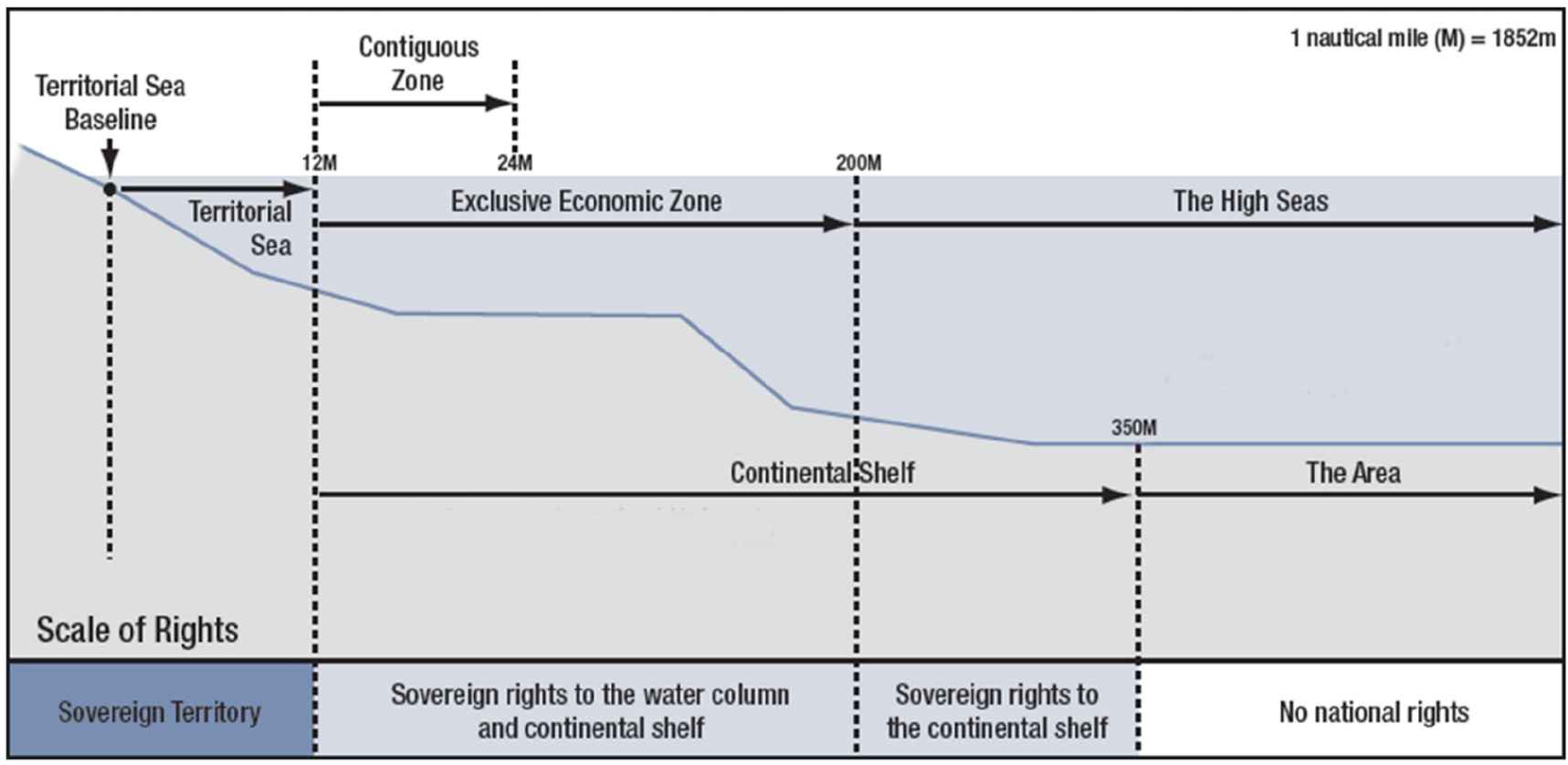
Much of the ocean science data collected by the private sector r has been in national waters or Exclusive Economic Zones (EEZs) with the permission of national governments under various lease arrangements (Fig. 4). In most cases, it is these national governments that ultimately own the data and determine whether to make it publicly accessible. Even when companies are willing to share their data, national governments must approve the release if the data was acquired within their EEZ. However, individual countries have different approaches to allowing and facilitating the sharing of data collected by parties in their territorial and EEZ waters. This difference in approaches can be restrictive and hinder private-sector companies’ efforts to unlock and share relevant ocean data they have collected. Despite many national governments’ endorsement of the Ocean Decade, as well as their signing up to international conventions, agreements, and frameworks such as Convention on Biological Diversity (CBD, 1992), BBNJ Agreement (UN, 2023), UNCLOS (UN, 1982), that promote data-sharing and public access to data, most have yet to take clear steps to allow public release of private sector ocean science data collected within their jurisdiction.
Outside EEZ waters, data is also collected as part of surveys for submarine telecommunication cables and critical mineral surveys. For the latter, the International Seabed Authority and developers have committed to sharing their bathymetry data with Seabed 2030.
7 Policy recommendations
To overcome these challenges, the CDG has developed a policy recommendation for countries to facilitate data sharing in territorial and Exclusive Economic Zone (EEZ) waters. Encouraging countries to implement policies that mandate ocean data sharing for public and private entities operating within their jurisdictions is crucial. This can be achieved by actively incorporating mandatory open data sharing conditions into offshore licensing agreements and permitting processes for public and private parties operating in their national jurisdictions.
To address this a policy recommendation to overcome barriers to data sharing in areas within national jurisdiction that was accepted at the 28th session of the IODE Committee meeting in March 2025. The recommendation urges UNESCO-IOC Member States to support the sharing of data for all-ocean related data collection in their territorial waters and exclusive economic zone through the inclusion of the provisions of the IOC Data Policy and Terms of Use in licensing and permitting within their jurisdictions. This recommendation will be presented for adoption by the 33rd session of the IOC Assembly in June 2025.
8 Conclusion
The private sector has an important role to play in advancing ocean science and sustainable development, not only through ocean technology innovation, but also by facilitating data sharing. Through unlocking and sharing their ocean data, companies can contribute to a healthier ocean, support informed policy-making, and foster innovation. The work of the Ocean Decade, including through its Bathymetry Data Sharing Guideline provides a practical framework for achieving these goals, but overcoming the challenges requires coordinated efforts from all stakeholders.
As we move forward, it is imperative that the private sector, governments, and international organizations work together to ensure that decisions-makers and other stakeholders have access to robust ocean data to support the longevity and health of our ocean.
References
Bindoff, N. L., Cheung, W. W. L., Kairo, J. G., Arístegui, J., Guinder, V. A., Hallberg, R., Hilmi, N., Jiao, N., Karim, M. S., Levin, L., O’Donoghue, S., Purca Cuicapusa, S. R., Rinkevich, B., Suga, T., Tagliabue, A. and Williamson, P. (2019). Changing ocean, marine ecosystems, and dependent communities. In H.-O. Pörtner, D. C. Roberts, V. Masson-Delmotte, P. Zhai, M. Tignor, E. Poloczanska, K. Mintenbeck, A. Alegría, M. Nicolai, A. Okem, J. Petzold, B. Rama and N. M. Weyer (Eds.), IPCC Special Report on the Ocean and Cryosphere in a Changing Climate (pp. 447–587). Cambridge University Press. https://doi.org/10.1017/9781009157964.007
CBD (1992). Convention on Biological Diversity (adopted 5 June 1992, entered into force 29 December 1993), 1760 U.N.T.S. 69. https://www.cbd.int/doc/legal/cbd-en.pdf (last accessed 16 April 2025).
Guan, S., Qu, F. and Qiao, F.-L. (2023). United Nations Decade of Ocean Science for Sustainable Development (2021–2030): From innovation of ocean science to science-based ocean governance. Frontiers in Marine Science, 9. https://doi.org/10.3389/fmars.2022.1091598
HUB Ocean (2024). Tides of transparency: A first mapping of industrial ocean data sharing (biodiversity). Oslo: HUB Ocean. https://sadataproducts.blob.core.windows.net/huboceandatapublic/HUBOcean_TidesOfTransparency_2024.pdf (last accessed 16 April 2025).
OC (2025). Data policy and terms of use (2023). IOC Information document series, 1548. The Intergovernmental Oceanographic Commission, Paris, France. https://unesdoc.unesco.org/ark:/48223/pf0000393235.locale=en (last accessed 7 May 2025).
Seabed 2030 (2017). Our mission. https://seabed2030.org/our-mission/ (last accessed 16 April 2025).
UN (1982). United Nations Convention on the Law of the Sea (adopted 10 December 1982, entered into force 16 November 1994). 1833 U.N.T.S. 397. United Nations, New York, USA. https://www.un.org/depts/los/convention_agreements/texts/unclos/unclos_e.pdf (last accessed 16 April 2025).
UN (2023). Agreement under the United Nations Convention on the Law of the Sea on the conservation and sustainable use of marine biological diversity of areas beyond national jurisdiction (adopted 19 June 2023, not yet in force). United Nations, New York, USA. https://www.un.org/bbnjagreement/en (last accessed 16 April 2025).
UNESCO-IOC (2024). Ocean Decade Bathymetry Data Sharing Guideline (The Ocean Decade Series, 58). UNESCO. https://oceandecade.org/publications/ocean-decade-bathymetry-data-sharing-guideline/ (last accessed 16 April 2025).
UNGA (2017, December 5). Resolution A/72/73. UN General Assembly, United Nations, New York, USA. https://documents.un.org/doc/undoc/gen/n17/421/90/pdf/n1742190.pdf (last accessed 16 April 2025).
UNGC (2015). Guide to corporate sustainability: Shaping a sustainable future. United Nations Global Compact, United Nations, New York, USA. https://www.globalcompact.de/migrated_files/wAssets/docs/Nachhaltigkeits-CSR-Management/un_global_compact_guide_to_corporate_sustainability.pdf (last accessed 16 April 2025).
Von Schuckmann, K., Holland, E. A., Haugan, P. and Thomson, P. (2020). Ocean science, data, and services for the UN 2030 Sustainable Development Goals. Marine Policy, 121. https://doi.org/104154. 10.1016/j.marpol.2020.104154