
Abstract
Preamble
In honour of the centenary of The International Hydrographic Review (IHR) in 2023, Prof Dr Alex David Rogers was invited to contribute to the special Jubilee Issue* with a keynote article on the exploration of deep-sea biodiversity over the past 100 years and a look into the future of deep-sea exploration of marine ecosystems. As this was not possible in the Jubilee year, we are now publishing the manuscript.
1 The emergence of modern deep-sea biodiversity research
By the time of the establishment of the International Hydrographic Organisation (IHO; then the International Hydrographic Bureau) in 1921, the results to many oceanic and transoceanic expeditions had been published. The circumglobal voyage of HMS Challenger (1872–1876) alone resulted in 50 volumes of scientific research, the last of which was published in 1895 (Corfield, 2004). In 1935, the Swedish zoologist Sven Ekman synthesised findings on species distributions from the results of these expeditions to summarise current knowledge of the biogeography of the global ocean including the deep sea. Ekman (1935) concluded that the deep-sea fauna was distinctive and diverse (the Challenger expedition described more than 1,500 species living below 500 fathoms [914 m]), although the abundance and diversity of species declined with increasing depth and distance from the continental shelf. He also concluded that the fauna of hard substrata was different to that found on sediments (Ekman, 1935). His descriptions of the zones of transition from the shelf biota to the deep sea and then within the deep sea itself remain largely consistent with our understanding today.
It is fascinating to note that just before Ekman published his seminal work in on ocean biogeography two Americans, William Beebe and Otis Barton had taken the first dives into the deep sea using the Bathysphere, essentially a hollow iron ball lowered on a cable with a single viewing window. Deep-submergence technology had emerged for the first time for the purposes of marine scientific research. This paper reviews the exploration of deep-sea biodiversity over the last 100 years describing important technological advances and the landmark discoveries in the field. We finish by looking into the future of deep-ocean biodiversity science and how it is critical to halting the decline of marine species through providing evidence for decision making and management related to human activities in the ocean.
2 Plumbing the depths: over-the side sampling
Much of the work discovering deep-sea biodiversity has been undertaken through over-the-side sampling using dredges, trawls, sleds, corers and pelagic nets. This has involved painstaking work in the field and back in the laboratory to carefully identify marine species, still poorly known from the deep sea (e.g. Bouchet et al., 2023), to obtain quantitative data on the distribution of life. This equipment began as mechanical devices deployed by wire or rope from a ship but have developed overtime to incorporate sensors, telemetry and precise control of sampling.
2.1 Benthic sampling
2.1.1 Dredges and sleds
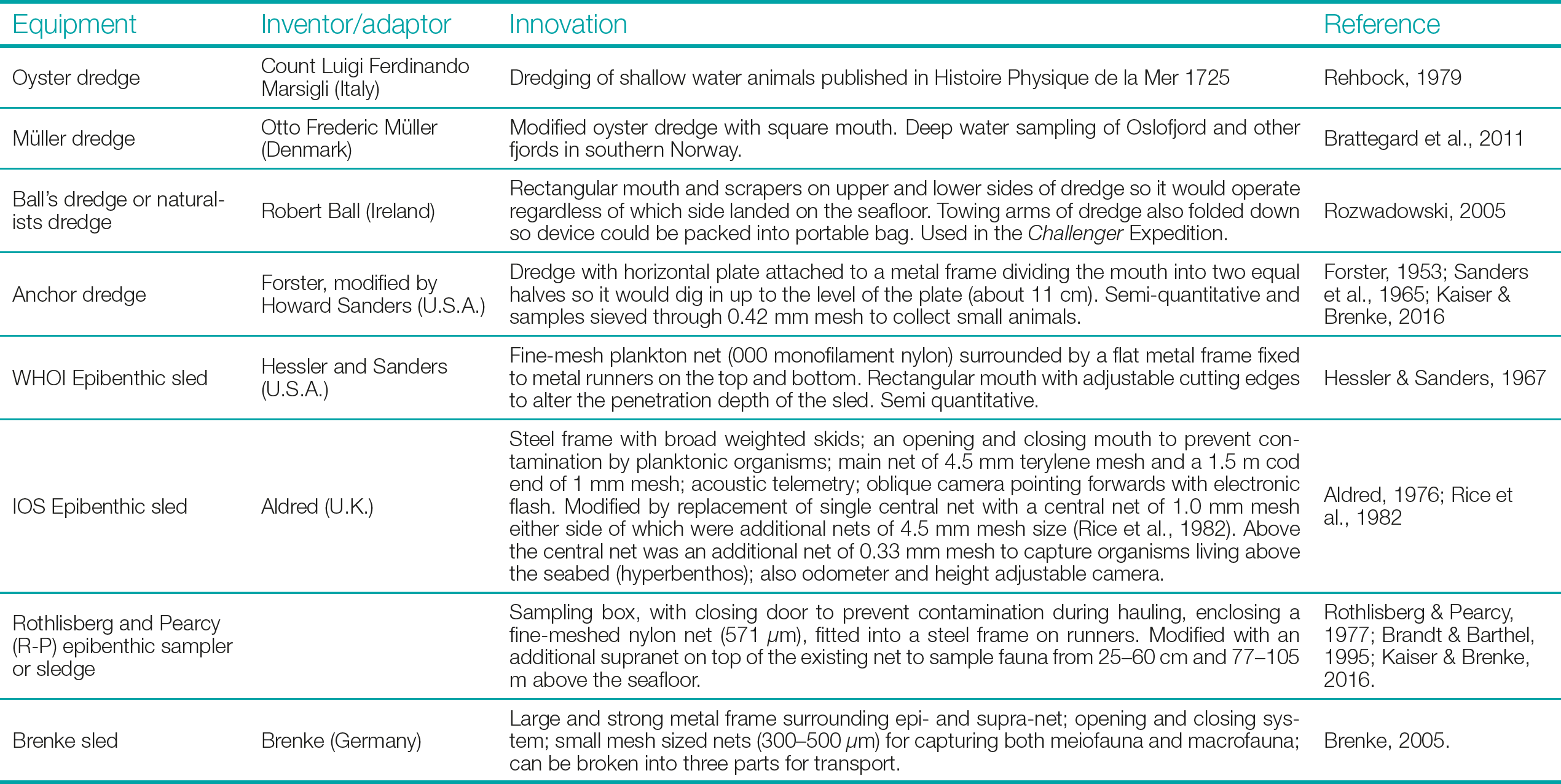
The naturalist’s dredge became the workhorse of 19th Century deep-sea biology and work undertaken during expeditions such as that of HMS Challenger (1872–1876) provided some of the first insights into the diversity and distribution of deep-sea organisms (Ekman, 1935; Kaiser & Brenke, 2016; Table 1). Post World War 2 scientists tried to design more quantitative dredges. Howard Sanders from Woods Hole Oceanographic Institution (WHOI) developed the anchor dredge for semi-quantitative sampling, revealing an astonishing diversity of small animals living on or in deep-sea sediments (Sanders et al. 1965). This was followed by the development of the WHOI epibenthic sled (Hessler & Sanders, 1967) and more complex sleds which incorporated acoustic telemetry and cameras to better estimate the area / volume of sediment sampled and to photograph seafloor communities prior to disturbance from the gear (Table 1).
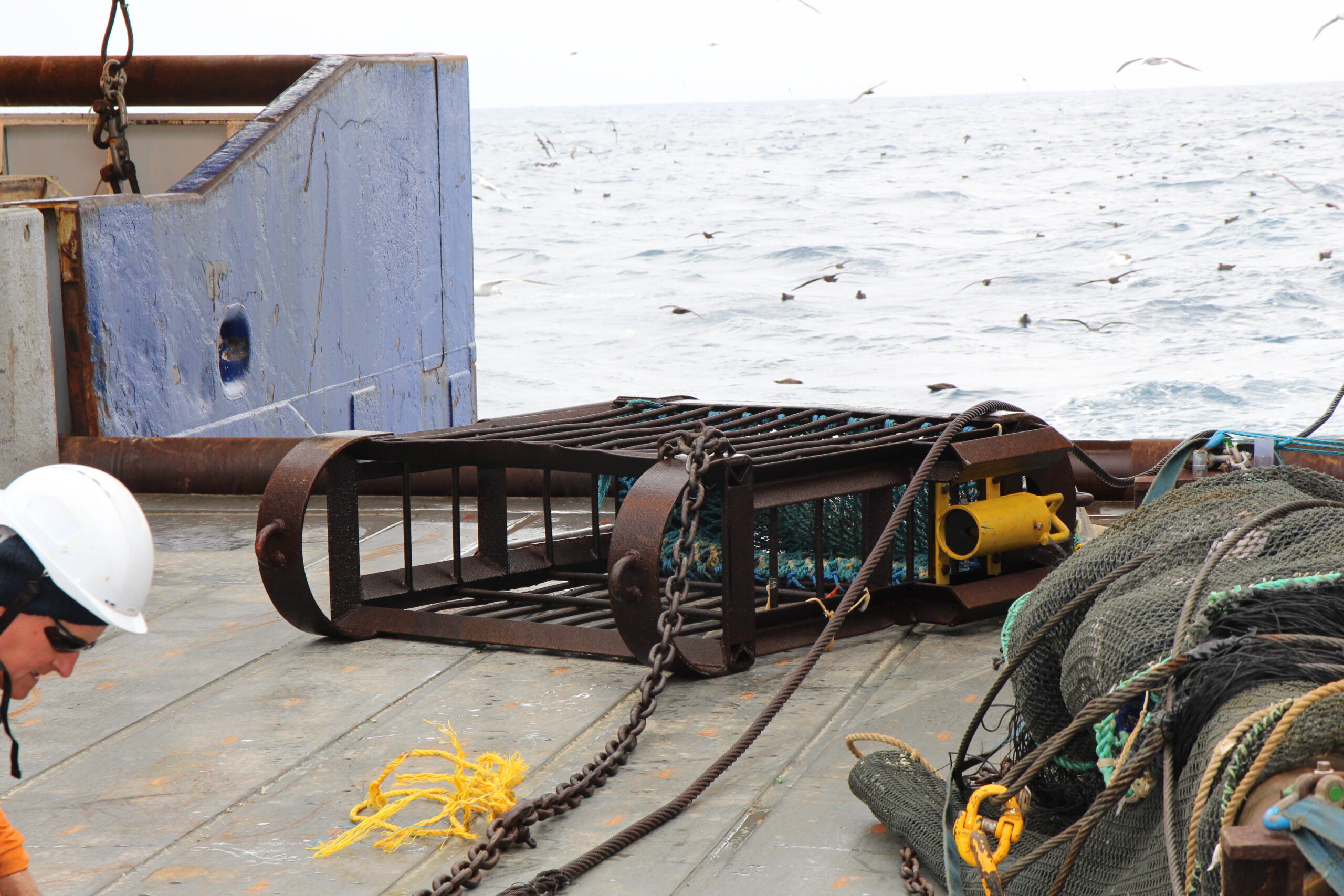
In subsequent decades iterations of the WHOI epibenthic sledge were designed (e.g. Snell sledge; Snell, 1998) whilst much heavier and more robust instruments have been used to sample rough seafloors associated with seamounts and other rugged topography (e.g. New Zealand Institute of Water and Atmospheric Research’s [NIWA] seamount sled; Kaiser & Brenke, 2016; Fig. 1). These instruments have provided data on the abundance and diversity of seamount benthic fauna (e.g. Clark & Rowden, 2009). Sleds were also developed to sample small organisms living on and in sediments as well as the hyperbenthos including the Rothlisberg and Pearcy epibenthic sampler or sled and the Brenke sledge (Brenke, 2005; Kaiser & Brenke, 2016; Table 1; Fig. 1). The latter can recover intact samples of small organisms and has also been equipped with stills and video cameras as well as oxygen sensors (Brandt et al., 2013).

2.1.2 Trawls
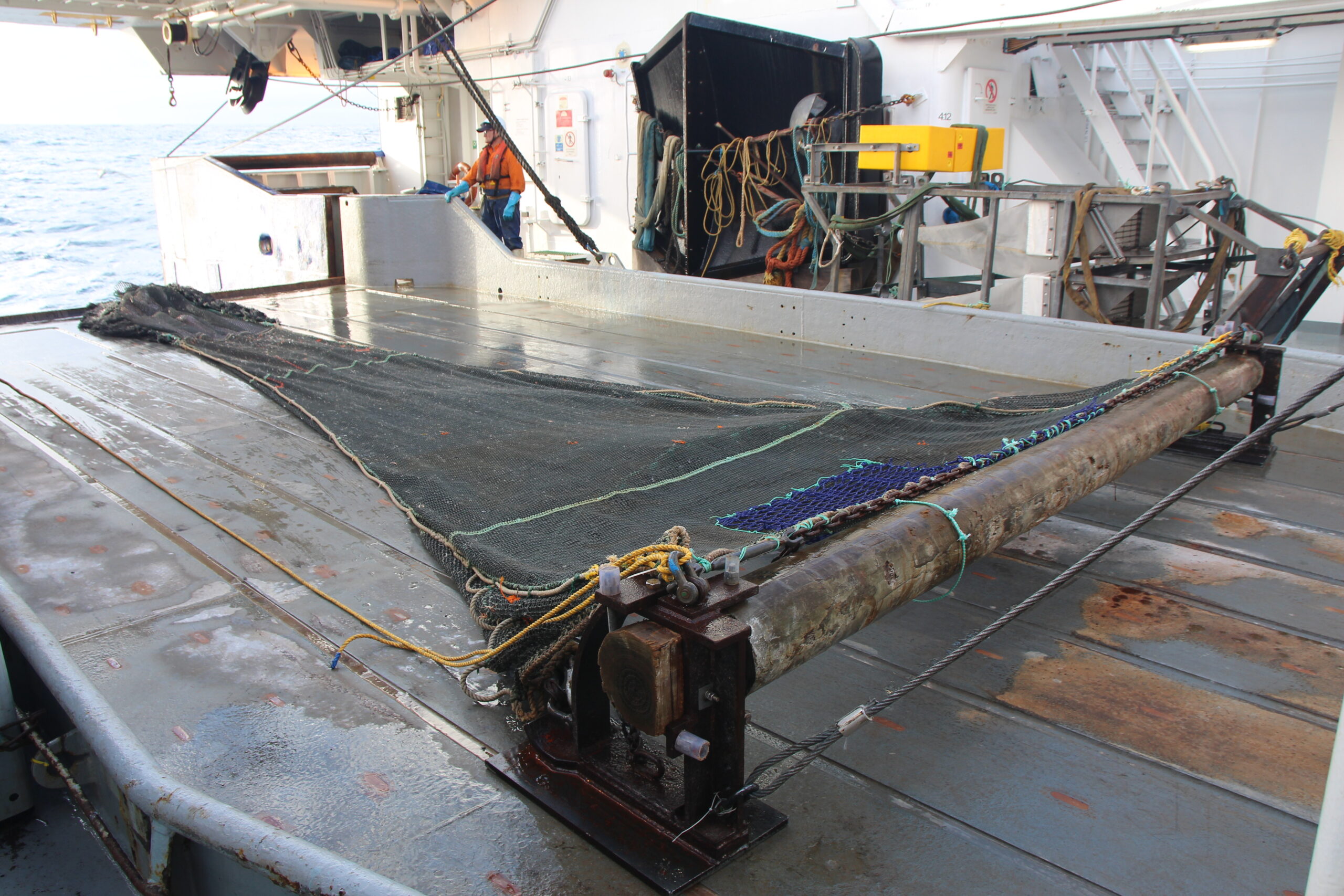
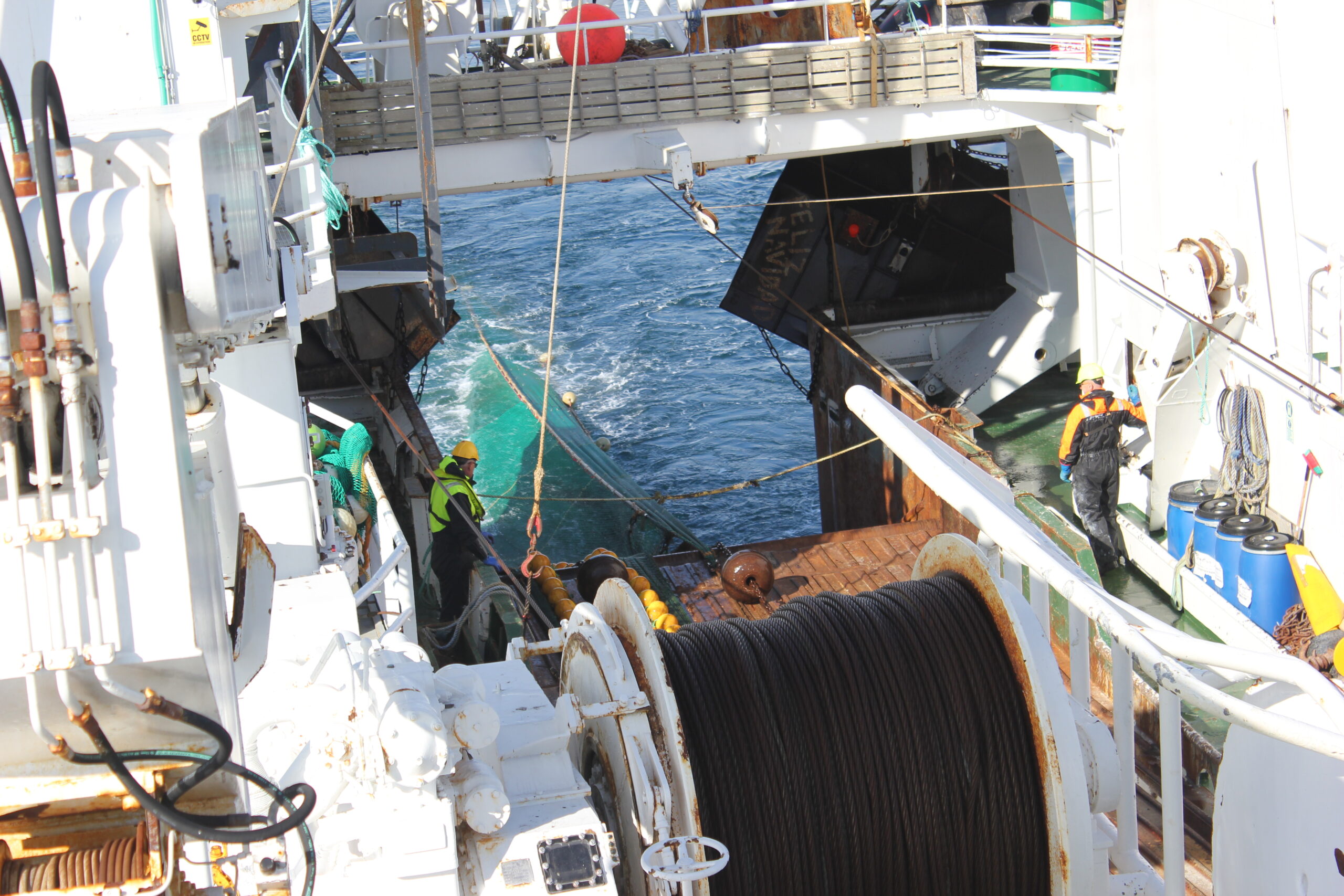
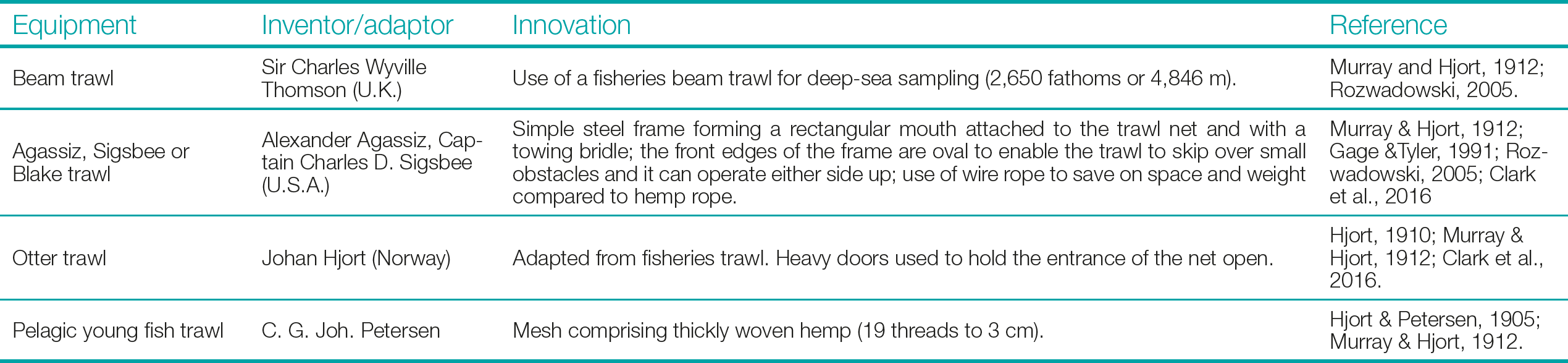
Beam and otter trawls (Fig. 1) have been adapted for science from fishing gear. Using a beam trawl HMS Challenger recovered megafauna living on the surface of the seafloor down to abyssal depths (Table 2). These trawls were simplified by Alexander Agassiz, a scientist and Captain Charles D. Sigsbee of the U.S. Coast Survey Steamer Blake (Murray & Hjort, 1912; Rozwadowski, 2005; Table 2). They also pioneered the use of wire rope a material which is now standard for many research vessels. Sizes of Agassiz trawl vary from small light trawls of 1 m width and 0.3 m height to much larger trawls of 3.5 m width and 1 m in height (Clark et al., 2016). Otter trawls (Table 2) can be large and need to be towed at speed to keep the doors open. This type of trawl enabled the capturing of large numbers of leptocephali of the European and America eels (Anguilla anguilla and Anguilla rostrata) on a series of fisheries investigations eventually enabling the Danish scientist Johannes Schmidt to uncover the approximate location of the eel spawning grounds in the Sargasso Sea (Hjort, 1910; Schmidt, 1923; see account in Svensson, 2019).
Modern otter trawls are often twin warped and the angle and spreading effect of the doors can be altered to reduce or increase bottom contact influencing the species collected (Clark et al., 2016; Fig. 1). Wires connect back from the doors to the net, the upper headline of which is held up in the water by buoyant floats to hold the mouth open (Clark et al., 2016). The ground rope is often equipped with rollers or bobbins to help it jump over obstacles (Clark et al., 2016). These nets can be modified for very rough seafloors such as found on seamounts or in canyons through including heavier ground gear with wide discs or rollers (Clark et al., 2016). Smaller otter trawls can be towed on single warps where the vessel is small and available power limited (e.g. Michael Sars; Murray & Hjort, 1912; Clark et al., 2016).
2.1.3 Corers
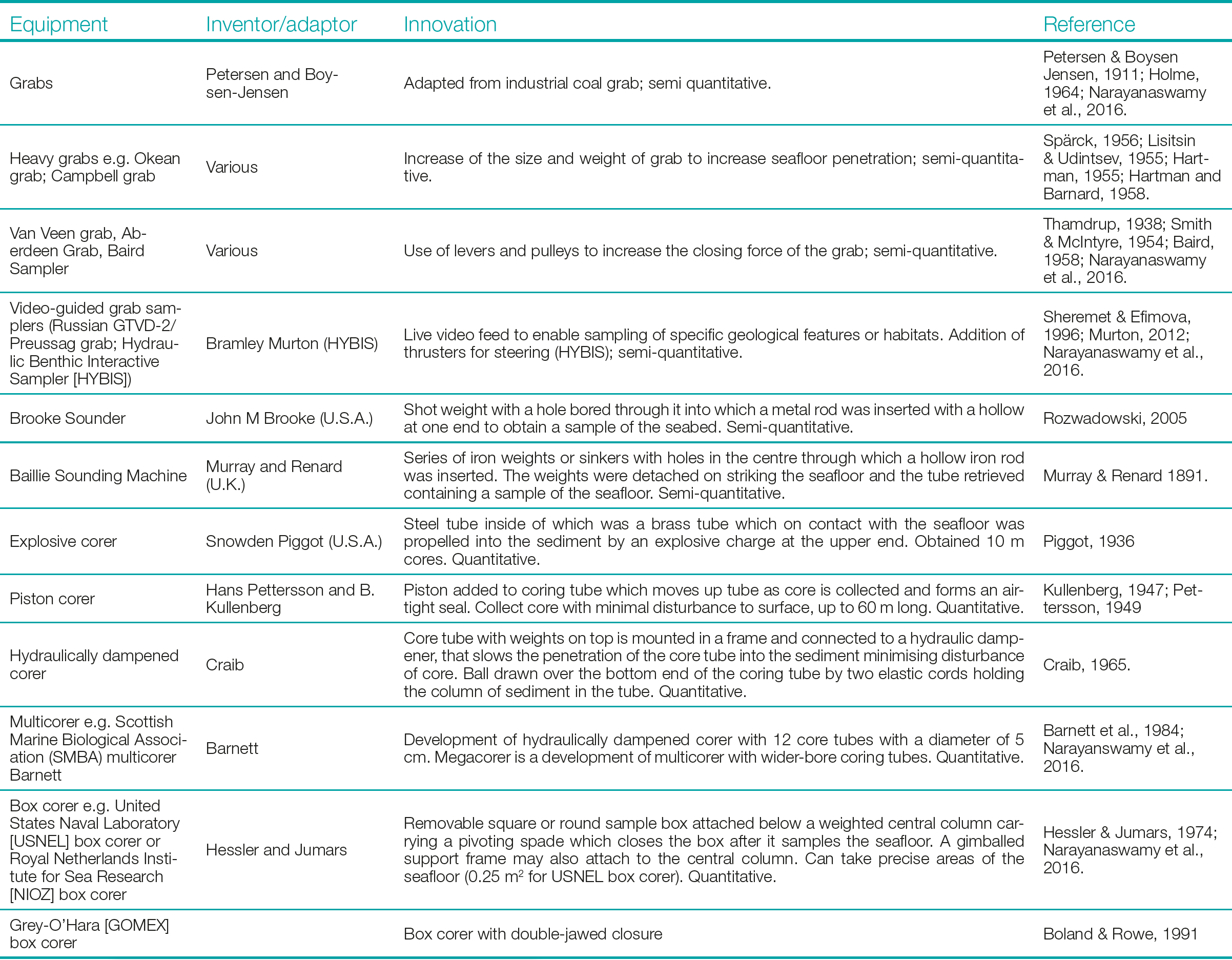
Trawls and dredges can only generate qualitative or semi-quantitative data for deep-sea megafauna and macrofauna (Gage & Tyler, 1991; Narayanaswamy et al., 2016). Grabs and later corers were developed to take a known quantity of the seafloor so that organisms living both on and in the sediments could be identified, enumerated and their biomass estimated. These include the macrofauna (animals retained in a sieve of mesh size 250–300 μm) and meiofauna (animals retained in a sieve of mesh size 20–32 μm) that make up most of the biological communities of deep-sea sediments (Narayanaswamy et al., 2016).
The first grabs were developed for use in shallow water for investigations of the role of benthic communities in supporting fish stocks in Danish fjords (Petersen & Boysen Jensen, 1911; Table 3). This work gave rise to the concept of animal communities on the seafloor (Petersen, 1913). Penetration of grabs into the seafloor was an issue as was the bow-wave effect where the water pushed in front of the equipment “blows away” organisms living on the surface (Narayanaswamy et al., 2016). Given these and other issues such as sample wash out on retrieval, these devices have been largely replaced by corers for quantitative sampling of deep-sea sediments (Narayanaswamy et al., 2016; Table 3). Video guided grab systems have more typically been used to take geological samples or to take samples from places where corers or other equipment cannot sample or where habitat is very patchy such as on seamount, cold-water coral reef ecosystems (e.g. Pratt et al., 2019) or sulphide-rich deposits (Narayanaswamy et al., 2016). Some of these are hydraulic and may even be equipped with ROV thrusters to enable more precise positioning of the system for sampling (e.g. HYBIS, Table 3).
Gravity corers were first developed in the midlate 19th Century and included the Brooke Sounder and the Baillie Sounding Machine, used during the Challenger Expedition for soundings (Murray & Renard, 1891; Schönfeld, 2012; Table 3). The desire for longer cores led to the development of a corer driven into the seafloor by an explosive charge which obtained cores up to 10 meters long from depths as great as 4,846 m depth (Piggot, 1936; Table 3). However, this was superseded by the piston core (Kullenberg, 1947) deployed on the Swedish Albatross expedition and was used to collect 250 core samples as long as 13 m from the deep sea (Pettersson, 1949). This has remained largely unchanged to the present day and can obtain cores up to 60 m long.
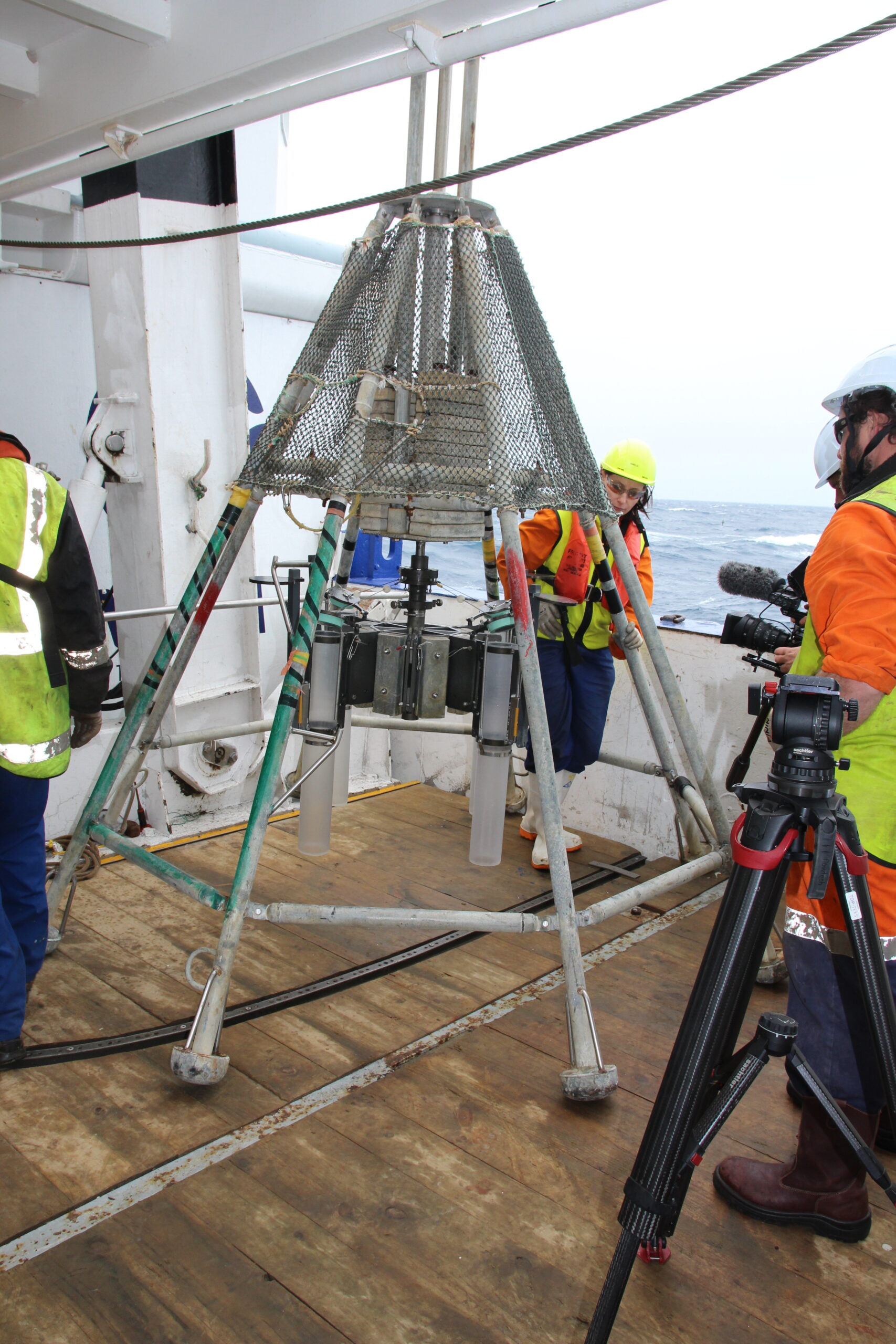
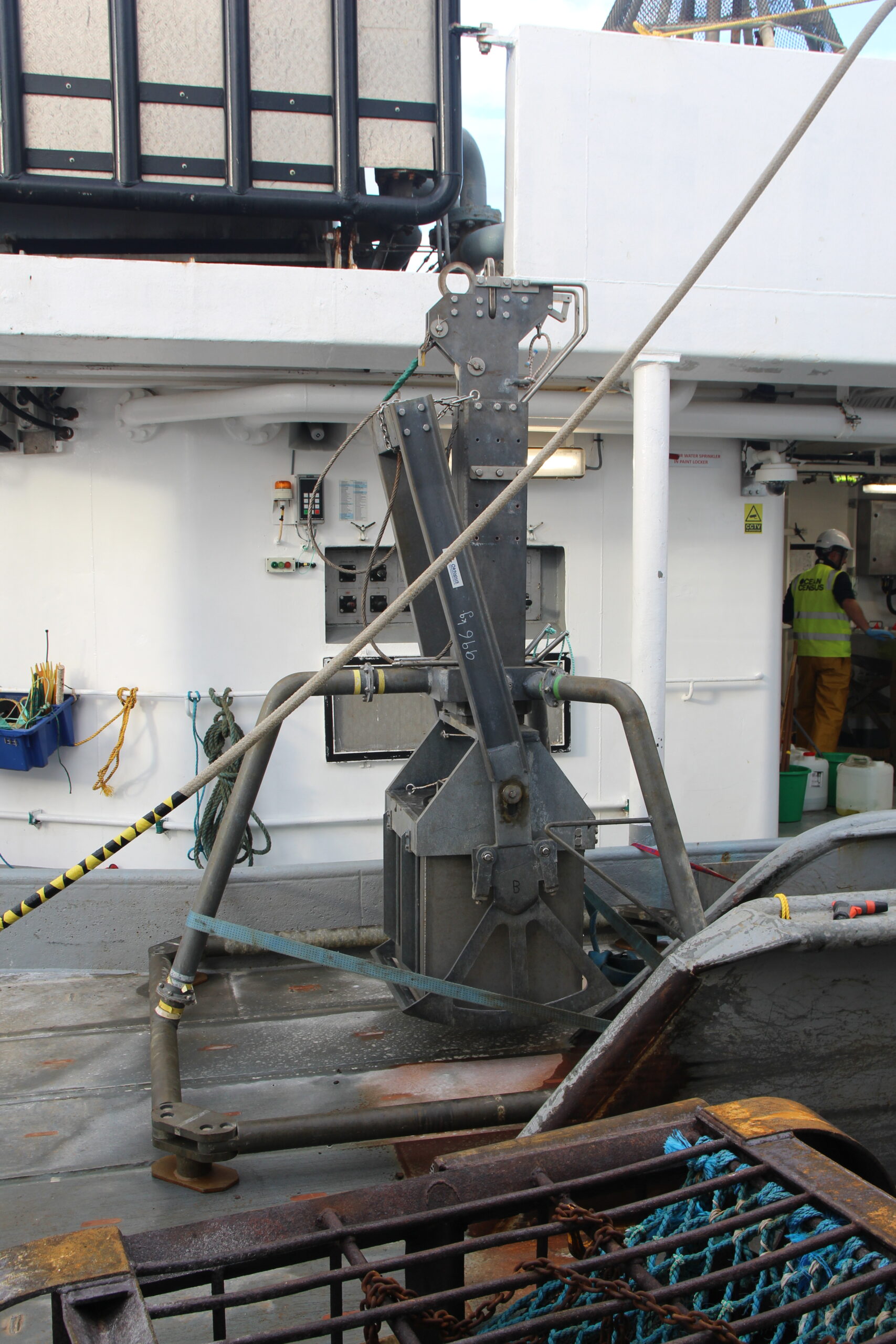
Gravity corers still suffered from the issue of bow waves and also the use of core catchers, devices which prevent a core falling from the coring tube or liner which tend to disturb the surface of the core (Craib, 1965; Schonfeld, 2012). The solution to this was the development of a corer with a hydraulic dampener a device that slows the penetration of the core tube into the sediment (Craib, 1965; Table 3). This was further developed into modern day multicorers and megacorers (Table 3; Fig. 2) routinely deployed for sampling of deep-sea meiofauna and macrofauna.
Box corers are designed to take a cuboid section of sediment from the seafloor (Table 3; Fig. 2). These samplers can take precise areas of the seafloor (0.25 m2 for USNEL box corer) and can provide a large amount of material for sampling or subsampling of animals and for recording the physical and chemical characteristics of the sediment including porewater. Bow wave effects can be an issue with box corers although careful operation can reduce this problem considerably.
2.2 Pelagic Sampling
2.2.1 Ring nets
The German scientist Victor Hensen first used the term “plankton” and developed the first quantitative approaches to sampling pelagic communities. Hensen believed that plankton production might fuel marine food webs and was interested in characterising the horizontal and vertical distribution of plankton (Wiebe & Benfield, 2003; Dolan, 2021). The Hensen Net comprised a metal ring from which a conical net was suspended, and which could be lowered to a set depth and the volume of water it had filtered calculated (Dolan, 2021; Table 4). Hensen also invented a method to enumerate planktonic organisms on an etched glass plate (Dolan, 2021). He undertook the Plankton Expedition on the steamer National which sampled the North Atlantic (Dolan, 2021) and versions of this net are still used. Chun, Petersen and Nansen modified this net to be sent to the required depth closed, mechanically opened through the use of a messenger sent down the cable (a weight) and then closed after the required length of time of fishing using another messenger (Murray & Hjort, 1912; Bigelow, 1913).
2.2.2 Deep pelagic trawls
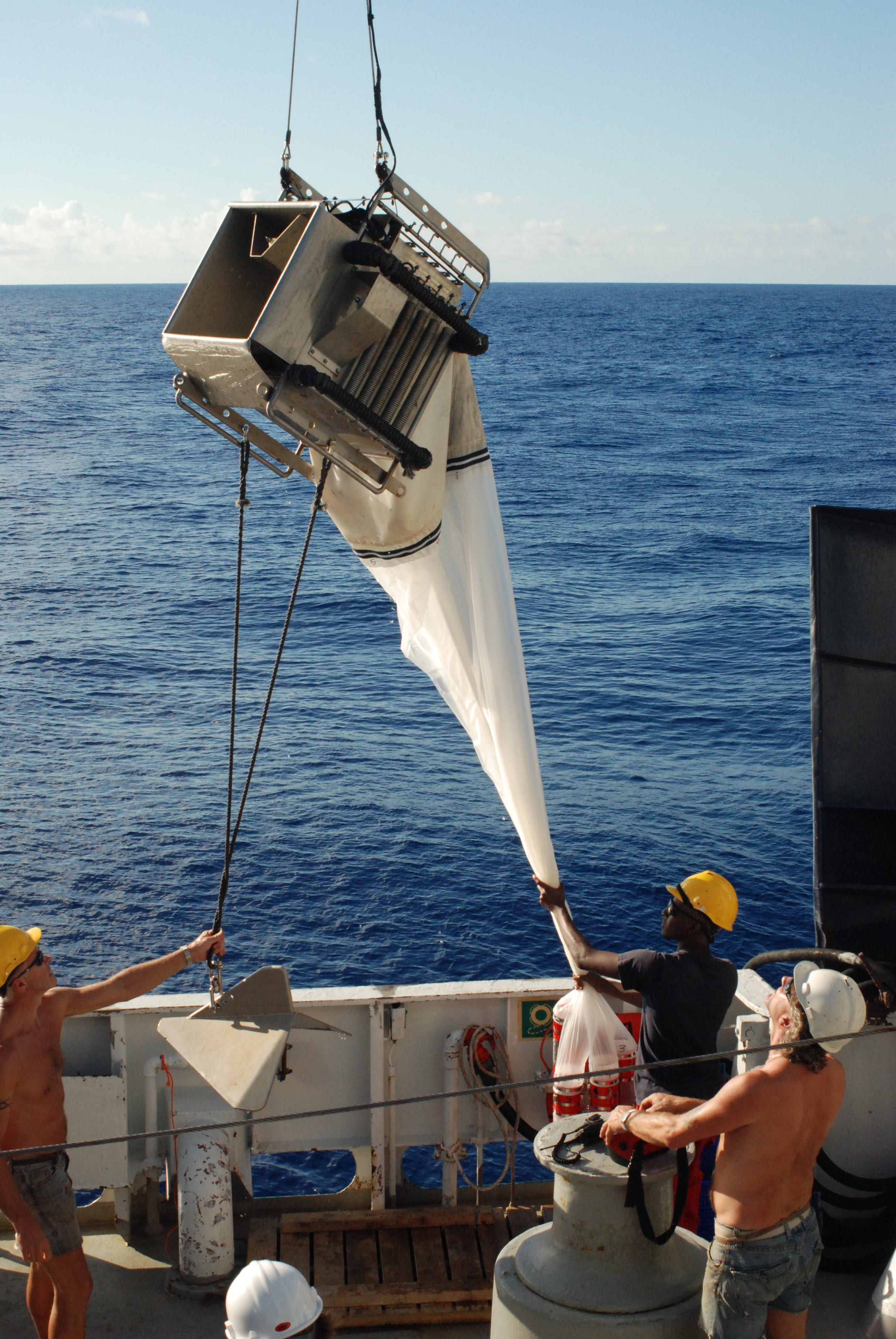
Following World War 2 scientific and military interest in characterising the deep scattering layer led to the need for nets that could open at mesopelagic or bathypelagic depths, maintain an open mouth while being towed horizontally and at a greater speed than previous designs (Hersey & Backus, 1962; Devereux & Winsett, 1953). Two main designs appeared in the 1950s, the Tucker Trawl and the Isaacs-Kidd Midwater Trawl (IKMT; Tucker, 1951; Devereux & Winsett, 1953; Table 4). These nets were effective at capturing micronekton which typically comprised of crustaceans such as euphausiids, small fish such as myctophids and squid (e.g. Tucker, 1951; Devereux & Winsett, 1953). The rectangular mouth of the Tucker Trawl enabled subsequent development as an opening and closing net and then the further development of multinets (Wiebe & Benfield, 2003; Table 4). System such as the RMT1+8 and MOCNESS were generally targeted at micronekton and large zooplankton. However, smaller modern multinets targeted at macrozooplankton are based on an original design by Bé et al. (1959; also Bé 1962; Table 4; Fig. 3).

3 The evolution of deep-submergence technology
In this section we focus on the deep-submergence technologies which have driven scientific advances in our understanding of deep-ocean biodiversity. These technologies are used for the remote exploration of the deep ocean using manned or unmanned platforms.
3.1 Drop cameras
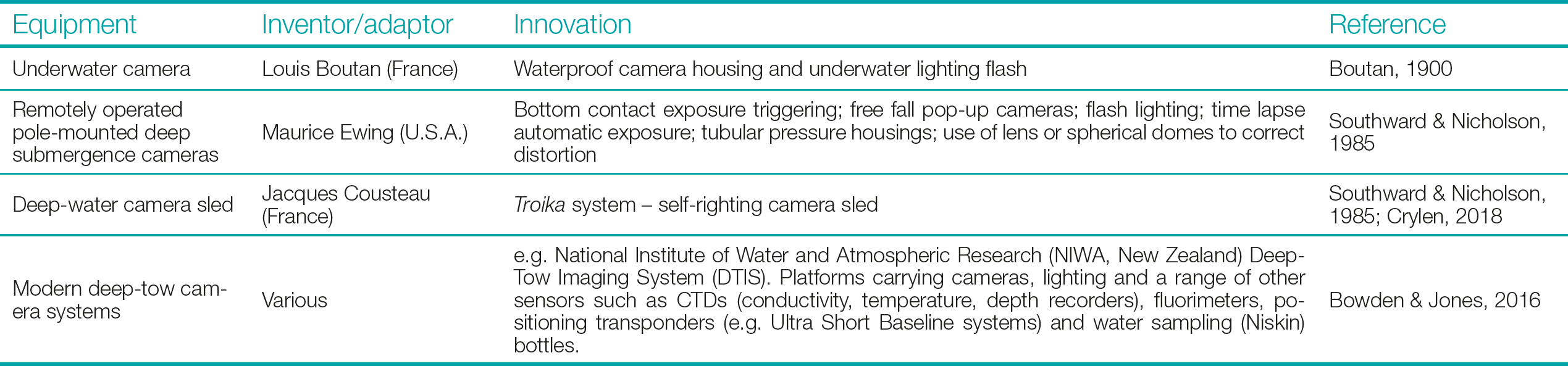
It was not until the pioneering work of a group of scientists and engineers at Lamont/Woods Hole that it was demonstrated that remotely operated cameras could be used for scientific observations in the deep sea (Ewing et al., 1946, 1967; Southward & Nicholson, 1985; Table 5). These camera systems were based on 35 mm film and evolved to be contained in tubular housings which had strong pressure-resistance and could be designed so the cameras as well as electronics and batteries could be spread along an internal chassis (Southward & Nicholson, 1985). Photographs were taken by closure of than electrical contact either by timer or through a switch linked to a triggering mechanism (Southward & Nicholson, 1985). Early flash units used either tungsten lights or flash bulbs but rapidly gave way to the use of electronic flash units in cylindrical housings (Southward & Nicholson, 1985).
Early deep-sea cameras were mounted on poles, in cages on sleds or on a variety of other towed gear such as trawls or grabs (Southward & Nicholson, 1985). Pole-mounted deep-sea cameras had their flash units mounted beneath to reduce backscatter and were typically activated when a weight suspended from a line hit the seafloor triggering a spring-loaded switch (e.g. Ewing, 1946). The bottom of the pole sometimes included a gravity corer and direct contact with the seafloor acted as a trigger (see example in Heezen & Hollister, 1971). Pole mounted cameras were improved with the introduction of a pinger which indicated when the camera was triggered and when it had recycled, ready for another photograph. This allowed the equipment to be repeatedly lifted 10–20 m off the seafloor before being lowered again for another photograph (Southward & Nicholson, 1985). The development of cages for deep-sea cameras gave them protection from knocks during launch and recovery and when operating within 2 m to <1 m of the seafloor, an advantage when trying to photograph deep-sea life (Southward & Nicholson, 1985).
Suspended and drop camera systems provided our first views of a variety of deep-sea ecosystems revealing how variable the composition of the seafloor is, a large diversity of megafauna (animals large enough to be seen in cameras), the influence of biological activity on the seafloor through generation of lebenspurren such as tracks, burrows, worm casts etc. and evidence of strong currents in the deep sea (e.g. ripple marks). They also provided evidence of how seafloor is generated along the mid-ocean ridges through structures such as pillow lavas. Importantly, images of the deep-sea floor and its inhabitants could be shown to the public for the first time, a good example being Heezen & Hollister’s (1971) book The Face of the Deep which contained hundreds of such images.
3.2 Camera sleds
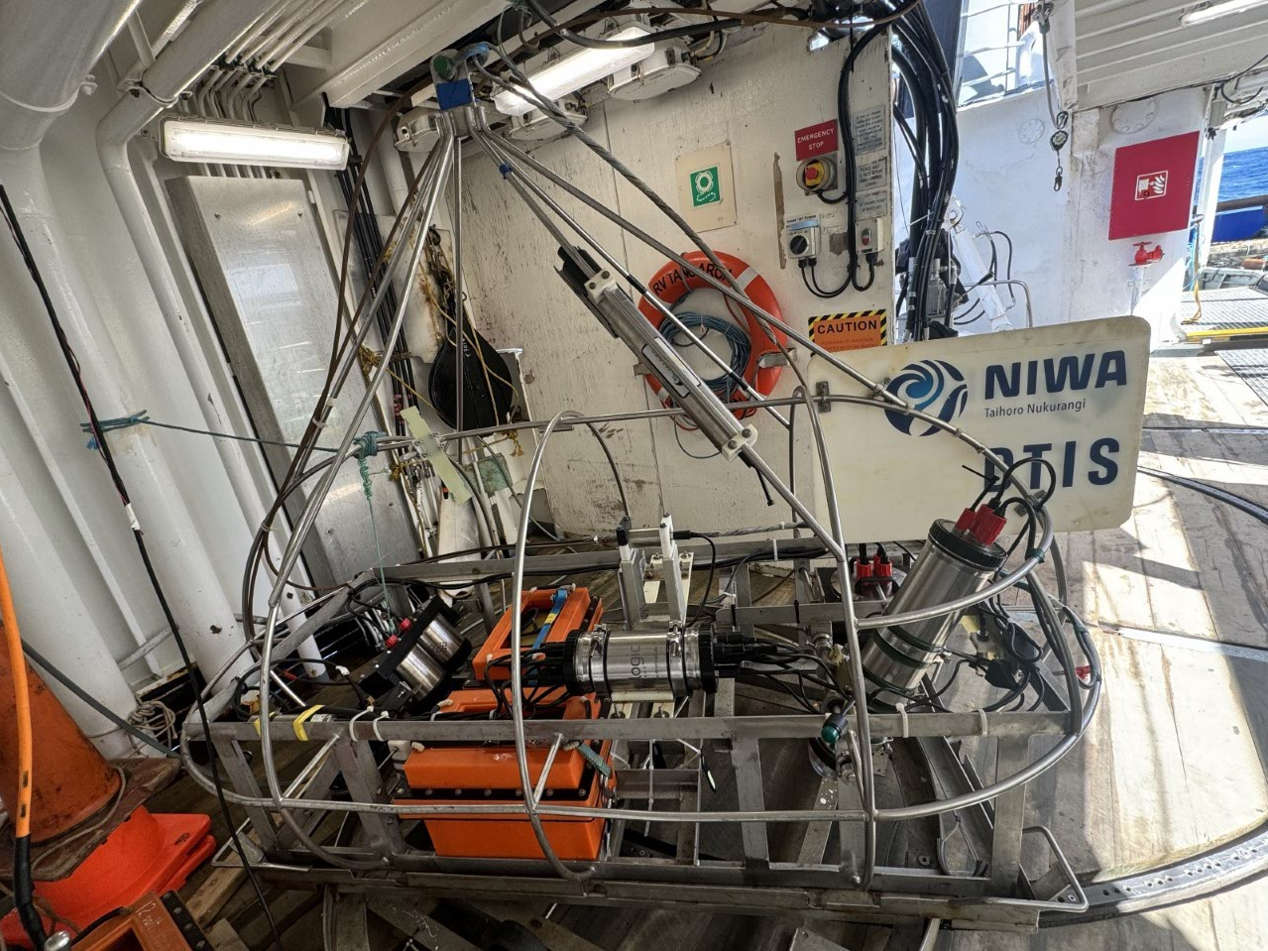
Camera sleds are platforms towed on or just off the seafloor. The first deep-water camera sled was Cousteau’s Troika, so named because it resembled the traditional Russian snow sled (Southward and Nicholson, 1985; Crylen, 2018). This sled was built by Cousteau and his team alongside Harold Edgerton from MIT, a pioneer of underwater camera and lighting equipment as well as side-scan sonar (Crylen, 2018). Modern camera sleds comprise a robust metal framework made of marine grade steel or aluminium to allow attachment and protection of cameras, lighting and other equipment (e.g. the Deep Towed Imaging System [DTIS]; Bowden & Jones, 2016; Fig. 4). Stills cameras and/or video cameras are set up for oblique or vertical imagery (ideally both). These orientations have advantages and disadvantages such as organisms being more easily identified in oblique camera images but vertical cameras being better able to count and estimate area coverage of organisms (see Bowden & Jones, 2016 for review). Even lighting is important for image analysis and is more easily achieved for vertical cameras. Lighting has to be set at an angle to cameras to avoid backscatter from suspended particulate matter in seawater (less of an issue in the deep-sea). Lighting has developed considerably over the last 60–70 years and modern high-intensity discharge (HDI or HMI) and LED (light emitting diodes) lights can allow operation of cameras 2–5 m above the seafloor and even up to 10 m in some cases (Bowden & Jones, 2016). High-capacitance strobe lighting is required for stills images (Bowden & Jones, 2016).
Scaling of camera images is an important aspect of extracting data from video or stills images. This can be achieved by placing an object of known scale within the image frame (Bowden & Jones, 2016) or by testing cameras in a water-filled tank with a grid which can then be superimposed on images from the deep sea to measure and quantify organisms (e.g. Rice & Collins, 1985). Now this is usually achieved through the use of two or more red or green scaling lasers set in parallel, so the beams are a fixed distance apart (Bowden & Jons, 2016). Stereo cameras can also be used with commercial software that can quantify and measure organisms although such cameras usually require calibration in water (e.g. Stefanoudis et al., 2019a). The use of USBL or long baseline (LBL) acoustic positioning systems can help to superimpose the tracks of towed camera systems onto multibeam bathymetry or from pre-existing data or charts (Bowden and Jones, 2016). This can be very helpful in associating the diversity and abundance of benthic organisms and fish to seafloor topography (e.g. Clark & Rowden, 2009; Williams et al., 2010).
3.3 Submersibles
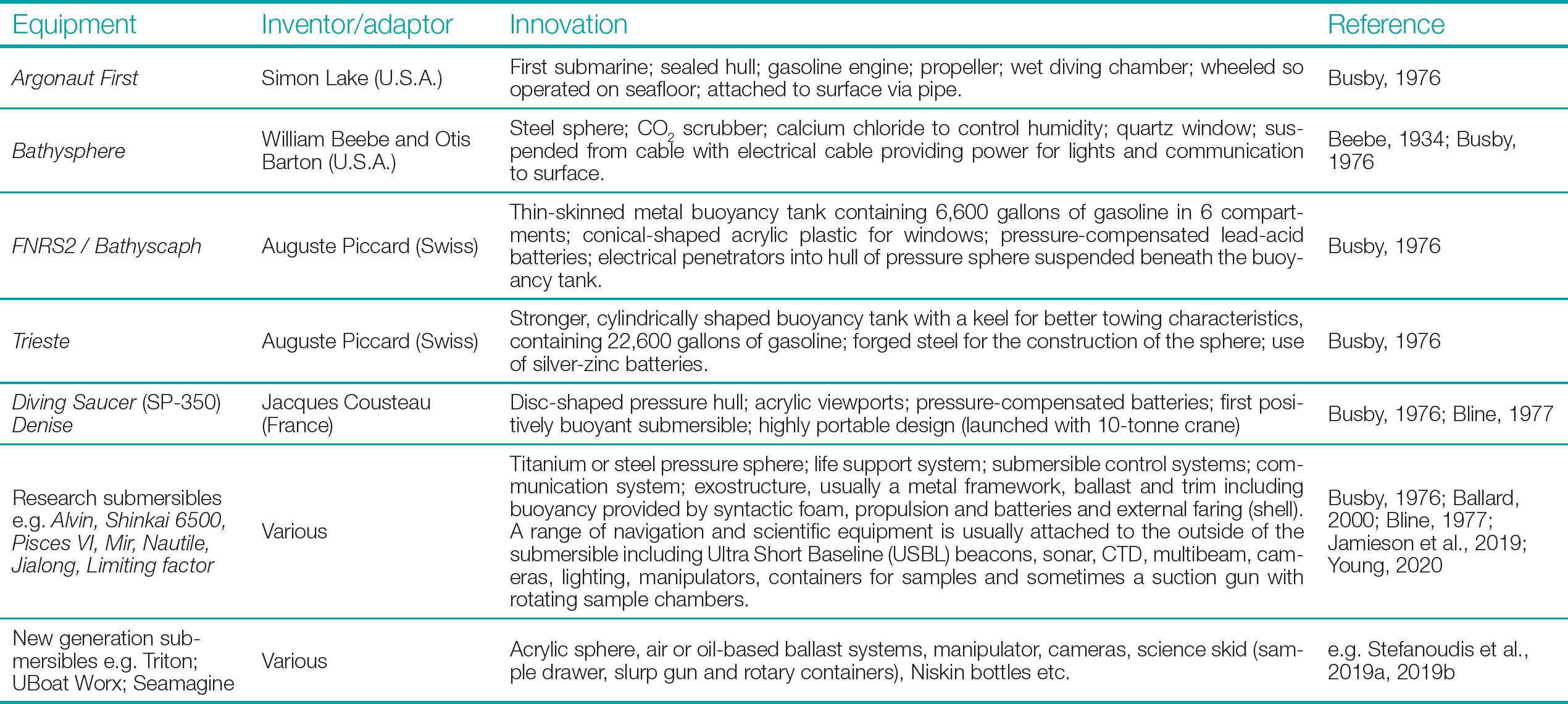
The first deep-sea exploration in a human occupied vehicle (HOV) was that of William Beebe and Otis Barton in the Bathysphere (Busby, 1976; Table 6). This comprised a single cast steel sphere weighing about 2.27 tonnes with a space just 1.35 m across inside. Between 1930 and 1934 Beebe and Barton conducted a series of dives observing deep-sea animals in their own habitat for the first time in human history, reaching 923m depth, a record at the time (Beebe, 1934; Busby, 1976).
Following WWII, the Swiss physicist and inventor, August Piccard, constructed the FNRS2, a submersible comprising a cast-steel sphere, larger than the Bathysphere, and formed by two halves bolted together, suspended under a thin-skinned metal structure containing gasoline as buoyancy (Busby, 1976). Unfortunately, during the first mission to the Cape Verde islands to test the submersible rough seas destroyed the gasoline buoyancy tanks of FNRS2 whilst the vehicle was on tow (Busby, 1976). Piccard built a new bathyscaph, the Trieste which following a number of successful missions was purchased by the US Navy Electronics Lab and upgraded with a new pressure sphere and more buoyancy (Busby, 1976). It was with this modified submersible that Jacques Piccard and Don Walsh in 1960 undertook the first dive to the bottom of the Challenger Deep in the Marianas Trench during the Nekton Mission, a depth of 35,814 feet (10,916 m) and the deepest part of the ocean (Busby, 1976).
The Bathyscaph design was large and cumbersome and as early as 1953 the underwater pioneer Jacques Cousteau was considering designs for a smaller, lighter and more easily transported vehicle. This resulted in the first modern submersible, the famous Diving Saucer (SP-350) Denise. The Diving Saucer could be launched and retrieved by a 10-ton crane but could be transported rapidly anywhere on its mothership and was highly agile underwater (Bline, 1977). It was also the first positively buoyant submersible with a 55 lb weight being manually jettisoned to the allow the vehicle to ascend to the surface (Busby, 1976; Bline, 1977). The Diving Saucer was successfully operated from Cousteau’s vessel Calypso and appeared in films such as World Without Sun (Le Monde sans soleil) completing over 1,000 dives (Bline, 1977).
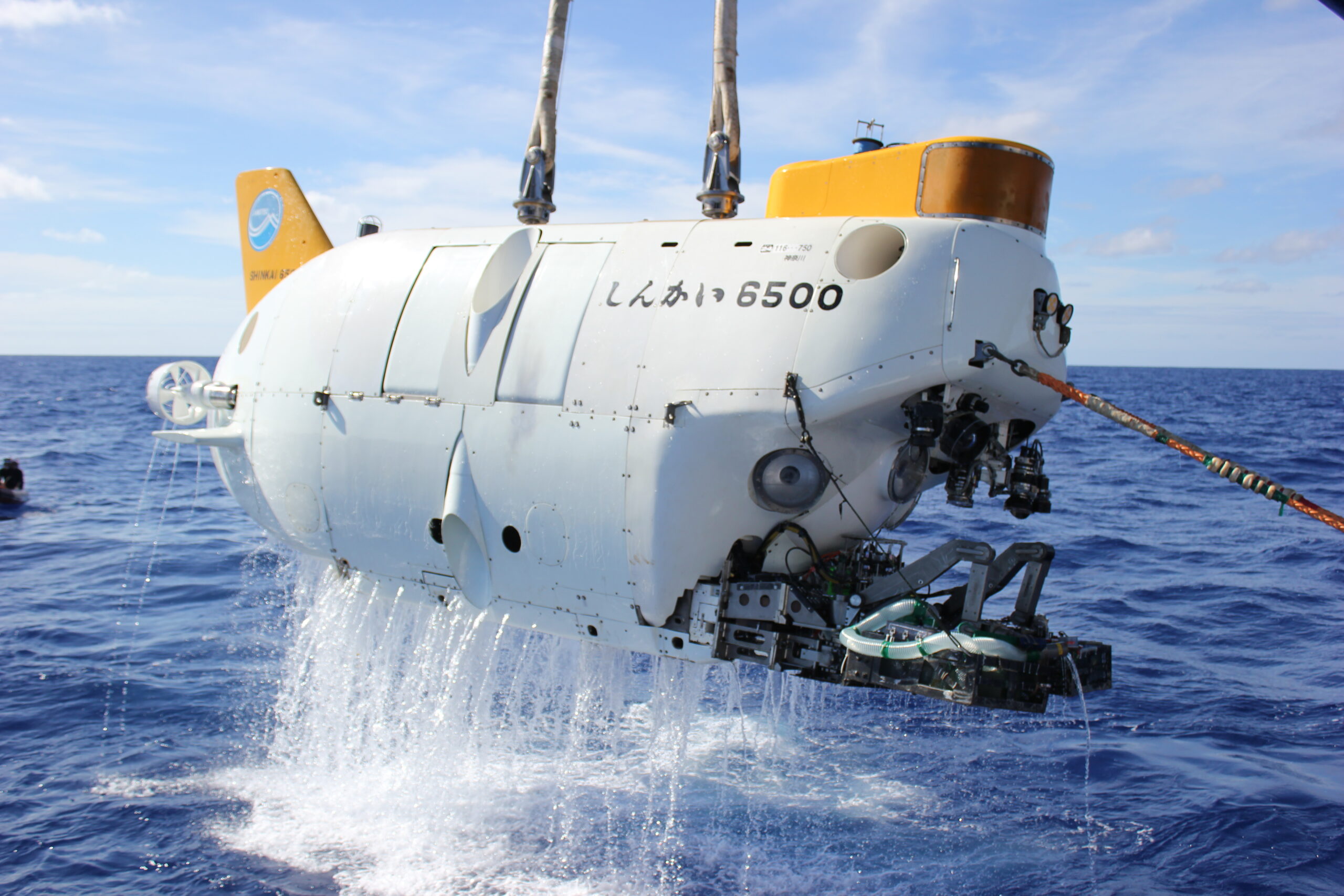
The early 1960s saw a burst in submersible development spurred on by the potential of perceived markets in tourism, leisure, scientific, commercial and military research and object recovery and rescue (Busby, 1976). It was during this time that the DSV Alvin, the most famous deep-sea submersible used for research on biodiversity was designed and built. Alvin was used to discover deep-sea high temperature hydrothermal vents on the Galapagos Ridge in 1976 and undertook the first dives to the wreck of the Titanic ten years later (Ballard, 2000). The destruction of a B52 bomber in 1966 following a mid-air collision over southern Spain resulted in the loss of four hydrogen bombs, one of which was located by Alvin in over 2000 ft of water, further spurred military interest in submersibles. The late 1960s saw the building of submersibles including the Deepstar 4000 and the International Hydrodynamics (HYCO) Pisces series submersibles. By 1976 more than 120 submersibles had been built with the offshore oil and gas industry adding further to the market for the use of these vehicles (Bline, 1977). Deep-diving research submersibles soon followed including the Pisces VI, Alvin, Mir, Shinkai 6500, Nautile and Jialong (Table 6; Fig. 5).
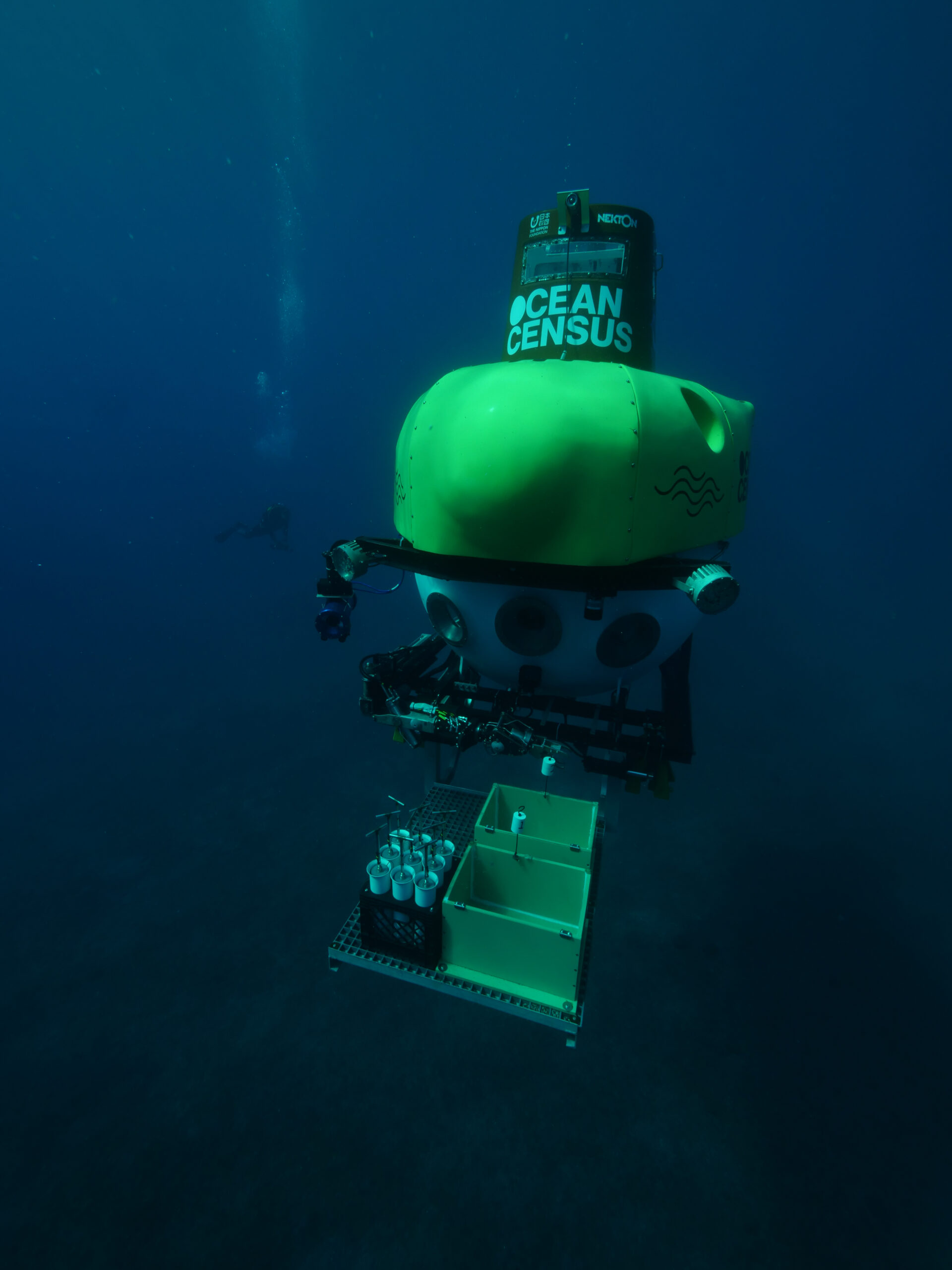
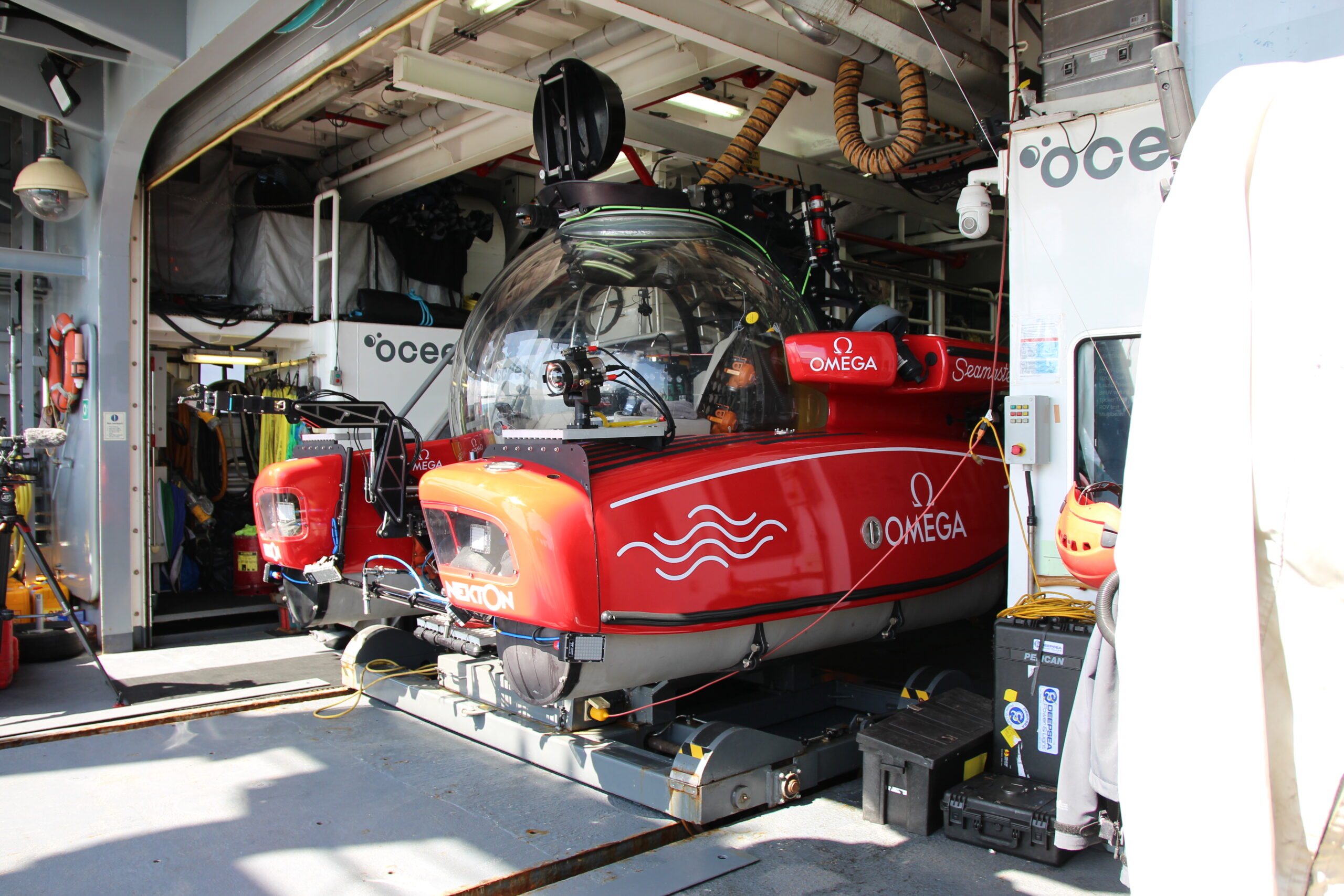
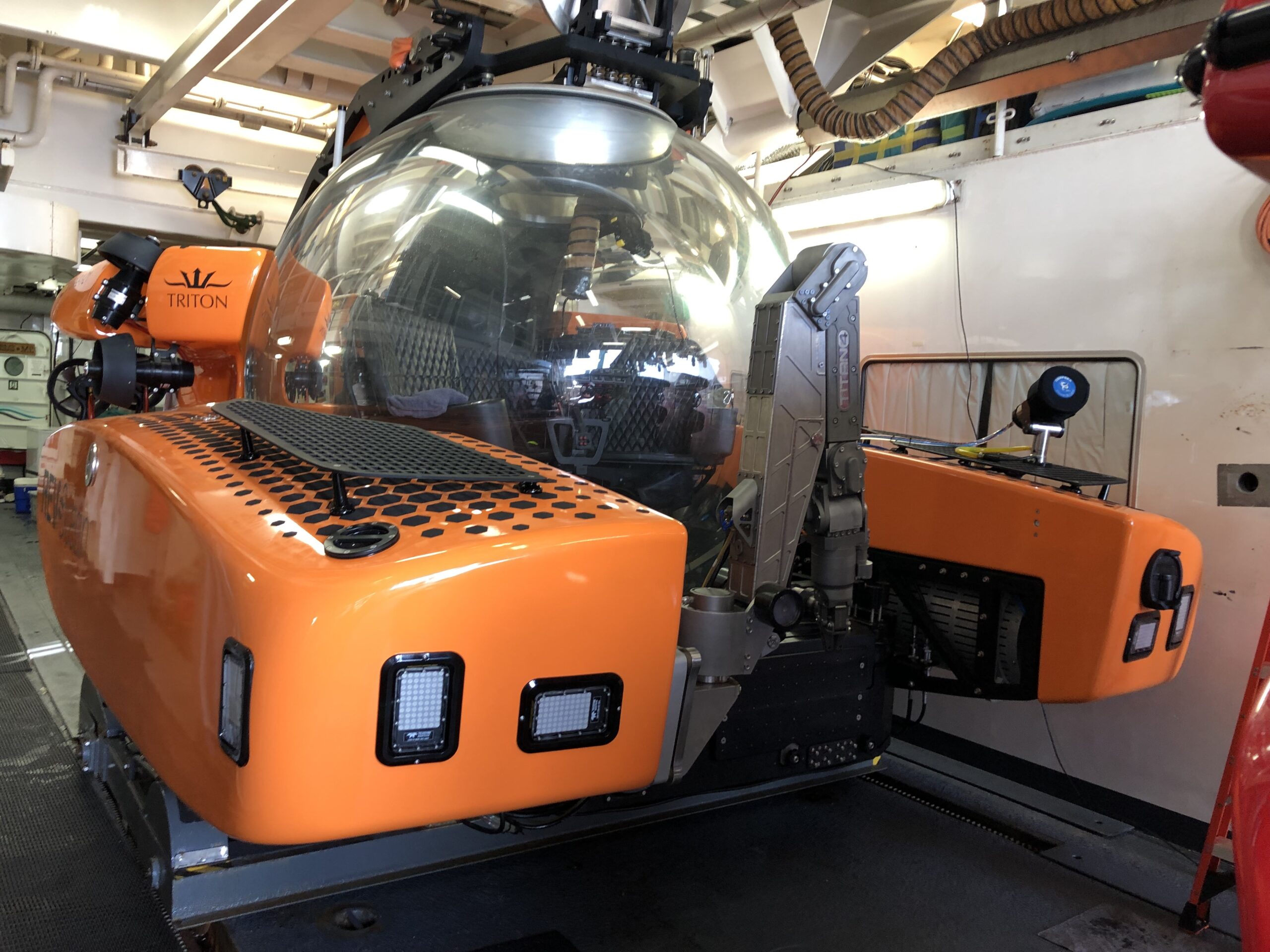
The advent of superyachts and adventure cruising has spurred the development of a new generation of small submersibles mostly with acrylic spheres or hemispheres if the vehicle has a tubular hull. These submersibles have been adapted for science and are increasingly being built with science capabilities as yacht owners want their assets to be used for science as a philanthropic activity. The deepest diving acrylic submersible to date is the Triton 7K3 operated by REV Ocean, which is equipped with scientific sampling equipment (Fig. 5). They have particularly been used for biological surveys in the mesophotic, rariphotic and upper bathyal zones for both surveys of fish and benthic communities (e.g. Stefanoudis et al., 2019a, 2019b; Fig. 5).
The first submersible capable of repeated diving to the deepest parts of the ocean, the Limiting Factor, was completed in 2018 by Triton funded by the philanthropist Victor Vescovo (Jamieson et al., 2019; Young, 2020). This submersible has a sphere constructed from titanium but the exostructure and faring are designed for rapid descent and ascent, so the submersible has a different shape to other currently constructed submersibles with a narrow cross section and greater height (see photos in Jamieson et al., 2019). It has enabled human exploration of the deepest parts of the ocean.
3.4 Remotely Operated Vehicles
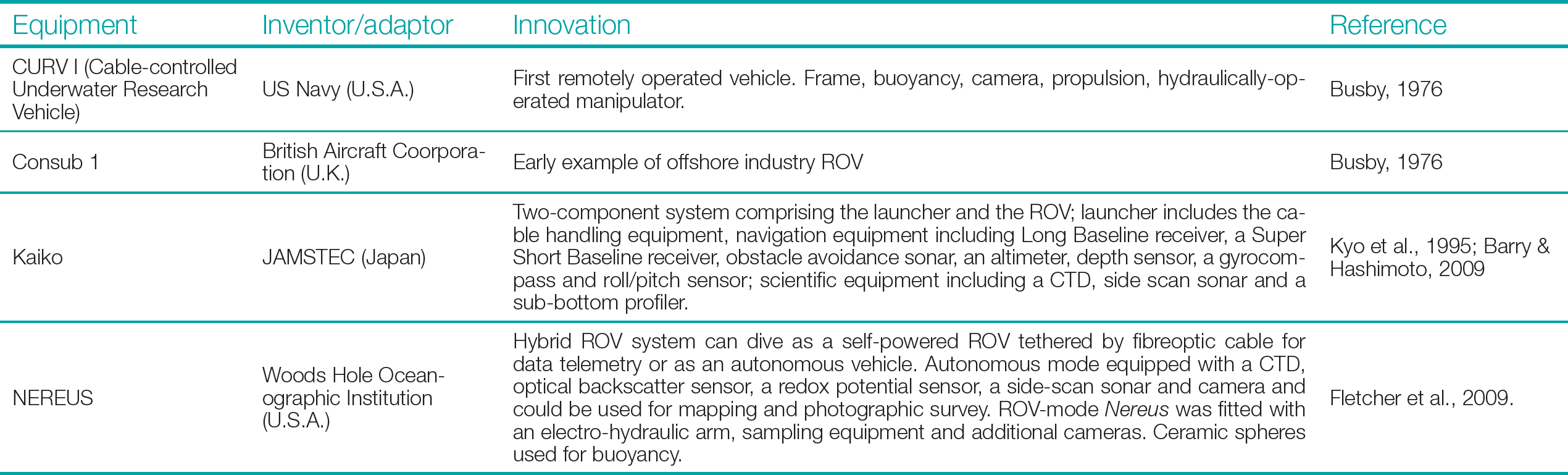
Remotely Operated Vehicles (ROVs) are self-propelled platforms which are tethered by cable to a surface craft from which they are powered and controlled and through which they feed data (Busby, 1976). ROVs were developed in the 1960s because of the need to selectively sample and study the seafloor, to recover lost military assets and to visually inspect, build, maintain and monitor underwater facilities (Busby, 1976). The US Naval Underwater Warfare Centre, Pasadena, California, developed the CURV I (Cable-controlled Underwater Research Vehicle) to retrieve torpedoes from depths of more than 305 m and it showed many of the basic features found in ROVs today (Table 7; Busby, 1976). It was later used to recover a lost hydrogen bomb from off the coast of Spain (found by Alvin) and CURV III, a later version of the vehicle was used to rescue the Pisces III and its crew from off the coast of Cork in 1973 (Talkington, 1977; Capocci et al., 2017). Oil and gas discoveries in the North Sea in the 1970s led to rapid development of ROVs for commercial operations which expanded in the 1980s (Busby, 1976; Capocci et al., 2017). By the 2000s the oil and gas industry were operating over 200 workclass ROVs capable of diving to 1,000 m depth or more whilst about 20 such vehicles were available for scientists (Jones, 2009).
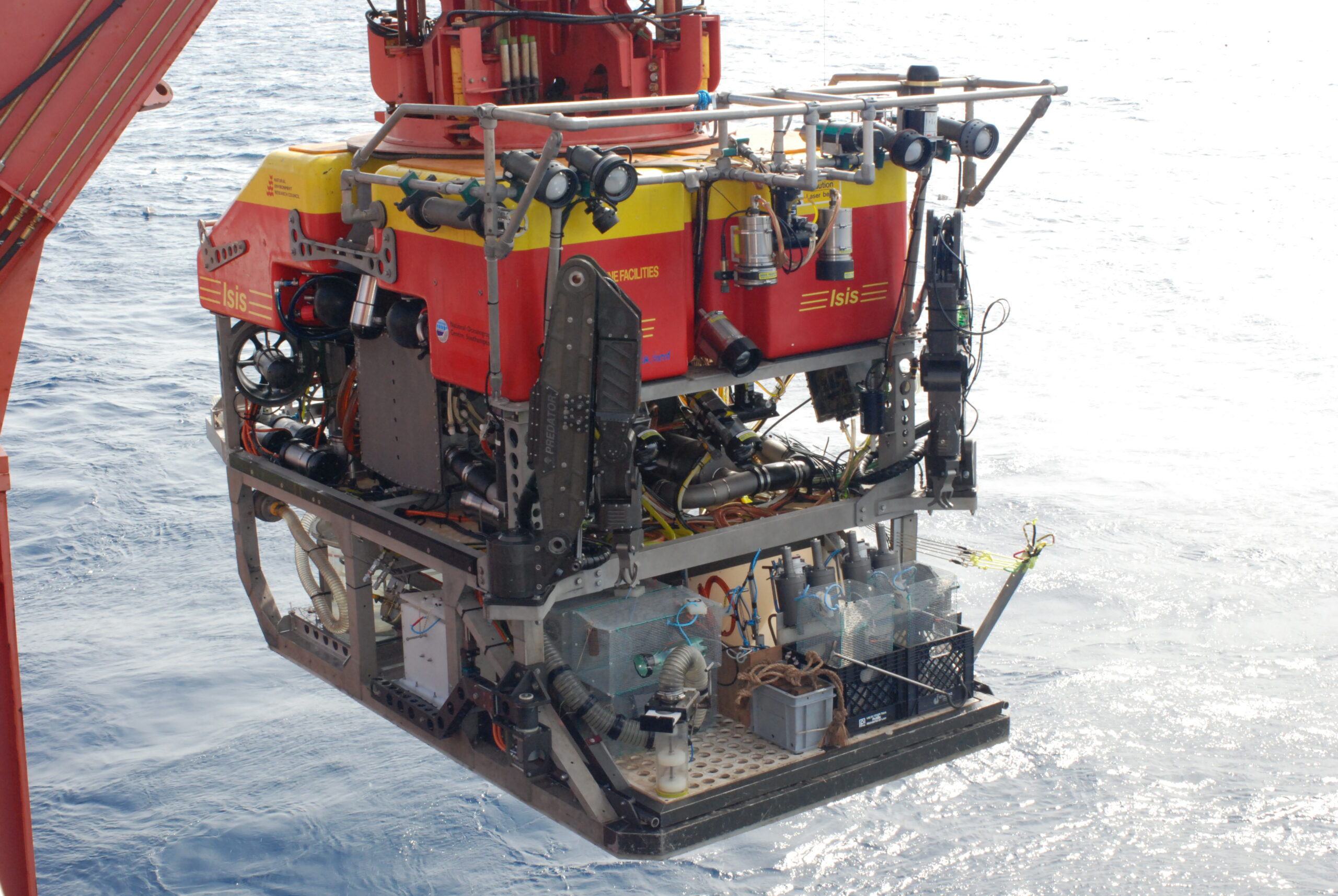
ROVs comprise a metal frame, usually aluminium or stainless steel, to mount equipment and provide support and protection to the vehicle (Capocci et al., 2017; Fig. 6). Smaller ROVs may employ plastic frames (e.g. high density polyethylene or polypropylene; Capocci et al., 2017). Buoyancy is attached to the frame which may be a dynamic system (e.g. buoyancy tanks) or buoyancy blocks with a lower density than seawater. For shallower water ROVs these blocks can be formed of polymer foam (e.g. polyurethane, polyisocyanurate or polyvinyl chloride) or for deep-water ROVs syntactic foam is used, a composite material formed with hollow glass microspheres in epoxy resin (Capocci et al., 2017; Fig. 6). The Nereus ROV developed by Woods Hole Oceanographic Institute used ceramic spheres to provide buoyancy (Capocci et al., 2017). Power distribution and control equipment are held in metal pressure bottles and ROVs may be equipped with electric or hydraulic manipulators. Propulsion is provided by an array of electric thrusters designed to allow multidirectional movement (Capocci et al., 2017). Navigation is achieved using a combination of depth sensors, altimeter (echosounder), fluxgate compass, Inertial Navigation System integrated with a Doppler Velocity Log and USBL systems (Capocci et al., 2017; Petillot et al., 2019). Ideally areas where ROVs (and submersibles) are used should be mapped prior to dives to assist in mission planning as well as real time tracking. Scientific equipment including cameras, lighting, sample containers, corers and suction guns tend to be mounted on the front of the vehicle, although CTDs, water sampling bottles and multibeam sonar can be positioned underneath or on the rear (Fig. 6). Larger ROVs may be operated with a Launch and Recovery System (LARS) and a Tether Management System (TMS; Fig. 6).
Two ROVs that are worth special mention are Kaiko, developed by JAMSTEC and the Nereus developed by WHOI (Table 7). Kaiko achieved dives to the bottom of the Challenger Deep in the Mariana Trench to a depth of 10,911 m (Kyo et al., 1995). Nereus was designed as a Hybrid ROV system whereby it could dive as a self-powered ROV tethered by fibreoptic cable for data telemetry or as an autonomous platform (Fletcher et al., 2009). The vehicle was designed to overcome the limitations of use of cables beyond 7,000 m depth (Fletcher et al., 2009). Nereus was lost to a catastrophic implosion in 2014 whilst undertaking a 9,900 m dive in the Kermadec Trench.
ROVs have been used to investigate both deep benthic and pelagic ecosystems globally. Benthic ecosystems have included seamounts (e.g. Pratt et al., 2019; Auscavitch et al., 2020), cold-water coral reefs (e.g. Lim et al., 2018), chemosynthetic environments, including deep-sea hydrothermal vents (e.g. Rogers et al., 2012) and seeps (e.g. Ondréas et al., 2005), abyssal plains (e.g. Vanreusel et al., 2016) and trenches (e.g. Nunally et al., 2016). Pioneering work on pelagic ecosystems using ROVs has been undertaken particularly by Monterey Bay Aquarium Research Institute (MBARI; Robison et al., 2017).

3.5 Autonomous Underwater Vehicles
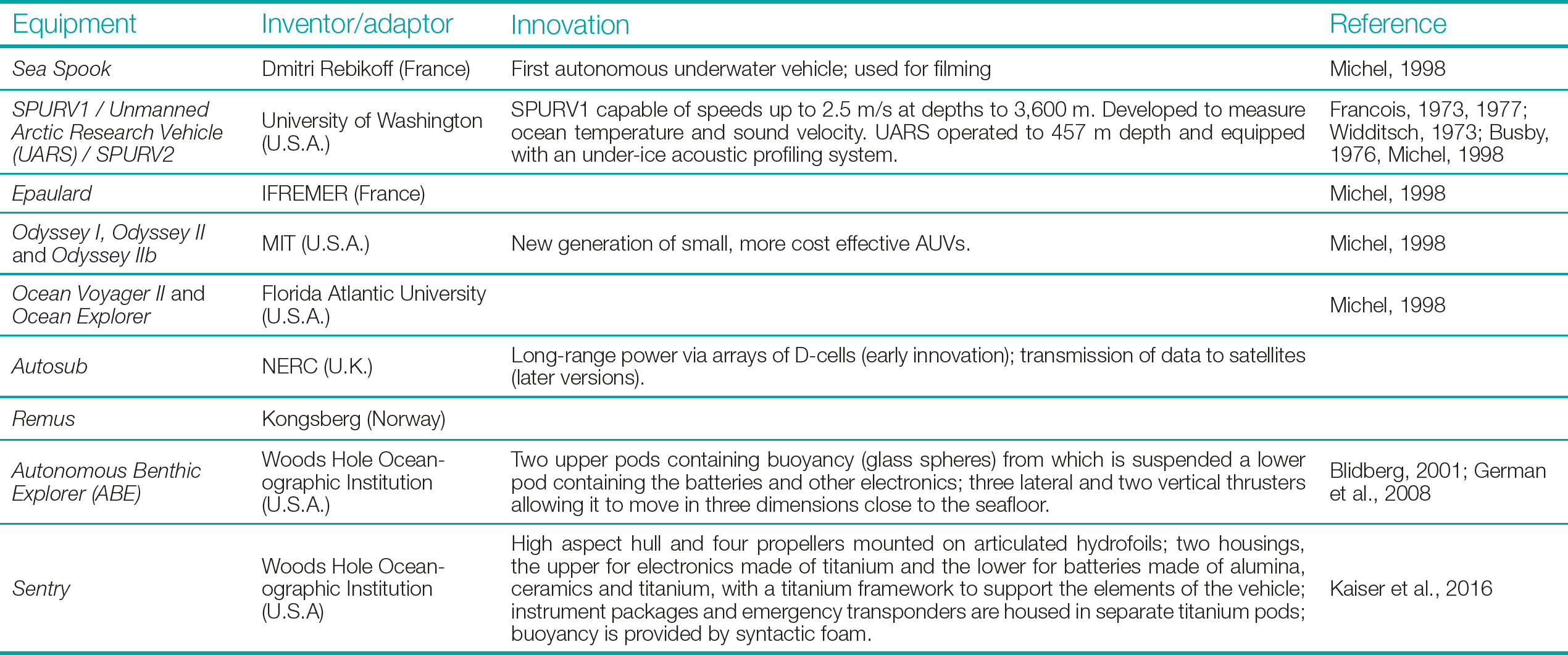
Autonomous Underwater Vehicles (AUVs) are unmanned and untethered underwater vehicles driven through the water by a propulsion system, controlled and piloted by onboard computers and are manoeuvrable in three dimensions (von Alt, 2003). The first AUV, Sea Spook, was developed by the pioneering underwater photographer and film maker, Dmitri Rebikoff in 1960 (Michel, 1998). This was followed by the University of Washington’s (Seattle) Self-Propelled Underwater Research Vehicle (SPURV 1) in 1963 and the Unmanned Arctic Research Vehicle (UARS) in 1972, and SPURV 2 in 1973 (Francois, 1973, 1977; Widditsch, 1973; Busby, 1976, Michel, 1998).
Development of AUVs continued through the 1970s and early 1980s spurred on by military funding because of the perceived importance of AUVs as stealth reconnaissance platforms (Michel, 1998). By 1984 there were 17 AUVs under development in different countries but only the SPURV systems and the French Epaulard, operated by IFREMER could be considered as operational (Michel & Wernli, 1998; Table 8). Epaulard was built in 1981 and had a maximum depth rating of 6,000 m and within five years had undertaken more than 800 km of underwater survey (Michel, 1988). Many of the AUVs developed during the 1980s and early 1990s were either military or designed as test-bed platforms and were perceived as high-tech and high risk (Michel & Wernli, 1998). Many of these AUVs were also expensive which spurred the development of low cost, smaller AUVs at academic institutions such as MIT (Odyssey I, Odyssey II and Odyssey IIb) and Florida Atlantic University (e.g. Ocean Voyager II and Ocean Explorer; Michel, 1998). These small, more cost-effective AUVs paved the way for evolution of this technology for a wide range of industrial, military and scientific applications. This was further promoted by the adoption of this technology by the oil and gas industry (Michel, 1998).
Most AUVs are torpedo-shaped (e.g. Kongsberg REMUS and General Dynamics Blue Fin; Sahoo et al., 2019) in order to reduce drag. However, other shapes have been adopted including platforms with a more rectangular cross-section to egg-shaped or even spherical AUVs for more manoeuvrability and some with hydrofoils (Sahoo et al., 2019). Biomimetic AUVs have also been designed which are inspired by nature with a fish-like or snake-like shape (Sahoo et al., 2019). Some AUVs have adopted more complex shapes, especially those capable of hovering including WHOI’s Autonomous Benthic Explorer (ABE; German et al., 2008; Table 8) and Sentry, designed to operate close to the seafloor at up to 6,000 m depth (Kaiser et al., 2016).
Propulsion for AUVs is provided by propellers or thrusters with rudders and fins for directional control (Sahoo et al., 2019). Power in early AUVs was provided by lead-acid batteries but silver zinc batteries have also been deployed although these are expensive (Blidberg, 2001). The ABE system uses lithium-ion batteries whilst NiMH batteries are used in some newer AUVs (Blidberg, 2001). Aluminium – oxygen semi cells have also been employed extending the range of the DARPA UUV (Blidberg, 2001). Navigation is usually achieved through use of arrays of acoustic beacons on the seafloor (Long Base Line beacons) or by a combination of Ultra Short Base Line acoustic communication, GPS positioning, and inertial navigation (Wynn et al., 2014). AUVs are programmed to undertake specific missions but the advent of acoustic communications and subsea docking stations are providing a new order of flexibility and complexity in AUV deployment. Sensor packages for AUVs vary greatly and they are used for a wide range of scientific missions including seafloor mapping, physical oceanographic measurements, chemical and turbidity measurements, biological acoustics and seafloor photography. Some AUVs are modular in design so specific sensor modules can be changed to suit a specific mission (e.g. Teledyne Gavia system).
AUVs have been used for a wide range of scientific missions including detection and location of deep-sea hydrothermal vents and fluid escape features, habitat mapping, mapping of seafloor morphology, under ice mapping of the seafloor and ice profiling, fisheries research and physical oceanographic measurements (e.g. Manly, 2004; German et al., 2008; McPhaill et al., 2009; Morris et al., 2014; Wynn et al., 2014; Barker et al., 2020).
3.6 Landers
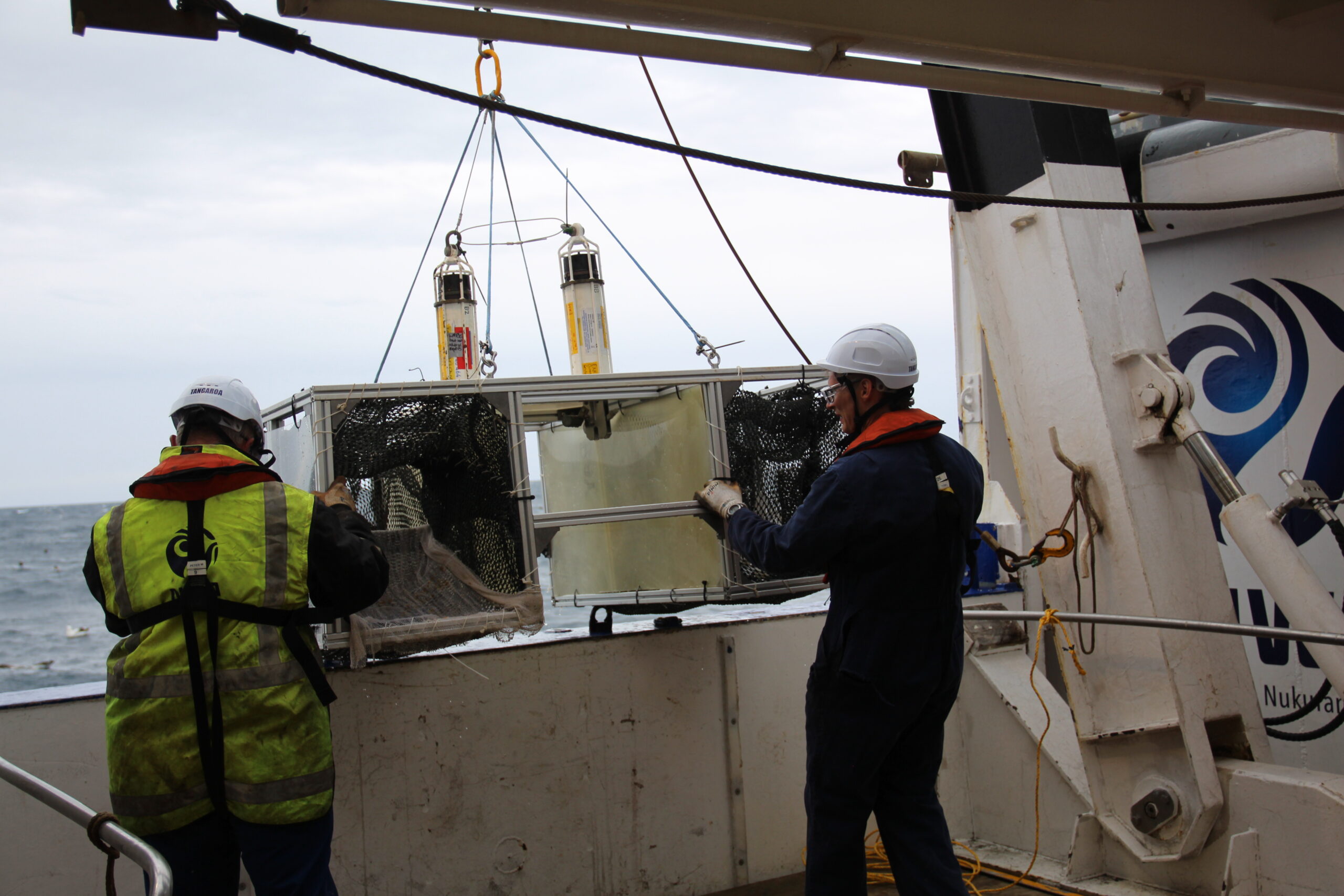
Landers are autonomous, free-fall platforms used to undertake physical oceanographic or biogeochemical observations, experiments on the seafloor or to photograph and/or capture deep-sea organisms (e.g. Baited Remote Underwater Video or BRUVs; Tengberg et al., 1995; Fig. 7). The platforms generally comprise a rigid framework on which is mounted instrumentation, batteries, buoyancy, ballast weights and a ballast release mechanism (Tengberg et al., 1995). Release is usually achieved by an acoustic signal from a surface vessel or by a timed-release device (Jamieson, 2016). Landers have been deployed for hours to up to a year or more (Jamieson, 2016). They have the advantage that once deployed research vessels are free to undertake other activities (Tengberg et al 1995).
The first landers were developed in the late 1960s / early 1970s for photographing the scavenging fauna of the deep-sea floor (e.g. Isaacs, 1969; Heezen & Hollister, 1971; Isaacs & Scwartlose, 1975) and for biogeochemical measurements. Early examples of baited landers include the Monster Camera (Isaacs, 1969; Heezen & Hollister, 1971; Isaacs & Scwartlose, 1975) and the baited version of the U.K.’s Bathysnap system known as Bathysnack (Thurston et al., 1995). Early examples of biogeochemical landers include the Free Vehicle Respirometer (FVR) developed to undertake measurements of oxygen consumption in the deep sea (Smith & Clifford, 1976; Smith, 1978) and the free vehicle developed for the Manganese Nodule Programme (MANOP) during the International Decade for Ocean Exploration (IDOE; Weiss et al., 1977). The latter could take water samples for insitu experiments, measuring oxygen and pH and also retrieving box core samples (Weiss et al., 1977). Further development of landers mainly for biogeochemical analysis were developed through the 1980s and 1990s (see Tengberg et al., 1995).
The main use of landers for biodiversity studies has been for the study of scavenger communities attracted by bait as well as colonisers of organic materials such as wood and whale bone (Bailey et al., 2007; Jamieson, 2016; Figs. 7a and 7b). The design of baited landers is reviewed in Bailey (2007) and Jamieson (2016). These can comprise some or all of the following components: bait, imaging systems, lighting, baited traps, ingestible acoustic devices (swallowed by scavengers feeding on bait), sensors (e.g. CTDs, ADCPs) and the lander delivery system (Bailey et al., 2007; Jamieson, 2016). Baits tend to include oily fish which may be macerated or liquidised, squid, cat food, sometimes thickened with breadcrumbs or sawdust and are held in a perforated receptacle or mesh bag (Jamieson, 2016). Entire carcasses have been used to simulate food falls ranging in size from fish to dolphins, porpoises and sharks (Jamieson, 2016). The latter can form temporary habitats as consumption of the entire carcass including bones can take time. Alternatively, artificial baits have been used comprising natural chemical attractants found in squid and fish (Jamieson, 2016). Jellyfish have also been used in baited landers to improve understanding of the role of these animals in carbon transport from the water column to the seafloor (e.g. Sweetman et al., 2014).
Landers have been particularly important in understanding the biodiversity and ecology of the hadal zone (ocean trenches as well as deep fracture zones, troughs and basins; Weston et al., 2021) because there are few other deep-submergence assets capable of deployment to depths beyond 6,000 m. Deployment of hadal lander systems have enabled the sampling of large numbers of scavenging amphipods from the families Lysianassoidea and Allicelloidea which can be dominant components of communities below 8,000 m depth. This has enabled the use of these organisms as model taxa to study the ecological dynamics of hadal fauna (e.g. patterns of genetic connectivity; Weston et al., 2021; Weston & Jamieson, 2022). These studies have confirmed an abrupt change in biological communities from an abyssal fauna to hadal at depths 6,000 m and 7,000 m (Weston et al., 2021). They have also revealed the Liparidae (snail fishes) as the deepest living fish family with the deepest record currently at 8,336 m depth in the Izu-Ogasawara Trench in the northwest Pacific Ocean (Jamieson et al., 2023).

3.7 Acoustics
3.7.1 Habitat mapping
Prior to the 20th century the depth of the ocean was measured using the lead and line system in which a plumb attached to a cable is allowed to sink to the seafloor (Menandro & Bastos, 2020). Echosounders were developed as a response to the Titanic disaster of 1912 for the detection of icebergs (Hersey & Backus, 1962). Reorientation of the directional transducer vertically downwards enabled emitting regular pulses of sound so that between pulses they could serve as the receiver of the bottom echo (Vigoureux & Hersey, 1962). A graphic recorder for collecting echosounder data was introduced by Marti (1922) and in 1925–1927 the German Meteor Expedition surveyed the South Atlantic Ocean using echo sounding equipment identifying the continuous nature of the Mid-Atlantic Ridge (Menandro & Bastos, 2020).
Multibeam bathymetry systems were developed in the 1960s by the military for seafloor mapping. These systems emit a fan-shaped wave of acoustic pulses (>100 sound beams and in some cases >200; Brown & Blondel, 2009; Harris and Baker, 2012) which are reflected from across a swath of the seafloor and picked up by the transceiver. They revolutionised seafloor mapping by enabling a broad track of the seafloor to be mapped under a vessel. The first civilian systems were installed on the French research vessel Jean Charcot and employed on an expedition in 1977. Multibeam sonar when combined with Geographic Positioning System (GPS data) produces high resolution geopositioned contour maps of the seafloor (Harris & Baker, 2012). The properties of the backscatter data from echo sounders (e.g. the strength of the return echo) are dependent on seafloor hardness, texture and roughness (de Moustier, 1986). Different frequencies of echosounders are used to map different water depths with higher frequencies used for shallower water mapping (Harris & Baker, 2012). Sidescan-sonar only collects acoustic backscatter data but because it is usually deployed as a tow-fish behind a ship it is not easy to georeference the map produced and has significant disadvantages for habitat mapping (Harris and Baker, 2012). Approaches to analysis of backscatter data are discussed in Brown and Blondel (2009). This method is now improving with the advent of multifrequency acoustic backscatter data (e.g. Brown et al., 2019).
Both seafloor topography and backscatter data give important information on benthic habitat, the first for identifying important topographic features (e.g. seamounts, ridges, canyons) and the second on the texture of the seafloor (e.g. basalt, sand, coral). Both provide information on physical habitats, the ecological or environmental areas that are inhabited by species (Harris and Baker, 2012). The same types of habitats are consistently associated with biological communities or assemblages of species which occur together (Harris and Baker, 2012). Currently, it is still the case that our ability to map the physical structure of the seabed greatly exceeds our ability to observe what species live in these habitats (Harris and Baker, 2012). Biological observations using video survey or other methods on a small subset of the seafloor for which acoustic data has generated topographic maps and backscatter data can be used to model community distribution at much larger geographic scales. The mapping of biophysical variables of the seafloor which have a quantifiable correspondence to the occurrence of benthic species and communities is referred to as surrogacy (Harris, 2012). Processing methods for multibeam data from the water column have also now been used to identify habitats such as gas plumes from hydrocarbon seeps (e.g. Schneider von Deimling et al., 2007; Wilson et al., 2015).
Habitat classification and mapping is an important area of biodiversity research with many applied and scientific applications. The combination of further refinements in acoustic mapping technologies (e.g. multifrequency multibeam bathymetry; synthetic aperture sonar) and navigation together with application of new methods such as deep machine learning to habitat classification are increasing the resolution and accuracy of acoustic mapping of habitat.
3.7.2 Biological acoustics
The first use of active acoustics to study pelagic ecology occurred in the 1920s and 1930s with Kimura (1929) being the first scientist to record echoes from a fish (Benoit-Bird & Lawson, 2016). In the 1930s the pioneering British fisherman Captain Ronald Balls installed an echosounder in his herring drifter Violet and Rose and was able to set his nets on mid-water echoes correctly attributed to herring shoals (Balls, 1948, 1951; Hersey & Backus, 1962). Early work on the use of echosounders was also undertaken in Norway with the plotting of echoes in a time-depth plot (Sund, 1935).
The principle behind biological acoustics is that sound pulses are produced and their echoes from living organisms in the water column are received by a transducer mounted in the hull of a vessel, autonomous- or towed platform (Jennings et al., 2001; Benoit-Bird & Lawson, 2016). When a sound pulse meets an object with a density different from seawater sound waves are scattered in all directions (Jennings et al., 2001). Early sounders recorded single echoes, but development of the echo-integrator allowed the strength of many echo returns to be summed over depth and distance (Jennings et al., 2001). The advent of multifrequency echosounders, multiple echosounders emitting sound pulses at different frequencies or a single echosounder with multiple processing units (Korneliussen, 2018) has been critical in the ability of acoustics to discriminate among species and taxa (Benoit-Bird & Waluk, 2020). This has been further developed with the use of broadband echosounders that transmit and receive a frequency-modulated signal from a single transducer to allow acoustic backscattering to be measured continuously over a range of frequencies (Benoit-Bird & Waluk, 2020).
Different types of organisms have different sound reflection properties, for example, those with gas-filled cavities such as siphonophores or fish with swim bladders have a resonant sound scattering frequency that depends on the depth and size of the cavity (Benoit-Bird & Lawson, 2016; Benoit-Bird & Waluk, 2020; Korneliussen, 2018). The aim of acoustic target classification is to categorise sound scatter into groups which then hopefully correspond to different species or groups of organisms for which abundance and biomass can then be estimated (Korneliussen, 2018). Approaches to classification of echograms is based on model-based approaches or on empirical approaches (use of previously-collected data on sound scattering properties of monospecific aggregations of a species; Korneliussen, 2018). If species aggregations are known to have specific sizes or shapes these can be used to identify species from the dimensions and shapes of echograms (echo envelope; Korneliussen, 2018). Multivariate statistical approaches have been used to classify species on the basis of echo envelopes, other information on aggregation shape and size and also physical environmental data (Korneliussen, 2018). Increasingly, Artificial Neural Networks are being applied to the identification of species (e.g. Brautaset et al., 2020; Korneliussen, 2018).
3.8 Navigation
Ocean mapping and the operation of deep submergence technologies are not possible without accurate navigation. It is important to understand exactly where depth and backscatter are measured on the seafloor or where an underwater platform is in respect to the surrounding environment. Ship’s navigation has transformed over the last 50 years from the use of the sextant in the 1960s with accuracy of ~1 nautical mile, to the Global Positioning System (GPS) from the early 1990s with an accuracy of up to 100 m continuously to Real Time Kinematic GPS with an accuracy up to 5 cm (Mayer, 2006). The precise angles at which multibeam sonar signals leave a vessel and are received by its transducers are also critical to mapping. Therefore, technology has also developed to precisely monitor and correct soundings for vessel motion (Mayer, 2006). Accurate estimation of the positioning of an acoustic reflection from the seafloor requires the estimation of the sound velocity profile through the water column from measurement of temperature and salinity with depth using a Sound Velocity Profiler (SVP; Mayer, 2006).
Deployment of deep-sea sampling equipment and deep—submergence technologies that are tethered to a vessel or which need to be carefully deployed and recovered demands a stable ship’s position and heading. Such vessel stability is achieved through Dynamic Positioning Systems (DP or DPS) a technology that has also undergone a transformational advance since the late 1960s under the driving force of the offshore oil and gas industry (Mehrzadi et al., 2020). DP controls a vessel heading and position by using thrusters that are continuously dynamic to counter environmental forces induced by waves, winds and currents (Mehrzadi et al., 2020). Modern research vessels are often equipped with DP systems to enable the use of tethered equipment such as towed cameras and ROVs as well as launch and recovery of submersibles, AUVs or other deep-submergence equipment.
Georeferenced location of scientific observations from a submerged platform or sensors enables multiple datasets to be co-registered across multiple dives or deployments from a single system or across multiple systems (Barker et al., 2020). Georeferenced data can then be placed into context with physical and biogeochemical environmental data, bathymetric and other geophysical maps (Barker et al., 2020). It is also important to know the position of deep-submergence equipment to target specific localities, environmental features (e.g. hydrothermal vents) or to avoid hazards. Because GPS signals cannot be received underwater, submerged platforms deploy a range of technologies for underwater navigation including (Kinsey et al., 2006; Barker et al., 2020):
- Depth sensors (strain gauges or quartz crystal)
- Magnetic heading sensors
- Roll and pitch sensors (e.g. pendulum or fluid tilt sensors, accelerometer pitch sensors)
- Angular rate sensors (e.g. Fibre Optic Gyroscopes or Ring Laser Gyroscopes)
- Long Baseline Navigation (LBL; platform determines position by triangulation in a network of acoustic transponders)
- Ultra Short Baseline Navigation (USBL; ship’s location is telemetered to the platform continuously)
- Doppler sonar (measures bottom velocity using acoustics)
- Inertial Measurement Unit (IMU; employs Doppler Velocity Logs [DVL] and GPS or acoustic navigation systems to estimate position)
Multiple such systems may be used on a platform such as an ROV.
4 100 years of discovery
4.1 Continental drift and plate tectonics
In 1912, Alfred Wegener proposed the theory of continental drift where he hypothesised that the continents had drifted apart (Wegner, 1912a, 1912b). He was, however, unable to provide robust evidence for the processes that had led to this drift of continents and the theory remained controversial for years. Between 1920 and 1930, the geologist Arthur Holmes published work proposing that plate junctions under the ocean and convective cells and radioactive heat in the Earth’s mantle might drive the process of continental drift (Holmes, 1928, 1929). The discovery of the continuous nature of the mid-ocean ridges by Ewing’s team in the 1950s and 1960s (e.g. Heezen et al., 1959) and the development of the theory of seafloor spreading by Hess (1960, 1962) and Dietz (1961) proposed that new seafloor formed at the ridge was being carried away from the point of formation. Evidence of alternating stripes of magnetic orientation in basalt that were symmetrical around the mid-ocean ridges could only be explained by the formation of seafloor at the ridges and then it being drawn away (Vine & Matthews, 1963; Conveyer Belt Theory). These geological investigations, supported by Marie Tharpe’s cartographic works, led to the acceptance of Wegener’s hypothesis on continental drift (Le Pichon, 1968). It was not until 1968 that American geophysicist Jack Oliver with colleagues Bryan Isacks & Lynn R. Sykes provided the first seismologic evidence of plate tectonics that explained the process for continental drift (Isacks et al., 1968).
Recent studies suggest that plate tectonics have had a major role in the distribution of life in the ocean including the occurrence of biodiversity hotspots and endemism (e.g. Leprieur et al., 2016; Zaffos et al., 2017; Pellissier et al., 2018). It also explains phenomena such as the regional endemism of the Antarctic biota which has been isolated as a result of continental drift and the decline of environmental temperatures over millions of years (Rogers, 2007, 2012). In the deep sea, plate tectonics have also determined large-scale patterns of diversity in the hydrothermal vent fauna (e.g. Tunnicliffe et al., 1996).
4.2 Establishment of thermohaline circulation
In 1987 Wallace Smith Broecker published the paper that established the concept of the ocean conveyor belt, through which large-scale ocean circulation is explained by global density and temperature gradients – the thermohaline circulation. Surface currents driven by wind move water masses poleward in the Atlantic. As these water masses, enriched in salt through evaporation move northwards, they cool down, resulting in the sinking of dense water at high latitudes that form the North Atlantic Deep Water. This cold-water flows southward and into the Southern Ocean, circulating around it and also moving into the Indian and Pacific Oceans before it upwells to form warm surface currents. In the Southern Ocean, the strong cooling of the water caused by Antarctic winds and the formation of sea ice decrease temperature and increase salinity respectively, resulting in the formation of the Antarctic Bottom Water, joining the circumpolar circulation. Broecker (1987, 1997) also described the mechanism which leads to abrupt changes in ocean circulation and the climate over time, the freshening of seawater in the North Atlantic disrupting the thermohaline circulation and leading to its breakdown.
The thermohaline circulation is critical for the generation of cold, oxygenated water supporting the high biodiversity of deep-sea ecosystems. During climate warming events the disruption of the thermohaline circulation has caused episodes of hypoxia and anoxia in deep waters. This flip-flop from thermohaline oxygenated conditions to halothermal hypoxic or anoxic conditions in the global deep sea is thought to have played a major role in shaping the past and current distribution of many deep-sea taxa thus contributing to past and present distributions of deep-sea biodiversity (e.g. Rogers, 2000; Strugnall et al., 2008; Thuy, 2013; Košt’ák et al., 2021; Horowitz et al., 2023).
4.3 Discovery of high deep-sea biodiversity
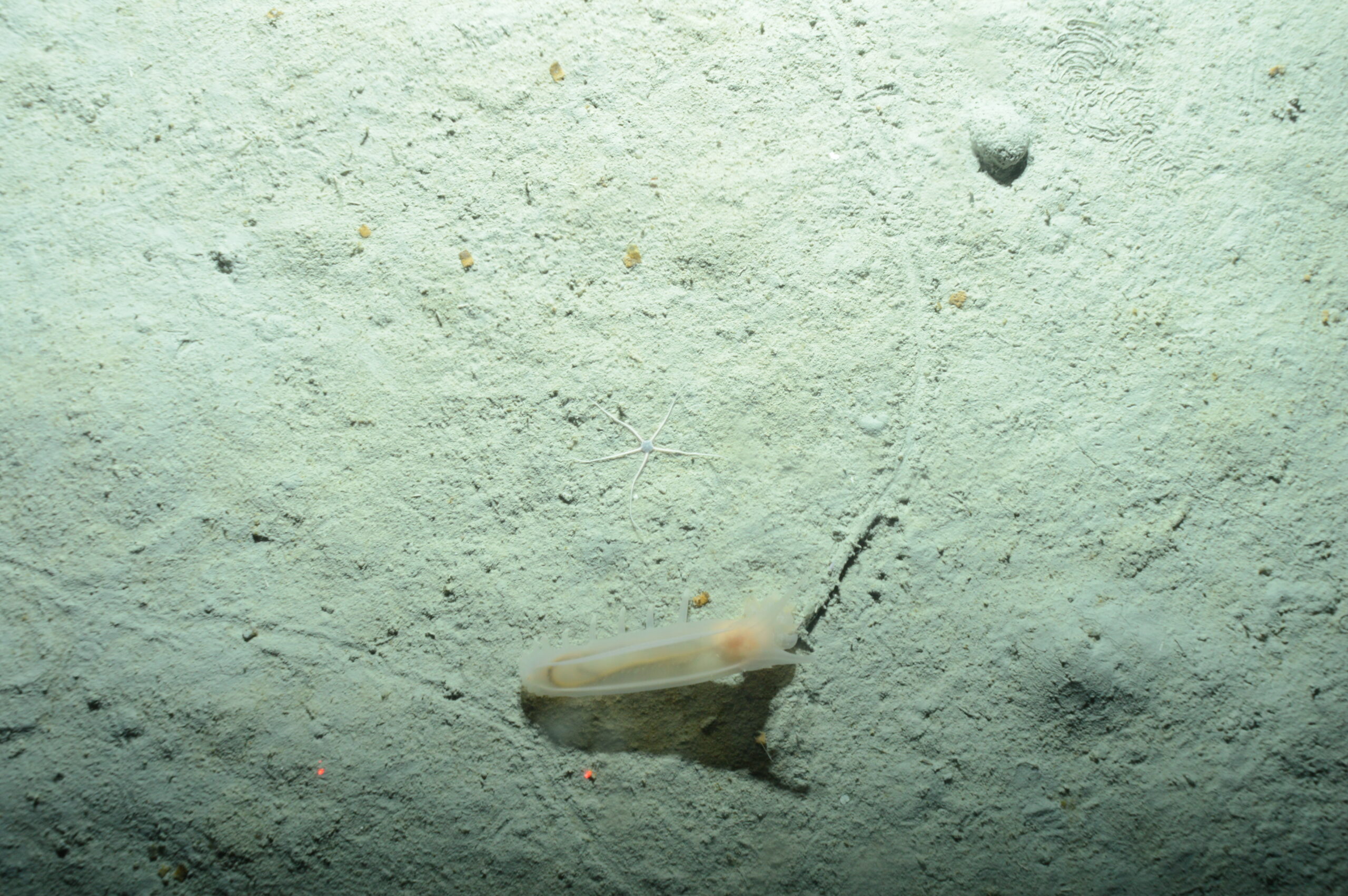
In the 1960s, deep-sea biology shifted from descriptive to more quantitative ecological, evolutionary and experimental approaches. Sampling along a transect in the Northwest Atlantic (Gay-Head to Bermuda) revealed an astonishing density of animals living in the deep sea, 6,000–23,000 animals/m2 on the upper continental slope dropping to 150–270 animals/m2 on the abyssal plain (Sanders et al., 1965). Polychaetes were the most abundant and diverse group, followed by peracarid crustaceans (mainly amphipods) and bivalve molluscs (Sanders et al., 1965). This provided evidence that, contrary to previous doctrine, the deep sea supported one of the highest levels of biodiversity on Earth, mainly comprising meio- and macrofauna living in and on the sediments (Hessler & Sanders, 1967; Grassle & Maciolek, 1992; Fig. 8a). Early findings also showed that in the abyssal soft sediments (Fig. 8a), there is an even distribution of species abundance, with the most abundant species not exceeding 20 % of the total and many species being rare taxa or occurring as singletons (e.g. Grassle & Maciolek, 1992). Later studies described a parabolic distribution of diversity with depth (Rex, 1981, 1983), with the biodiversity peak often found at bathyal depths (Rex, 1981; Maciolek et al., 1987), although the depth at which this peak occurs varies with region and taxon considered (reviewed in Rex & Etter, 2010). This is now thought to result from declining food supplies preventing competitive dominance at intermediate depths, along with a combination of other environmental factors promoting biodiversity (Rex & Etter, 2010).
In shallow waters analyses of species occurrence indicates that for many groups of species (but not all), and overall, there is a latitudinal gradient in biodiversity with highest levels occurring at low latitudes and the lowest at the poles, especially in the northern hemisphere (Rogers et al., 2022). For most groups of deep-sea organisms there is insufficient knowledge to elucidate such patterns with the exception to date of the Ophiuroidea (brittlestars). For this group of echinoderms, it has been demonstrated that peak diversity in the deep sea occurs at mid-latitudes (Woolley et al., 2016). This is likely a result of the higher input of particulate organic matter, the predominant food supply for the deep sea at mid-latitudes (Woolley et al., 2016). Time lapse photography as well as other forms of repetitive or long-term sampling of deep-sea biodiversity has also demonstrated that communities vary interannually and over longer time periods (reviewed in Rogers, 2015). The dependency of the deep-sea fauna on the rain of organic material from the ocean surface means that these ecosystems are coupled. Annual and longer-term variation in both the quantity and quality of food, mainly phytodetritus (dead phytoplankton cells) as well as dead organisms and faecal pellets drives temporal changes in the abundance and diversity of seafloor communities (Rogers, 2015; Sweetman et al., 2017). This has profound consequences in considering the impacts of climate change which is causing large-scale changes in the patterns of ocean primary production and may in turn strongly influence deep-sea biodiversity (Rogers, 2015; Sweetman et al., 2017).
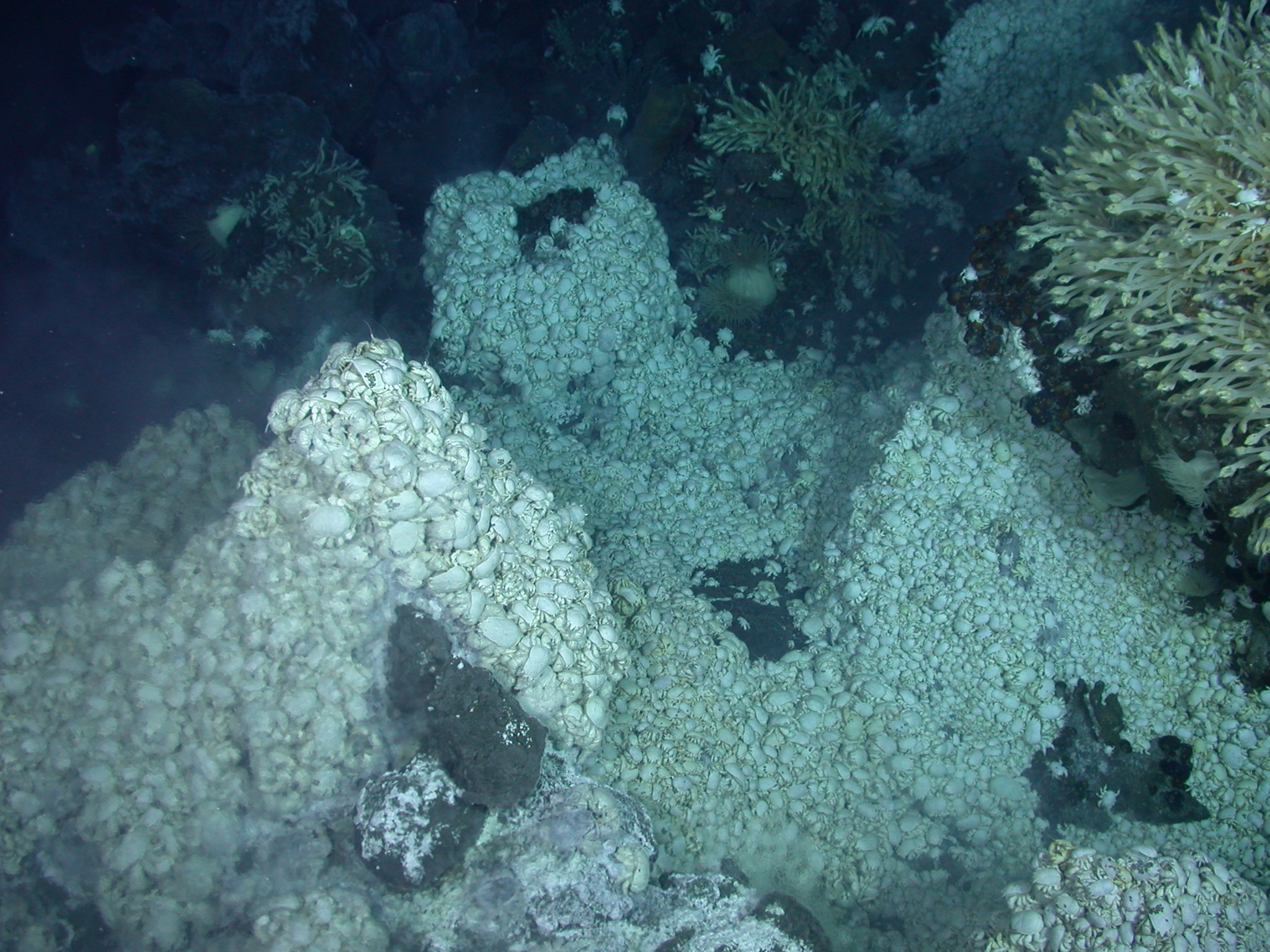
Increasing interest in exploiting deep-sea resources has driven studies on deep-sea biodiversity. On the continental margins exploration and exploitation of oil and gas deposits as well as deep-sea fisheries led to the rediscovery of cold-water coral reef ecosystems. Cold-water corals had been known from northern Europe since the eighteenth century (Roberts et al., 2009) and the extensive nature of cold-water coral habitats was described in the mid-twentieth century (e.g. Le Danois, 1948). However, it was the use of submersibles such as Alvin and the Pisces III that allowed direct observations of the habitats formed by corals such as Desmophyllum pertusum and Dendrophyllia profunda (Roberts et al., 2009; Fig. 8b). These habitats were found to support high diversities of associated species (e.g. Rogers, 1999; Roberts et al., 2009). The realisation that such habitats were impacted primarily by bottom trawl fisheries gave rise to the concept of Vulnerable Marine Ecosystems (VMEs; FAO, 2009). It has been recognised that many groups of sessile marine invertebrates can form habitats in the deep sea associated with high biodiversity of other species. These include coral gardens formed by Scleractinia, Octocorallia, Stylasterida and Antipatharia, and habitats formed by Demospongiae, Hexactinellida and xenophyophores (e.g. Buhl-Mortensen et al., 2010).
Development of deep-sea mining began in the 1960s but whilst deep-sea mineral resources were mapped and technology for recovery of polymetallic nodules developed in the 1970s and 1980s economic conditions were inimical to commercial mining (Glasby, 2000). Interest in deep-sea mining has reemerged driving studies focusing on the biodiversity of deep-sea ecosystems potentially impacted by mineral extraction. This has focused on abyssal ecosystems of the Clarion Clipperton Fracture Zone (CCFZ) in the equatorial eastern Pacific (e.g. Smith et al., 2021) but also on seamounts (e.g. Schlacher et al., 2014) and seabed massive sulphides (e.g. Boschen et al., 2016). Work on the CCFZ has confirmed the remarkable diversity of abyssal ecosystems with >5,500 species identified 92 % of which are undescribed and a predicted diversity of up to nearly 8,000 species (Rabone et al., 2023). They have also shown that communities vary across the CCFZ related to factors including topography, nodule density and particulate organic carbon concentration (Smith et al., 2021). Only a small proportion of the species found in the CCFZ seem to have wide geographic distributions whilst many have only been found at single sites and often are represented by a single specimen (singletons; Smith et al., 2021). This work and other studies, including metabarcoding analysis of the deep-sea water column and sediments point to large undocumented biodiversity in the deep sea, including at higher taxonomic levels (e.g. Cordier et al., 2022). Communities on cobalt crusts at seamounts and on seabed massive sulphides are also different to those that occur on the surrounding seafloor (e.g. Schlacher et al., 2014; Boschen et al., 2016). Deep-sea hydrothermal vent communities are characterised by having a high proportion of endemic species (e.g. Wolff, 2005). This is exemplified by the scaly foot snail, Chrysomallon squamiferum, which is found on just three vent sites in the Indian Ocean covering an estimated 0.02 km2 (Sigwart et al., 2019). Collectively these findings mean that management of the environmental impact of deep-sea mining is highly challenging.

4.4 The Structure of pelagic communities
Ekman (1935) summarised the findings of the expeditions of mid-19th and early 20th Centuries with respect to pelagic biodiversity. These expeditions, alongside the work of coastal marine research stations, founded our understanding of the biogeography of pelagic organisms. Findings included the existence of neritic (coastal) versus oceanic plankton communities, the occurrence of cosmopolitan and circumglobal distributions amongst some planktonic organisms and the association of species and communities with water masses of specific temperatures, generally divided latitudinally (e.g. polar, sub-tropical, tropical, Ekman, 1935). At this time a significant change in pelagic communities at a depth of 150–200 m was recognised dividing the shallower epipelagic zone from the deeper bathypelagic zone. For many groups of organisms limited sampling meant that depth zonation in the bathypelagic was obscure but it is notable that Dahl, as early as 1894 had identified three depth zones on the basis of copepod distribution, 0–200 m (epipelagic), 200–1,000 m (mesopelagic) and below 1,000 m (bathypelagic; Ekman, 1935). Studies in the second half of the 20th Century confirmed the differences between neritic and oceanic plankton communities (Haedrich & Judkins, 1979). The former lacked elements of the micronekton (e.g. small pelagic fish, decapod shrimps and squid) present in oceanic environments and meroplankton were more abundant inshore than offshore (Haedrich & Judkins, 1979). Neritic plankton and their communities tended to have a much narrower latitudinal distribution than oceanic species which could be defined by temperature. For oceanic species work on fish and invertebrates suggested that distribution was associated with temperature and salinity (density), in other words water mass (Haedrich & Judkins, 1979). However, work on mesopelagic fish demonstrated that water mass alone was insufficient to explain horizontal and vertical distribution and other factors such as seafloor topography, temperature alone, the edges of major current systems and fronts all had influence (Backus et al., 1970; Headrich & Judkins, 1979).
The advent of satellite remote sensing provided a different perspective on pelagic biogeography. Observations of sea-surface colour enabled the classification of ecological domains in the surface ocean based on seasonal and spatial patterns of phytoplankton production driven by turbulence, stratification and irradiance at the ocean surface (Yentsch & Garside, 1986; Platt, et al. 1991). This resulted in the classification of the surface ocean into biomes (polar, westerlies, trades and coastal) within which were defined multiple provinces (e.g. Longhurst, 1995, 1998). Recently, attempts to analyse both epipelagic and mesopelagic biogeography patterns have been undertaken using analysis of species distributions through cluster analyses and expert opinion (Sutton et al., 2017; Reygondeau et al., 2018; Reygondeau & Dunn, 2019). These approaches to defining epipelagic and deep-pelagic biogeography resemble the biogeochemical provinces of Longhurst (1995, 1998) but differ significantly in detail.
4.5 The deep scattering layer
During World War 2 sound propagation experiments undertaken by workers at the University of California’s Division of War Research identified a consistent layer of mid-water sound scattering (Eyring et al., 1948). This became known as the ‘deep-scattering layer’ (DSL) and early observations indicated that it shifted in depth diurnally from shallow depths at night to greater depths at day suggesting a biological origin (Johnson, 1948). The identity of the organisms reflecting sound energy remained elusive for many years because of difficulties in sampling deep-water pelagic ecosystems (Hersey & Backus, 1962). Early speculation was that the sound scatterers were likely to be midwater fish (e.g. myctophids) because their swim bladders were capable of reflecting sound (Marshall, 1951). Correlation of net captures from equipment such as the Tucker trawl and IKMTs with the depths of acoustic scattering in the northeastern Pacific found that euphausiids and mid-water fish, particularly myctophids, were the most conspicuous inhabitants of the DSL (e.g. Boden, 1950; Tucker, 1951; Barham, 1957; Hersey & Backus, 1962). Subsequent observations, including from the bathyscaphe Trieste and Cousteau’s diving saucer (Barham, 1963, 1966) indicated that a wider range of organisms were likely to contribute to the DSL including physonectid siphonophores which have a gas-filled pneumatophore. Description of the species that constitute the DSL, its behaviour and geographic variation remain in progress today.
It has now been recognised that vertically migrating organisms that cross from the mesopelagic and upper bathypelagic zone into the epipelagic zone on a daily basis make a significant contribution to the export of carbon from the surface of the ocean into the deep sea where it can be stored for centuries or millenia. Estimates for the annual organic carbon sequestration by mesopelagic organisms ranges between 900–3600 Tg Corg yr-1 although these are highly uncertain because of the lack of studies of mesopelagic food webs and biogeochemical processes (e.g. Childress et al., 1980; Davison et al., 2013; Aumont et al., 2018; Boyd et al., 2019). These organisms are therefore likely to be significant in terms of the ocean carbon cycle and consideration of blue carbon ecosystems.
4.6 Discovery of hydrothermal vents, cold seeps, other chemosynthetic systems
The discovery of high-temperature hydrothermal vents and their biota has been one of the most exciting and unexpected findings in oceanography over the last 100 years. The first “black smokers” were discovered in early 1977 between the Galápagos islands and mainland Ecuador by the submersible Alvin whilst looking for evidence of heat flow from the seafloor (Grassle, 1987; German et al., 1995; van Dover, 2000). The high abundance and biomass of clams, mussels and tube worms in these ecosystems was immediately recognised as unusual leading to them being referred to as deep-sea oases (Corliss et al., 1979; Turner & Lutz, 1984; Grassle, 1985; van Dover, 2000). For the first time, samples of large vesicomyid clams, mussels, limpets, and tube worms were collected and brought to surface for examination and identification (Corliss et al., 1979).
It was soon recognised that at vents, reduced chemicals such as hydrogen sulphide and methane dissolved in the hydrothermal fluids provide energy for chemoautotrophic microorganisms to fix carbon. The free-living bacteria grow in direct contact with hydrothermal fluid in a variety of habitats, forming microbial mats, as well as episymbionts on the external surfaces of vent organisms, or suspended in plumes of diluted hydrothermal fluid (Grassle, 1987; Winn et al., 1986). Not only were free-living bacteria crucial for sustaining vent fauna, but also symbiotic bacteria occurred in the tissues of the dominant vent species. In some cases, these symbiotic relationships have resulted in highly specialised physiologies, such as in the tubeworm Riftia pachyptila, which lacks a mouth and digestive system and depends completely on the production of its endosymbiotic microorganisms (Cavanaugh et al. 1981). The discovery of chemosynthesis changed the way we understand life on Earth and primary productivity in the ocean (Baker et al., 2010) as well as how life may have originated and where it might occur elsewhere in the universe, including within the solar system (e.g. Longo and Damer, 2020). The systematic study of mid-ocean ridges has led to the discovery of new hydrothermal active sites, with 722 confirmed high-temperature vents to date, and an additional 720 vents inferred from water-column chemistry data (Beaulieu & Szafranski, 2020; Fig. 8c). Since the discovery in the Pacific Ocean, hydrothermal vents have been found in all ocean basins, including in the ultra-slow spreading ridges of the Indian and Arctic oceans (Hashimoto et al. 2001; Ramirez-Llodra et al., 2007, 2023).
Following the discovery of chemoautrophic-based ecosystems at hydrothermal vents, similar communities based on the primary productivity of autotrophic microorganism were found in cold seeps and large organic falls. Cold seep ecosystems were discovered in the Gulf of Mexico in 1984 (Paull et al., 1984). These habitats are characterised by the seepage through the sediment of cold fluid with high concentrations of methane that sustains chemoautotrophic bacteria at the base of the food web, which support high abundances of specialised megafauna (Sibuet & Olu, 1998; Tunnicliffe et al., 2003).
5 The future
The deep ocean has now been recognised as harbouring high biodiversity, rivalling that of other marine and terrestrial ecosystems. However, it remains the least explored ecosystem in the ocean, particularly the deep pelagic (Webb et al., 2010). Increasing human activities in the deep ocean or those indirectly affecting it through pollution or climate change (e.g. Ramirez-Llodra et al., 2011; Sweetman et al., 2017) mean that reaching a better understanding of the distribution of life in the ocean is now a key scientific challenge of the 21st Century. The Agreement under the United Nations Convention on the Law of the Sea on the Conservation and Sustainable Use of Marine Biological Diversity of Areas beyond National Jurisdiction treaty now provides a legal framework for protection of pelagic and benthic species in the high seas and the Area (seafloor in areas beyond national jurisdiction; UN, 2023). However, without improved knowledge of the biodiversity of the deep sea, connectivity between its communities and better understanding of the functional ecology of species, implementation will be difficult.
One challenge in studying the deep sea is its vast size. At present, studying deep-sea biodiversity involves sampling the water column or seafloor, recovering animals and identifying and quantifying them. This science requires large, ocean-going research vessels of which there are a finite number operating globally, mainly belonging to high-income countries or wealthy philanthropic non-governmental organisations (Rogers et al., 2021). The process of identifying species through taxonomy is challenging, slow and significantly impaired by a lack of human capacity (Rogers et al., 2023). Enhancing ship-based science with autonomous platforms for biological studies is extremely challenging but may be important in expanding the geographic scope and resolution of biodiversity studies and lowering the carbon footprint of ocean science. This may be tractable first in the much smaller size fractions of organisms such as microbial taxa and the pelagic fauna that may be documented through a combination of advanced imaging and DNA sequencing. Meiofauna and macrofauna that live in sediments might also be sampled and preserved using autonomous platforms. These may be tractable to automated sorting and identification using technologies such as flow cytometry (e.g. Kitahashi et al., 2018).
DNA sequencing is providing further resolution to our knowledge of deep-sea biodiversity demonstrating that even in apparently homogenous pelagic environments what were considered as cosmopolitan or widespread species can be complexes of geographically separated cryptic species (e.g. mesopelagic fish; Miya & Nishida, 1997). Integrated taxonomic approaches whereby both morphological and genetic data are collected to enable the discovery and description of species are now key to species discovery and ultimately description (Rogers et al., 2022, 2023). Metabarcoding approaches are beginning to yield new information on the distribution and diversity of life in the deep sea. Application of these approaches to deep-sea sediments have revealed previously undocumented diversity, including at higher taxonomic levels and new information on species range and turnover for different size classes of organisms (e.g. Cordier et al., 2022). However, wider application of environmental DNA (eDNA) for biodiversity monitoring requires barcoding libraries that are much better populated with sequences from species identified or described by taxonomists along with accompanying voucher specimens and archived tissue / DNA samples in biological collections (Rogers et al., 2022).
Such a major challenge requires a coordinated global approach to species discovery and description whether from existing collections or from new expeditions to poorly sampled parts of the ocean such as the deep sea. The Nippon Foundation Nekton Ocean Census programme is one such effort aimed to accelerate the discovery of ocean life. Here a combination of the use of new technologies, human capacity development and the nurturing of global networks of taxonomists, institutions, technology and infrastructure providers are aimed at meeting the challenge of better understanding the distribution of life in the ocean (Rogers et al., 2023). It is critical that such global initiatives are inclusive of low- and middle-income countries which are not only located in some of the most biodiversity rich parts of the ocean but also have a wealth of human talent to help solve this challenge. For this programme and others to be successful in transforming our knowledge of life in the deep ocean biodiversity must be valued by society for the critical services it provides to humankind. Only through such recognition will the investment be made and maintained in capacity and infrastructure to study and understand life in the ocean and to use the knowledge gained to better manage human activities to restore it to health.
Acknowledgements
The authors would like to thank Dr Patrick Westfeld, the Editor of The International Hydrographic Review for the invitation to write this paper. They would also like to thank REV Ocean, The Nippon Foundation and the Nekton Foundation for support during the production of this synthesis.
References
Aldred, R. G., Thurston, M. H., Rice, A. L. and Morley D. R. (1976). An acoustically monitored opening and closing epibenthic sledge. Deep-Sea Research, 23, pp. 167–174.
Aumont, O., Maury, O., Lefort, S. and Bopp, L. (2018). Evaluating the potential impacts of the diurnal vertical migration by marine organisms on marine biogeochemistry. Global Biogeochemical Cycles, 32, pp. 1622–1643.
Auscavitch, S. R., Deere, M. C., Keller, A. G., Rotjan, R. D., Shank, T. M. and Cordes, E. E. (2020). Oceanographic drivers of deep-sea coral species distribution and community assembly on seamounts, islands, atolls, and reefs within the Phoenix Islands Protected Area. Frontiers in Marine Science, 7, 42.
Backus, R. H., Craddock, J. E., Haedrich, R. L. and Shores, D. L. (1970). The distribution of mesopelagic fishes in the equatorial and western North Atlantic Ocean. In G. B. Farquhar (Ed.), Proceedings of the International Symposium on Biological Sound Scattering in the Ocean, March 31–April 2, 1970 Airlie House Conference Center Warrenton, Virginia (pp. 20–40). U.S. Government Printing Office, Washington DC, U.S.A.
Bailey, D. M., King, N. J. and Priede, I. G. (2007). Cameras and carcasses: historical and current methods for using artificial food falls to study deep-water animals. Marine Ecology Progress Series, 350, pp. 179–191.
Baird, R. H. (1958). A preliminary account of a new half square metre bottom sampler. I. C. E. S. Shellfish Committee, 70, 4 pp.
Baker, A., de C., Clarke, M. R. and Harris, M. J. (1973). THE N. I. O. combination net (RMT 1 + 8) and further developments of rectangular midwater trawls. Journal of the Marine Biological Association of the U. K., 53, pp. 167–184.
Baker, M. C., Ramirez-Llodra, E. Z., Tyler, P. A., German, C. R., Boetius, A., Cordes, E. E., Dubilier, N., Fisher, C. R., Levin, L. A., Metaxas, A., Rowden, A. A., Santos, R. S., Shank, T. M., van Dover, C. L., Young, C. M. and Warén, A. (2010). Biogeography, ecology, and vulnerability of chemosynthetic ecosystems in the deep sea. In A. D. McIntyre (Ed.), Life in the World’s Oceans (pp. 161–182). Blackwell Publishing Ltd., Oxford, U. K.
Ballard, R. D. (2000). The Eternal Darkness. Princeton University Press, Princeton, New Jersey, U.S.A, 388 pp.
Balls, R. (1948). Herring fishing with the echometer. Journal du Conseil, 15, pp. 193–206.
Balls, R. (1951). Environmental changes in herring behaviour: a theory of light avoidance as suggested by echo-sounding observations in the North Sea. Journal du Conseil, 17, pp. 274–298.
Barham, E. G. (1957). The ecology of sonic scattering layers in the Monterey Bay area. Hopkins Marine Station, Stanford University Technical Report, 1, 182 pp.
Barham, E. G. (1963). The deep scattering layer as observed from the bathyscaph Trieste. In J. A. Moore (Ed.), Proceedings of the 16th International Congress of Zoology, Washington, 20th–27th August 1963 Volume 4 (pp. 298–300).
Barham, E. G. (1966). Deep scattering layer migration and composition: observations from a diving saucer. Science, 151, pp. 1399–1403.
Barker, L. D. L., Jakuba, M. V., Bowen, A. D., German, C. R., Maksym, T., Mayer, L., Boetius, A., Dutrieux, P. and Whitcomb, L. L. (2020). Scientific challenges and present capabilities in underwater robotic vehicle design and navigation for oceanographic exploration under-ice. Remote Sensing, 12, 2588.
Barnett, P. R. O., Watson, J. and Connelly, D. (1984). A multiple corer for taking virtually undisturbed samples from shelf, bathyal and abyssal sediments. Oceanologica Acta, 7, pp. 399–408.
Barry, J. P. and Hashimoto, J. (2009). Revisiting the Challenger Deep using the ROV Kaiko. Marine Technology Society Journal, 43, pp. 77–78.
Bé, A. W. H. (1962). Quantitative multiple opening-and-closing plankton samplers. Deep-Sea Research, 9, pp. 144–151.
Bé, A. W. H., Ewing, M. and Linton, L. W. (1959). A quantitative multiple opening-and-closing plankton sampler for vertical towing. Journal du Conseil / Conseil Permanent International pour l’Exploration de la Mer, 25, pp. 36–46.
Beaulieu, S. E., and Szafranski, K. (2020). InterRidge Global Database of Active Submarine Hydrothermal Vent Fields, Version 3.4. https://vents-data.interridge.org/ (accessed 28 March 2024).
Beebe, W. (1934). Half Mile Down. Harcourt Brace and Company, New York, U.S.A., 344 pp.
Benoit-Bird, K. J. and Lawson, G. L. (2016). Ecological insights from pelagic habitats acquired using active acoustic techniques. Annual Review of Marine Science, 8, pp. 463–490.
Benoit-Bird, K. J., Waluk, C. M. (2020). Exploring the promise of broadband fisheries echosounders for species discrimination with quantitative assessment of data processing effects. Journal of the Acoustical Society of America, 147, pp. 411–427.
Bigelow, H. B. (1913). A new closing net for horizontal use, with a suggested method of testing the catenary in fast towing. Internationale Revue der gesamten Hydrobiologie und Hydrographie, 5, pp. 576–580.
Blidberg, R. D. (2001). The development of Autonomous Underwater Vehicles (AUV); A brief summary. Autonomous Undersea Systems Institute, Lee New Hampshire, USA, 12 pp.
Bline, D. (1977). The unique roles and history of manned and unmanned submersibles in oceanography. In R. A. Geyer (Ed.), Submersibles and Their Use in Oceanography and Ocean Engineering, Elsevier Oceanography Series, 17 (pp. 61–76).
Boden, B. P. (1950). Plankton organisms in the deep scattering layer. United States Navy Electronics Laboratory Reports, 186, pp. 1–29.
Boland, G. S. and Rowe, G. T. (1991). Deep-sea benthos sampling with the GOMEX box corer. Limnology and Oceanography, 36, pp. 1015–1020.
Boschen, R. E., Rowden, A. A., Clark, M. R., Pallentin, A. and Gardner, J. P. A. (2016). Seafloor massive sulfide deposits support unique megafaunal assemblages: Implications for seabed mining and conservation. Marine Environmental Research, 115, pp. 78–88.
Bouchet, P., Decock, W., Lonneville, B., Vanhoorne, B. and Vandepitte, L. (2023). Marine biodiversity discovery: The metrics of new species descriptions. Frontiers in Marine Sciences, 10, 929989.
Boutan, L. (1900). La Photographie Sous Marine et Les Progres de la Photographie. Schleicher Frères, Éditeurs, Paris, France, 332 pp.
Bowden, D. A., Jones, D. O. B. (2016). Towed cameras. In M. R. Clark, M. Consalvey and A. Rowden (Eds.), Biological Sampling in the Deep Sea (pp. 260–284). John Wiley & Sons Ltd., Chichester, Sussex, U. K.
Boyd, P. W., Claustre, H., Levy, M., Siegel, D. A. and Weber, T. (2019). Multi-faceted particle pumps drive carbon sequestration in the ocean. Nature, 568, pp. 327–335.
Brandt, A. and Barthel, D. (1995). An improved supra- and epibenthic sledge for catching peracarida (Crustacea, Malacostraca). Ophelia, 43, pp. 15–23.
Brandt, A., Elsner, N., Brenke, N., Golovan, O., Malyutina, M. V., Riehl, T., Schwabe, E. and Würzberg, L. (2013). Epifauna of the Sea of Japan collected via a new epibenthic sledge equipped with camera and environmental sensor systems. Deep-Sea Research II 86–87, pp. 43–55.
Brautaset, O., Waldeland, A. U., Johnsen, E., et al. (2020). Acoustic classification in multifrequency echosounder data using deep convolutional neural networks. ICES Journal of Marine Science, 77, pp. 1391–1400.
Brattegard, T., Høisæter, T., Sjøtun, K., Fenchel, T. and Uiblein, F. (2011). Norwegian fjords: From natural history to ecosystem ecology and beyond. Marine Biology Research, 7, pp. 421–424.
Brenke, N. (2005). An epibenthic sledge for operations on marine soft bottom and bedrock. Marine Technology Society Journal, 39, pp. 10–21.
Broecker, W. S. (1987). Unpleasant surprises in the greenhouse? Nature, 328, pp. 123–126.
Broecker, W. S. (1997) Thermohaline circulation, the Achilles heel of our climate system: will man-made CO2 upset the current balance? Science, 278, pp. 1582–1588.
Brown, C. J., Beaudoin, J., Brissette, M. and Gazzola, V. (2019). Multispectral multibeam echo sounder backscatter as a tool for improved seafloor characterization. Geosciences, 9, p. 126.
Brown, C. J. and Blondel, P. (2009). Developments in the application of multibeam sonar backscatter for seafloor habitat mapping. Applied Acoustics, 70, pp. 1242–1247.
Buhl-Mortensen, L., Vanreusel, A., Gooday, A. J., Levin, L. A., Priede, I. G., Buhl-Mortensen, P., Gheerardyn, H., King, N. J. and Raes, M. (2010). Biological structures as a source of habitat heterogeneity and biodiversity on the deep ocean margins. Marine Ecology, 31, pp. 21–50.
Busby, R. F. (1976). Manned Submersibles. Office of the Oceanographer of the Navy, U.S.A., 764 pp.
Capocci, R., Dooly, G., Omerdic, E., Coleman, J., Newe, T. and Toal, D. (2017). Inspection-class remotely operated vehicles—a review. Journal of Marine Science and Engineering, 5, 13.
Cavanaugh, C. M., Gardiner, S. L., Jones, M. L., Jannasch, H. W. and Waterbury, J. B. (1981). Prokaryotic cells in the hydrothermal vent tube worm Riftia pachyptila Jones: Possible chemoautotrophic symbiont. Science, 213, pp. 340–342.
Childress, J. J., Taylor, S. M., Calliet, G. M. and Price, M. H. (1980). Patterns of growth, energy utilization and reproduction in some meso- and bathypelagic fishes off southern California. Marine Biology, 61, pp. 27–40.
Christiansen, B. (2016). Deep-sea zooplankton sampling. In M. R. Clark, M. Consalvey and A. Rowden (Eds.), Biological Sampling in the Deep Sea (pp. 103–125). John Wiley & Sons Ltd., Chichester, Sussex, U. K.
Clark, M. R., Bagley, N. W. and Harley, B. (2016). Trawls. In M. R. Clark, M. Consalvey and A. Rowden (Eds.), Biological Sampling in the Deep Sea (pp. 126–158). John Wiley & Sons Ltd., Chichester, Sussex, U. K.
Clark, M. R. and Rowden, A. A. (2009). Effect of deepwater trawling on the macro-invertebrate assemblages of seamounts on the Chatham Rise, New Zealand. Deep Sea Research I, 56, pp. 1540–1554.
Clarke, M. (1969). A new midwater trawl for sampling discrete depth horizons. Journal of the Marine Biological Association of the United Kingdom, 49, pp. 945–960.
Cordier, T., Angeles, I. B., Henry, N., Lejzerowicz, F., Berney, C., Morard, R., Brandt, A., Cambon-Bonavita, M.-A., Guidi, L., Lombard, F., Arbizu, P. M., Massana, R., Orejas, C., Poulain, J., Smith, C. R., Wincker, P., Arnaud-Haond, S., Gooday, A. J., de Vargas, C. and Pawlowski, J. (2022). Patterns of eukaryotic diversity from the surface to the deep-ocean sediment. Science Advances, 8, eabj9309.
Corfield, R. (2004). The Silent Landscape: In the Wake of HMS Challenger 1872–1876. John Murray, London, U. K., 285 pp.
Corliss, J. B., Dymond, J., Gordon, L. I., Edmond, J. M., von Herzen, R. P., Ballard, R. D., Green, K., Williams, D., Bainbridge, A., Crane, K. and van Andel, T. H. (1979). Submarine thermal springs on the Galápagos Rift. Science, 203, pp. 1073–1083.
Craib, J. S. (1965). A sampler for taking short undisturbed marine cores. Journal du Conseil / Conseil Permanent International pour l’Exploration de la Mer, 30, pp. 34–39.
Crylen, J. (2018). Living in a world without sun. Journal of Cinema and Media Studies, 58, pp. 1–23.
Davis, I. E. and Barham, E. G. (1969). An in-situ surge-temperature recorder. Limnology and Oceanography, 14, pp. 638–641.
Davison, P. C., Checkley Jr., D. M., Koslow, J. A. and Barlow, J. (2013). Carbon export mediated by mesopelagic fishes in the northeast Pacific Ocean. Progress in Oceanography, 116, pp. 14–30.
De Moustier, C. (1986). Beyond bathymetry: Mapping acoustic backscattering from the deep seafloor with Sea Beam. Journal of the Acoustical Society of America, 79, pp. 316–331.
Devereux, R. F. and Winsett, R. C. (1953). Isaacs-Kidd Midwater Trawl. Final Report. Designers J. D. Isaacs and L. W. Kidd. University of California, Scripps Institute of Oceanography, California, U.S.A., 18 pp. + 3 Diagrams.
Dietz, R. S. (1961). Continent and ocean basin evolution by spreading of the seafloor. Nature, 190, pp. 854–857.
Dolan, J. R. (2021). Pioneers of plankton research: Victor Hensen (1835–1924). Journal of Plankton Research, 43, pp. 507–510.
Ehlers, P. (2002). Hydrographic services at the crossroads. The International Hydrographic Review, 3, pp. 6–13.
Ekman, S. (1935). The Zoogeography of the Sea. Sidgewick and Jackson Limited, London, U. K., 417 pp. (note this is an English translation of Ekman’s work Tiergeographie des Meeres published in 1953).
Ewing, M., Vine, A. and Worzel, J. L. (1946). Photography of the ocean bottom. Journal of the Optical Society of America, 36, pp. 307–321.
Ewing, M., Worzel, J. L. and Veine, A. (1967). Early development of ocean bottom photography at Woods Hole Oceanographical Institution and Lamont Geological Observatory. In J. B. Hersey (Ed.), Deep-Sea Photography (pp. 13–39). Johns Hopkins Press, Baltimore, U.S.A.
Eyring, C. F., Christensen, R. J. and Raitt, R. W. (1948). Reverberation in the sea. Journal of the Acoustical Society of America, 20, pp. 462–475.
FAO (2009a). International Guidelines for the Management of Deep-Sea Fisheries in the High Seas. Food and Agricultural Organisation of the United Nations, Rome, Italy, 73 pp.
Fletcher, B., Bowen, A., Yoerger, D. R. and Whitcomb, L. L. (2009). Journey to the Challenger Deep: 50 years later with the Nereus hybrid remotely operated vehicle. Marine Technology Society Journal, 43, pp. 65–76.
Forster, G. R. (1953). A New Dredge for Collecting Burrowing Animals. Journal of the Marine Biological Association of the United Kingdom, 32, pp. 193–198.
Francois, R. E. (1973). The Unmanned Arctic Research Submersible System. Marine Technology Science Journal, 7, (republished in 2006 in Vol. 40, pp. 75–77 as an archive paper).
Francois, R. E. (1977). High Resolution Observations of Under-Ice Morphology. Applied Physics Laboratory, University of Washington, Seattle, Washington State, U.S.A.
Fraser, J. H. (1968). The history of plankton sampling. In Zooplankton Sampling. Monographs on Oceanographic Methodology 2 (pp. 11–18). United Nations Educational, Scientific and Cultural Organization, Paris France.
Gage, J. D. and Tyler, P. A. (1991). Deep-Sea Biology: A Natural History of Organisms at the Deep-Sea Floor. Cambridge University Press, 504 pp.
German, C. R., Baker, E. T. and Klinkhammer, G. (1995). Regional setting of hydrothermal activity. Geological Society of London Special Publications, 87, pp. 3–15.
German, C. R., Yoerger, D. R., Jakuba, M., Shank, T., Lin, J. and Nakamura, K. (2008). Hydrothermal exploration by AUV: Progress to-date with ABE in the Pacific, Atlantic & Indian Oceans. 2008 IEEE/OES Autonomous Underwater Vehicles, Woods Hole, MA, USA, pp. 1–5.
Glasby, G. P. (2000). Lessons learned from deep-sea mining. Science, 289, pp. 551–553.
Grassle, J. F. (1985). Hydrothermal vent animals: distribution and biology. Science, 229, pp. 713–717.
Grassle, J. F. (1987). The ecology od deep-sea hydrothermal vent communities. Advances in Marine Biology, 23, pp. 301–362.
Grassle, J. F. and Maciolek, N. J. (1992). Deep-sea species richness: regional and local diversity estimates from quantitative bottom samples. The American Naturalist, 139, pp. 313–341.
Haedrich, R. L. and Judkins, D. C. (1979). Macrozooplankton and its environment. In S. van der Spoel and A. C. Pierrot-Bults (Eds.), Zoogeography and diversity in plankton (pp. 4–28). Bunge Scientific, Utrecht, Netherlands.
Harris, B. (2000). 400 Years of Subs. https://www.pbs.org/wgbh/nova/lostsub/history.html (accessed 18 August, 2023).
Harris, P. T. (2012). Surrogacy. In P. T. Harris and E. K. Baker (Eds.), Seafloor Geomorphology as Benthic Habitat: GEOHAB Atlas of Seafloor Geomorphic Features and Benthic Habitats (pp. 93–108). Elsevier, London, U. K.
Harris, P. T and Baker, E. K. (2012). Why map benthic habitats? In P. T. Harris and E. K. Baker (Eds.), Seafloor Geomorphology as Benthic Habitat: GEOHAB Atlas of Seafloor Geomorphic Features and Benthic Habitats. Elsevier, London, U. K., 3–22.
Hartman, O. (1955). Quantitative survey of the benthos of San Pedro Basin, Southern California. Part I. Preliminary results. Allan Hancock Pacific Expeditions 19, 185 pp.
Hartman, O., and Barnard, J. L. (1958). The benthic fauna of the deep basins off southern California. Allan Hancock Pacific Expeditions 22, 67 pp.
Harvey, E. N. (1939). Deep-sea photography. Science, 90, p. 187.
Hashimoto, J., Ohta, S., Gamo, T., Chiba, H., Yamaguchi, T., Tsuchida, S., Okudaira, T., Watabe, H., Yamanaka, T. and Kitazawa, M. (2001). First hydrothermal vent communities from the Indian Ocean discovered. Zoological Science, 18, pp. 717–721.
Heezen, B. C. and Hollister, C. D. (1971) The Face of the Deep. Oxford University Press, London, U. K., 659 pp.
Hersey, J. B. and Backus, R. H. (1962). Sound scattering by marine organisms. In M. N. Hill (Ed.), The Sea: Ideas and Observations on Progress in the Study of the Seas. Vol. 1. Physical Oceanography. Interscience Publishers, John Wiley & Sons, New York, pp. 498–539.
Hess, H. H., (1960). The Evolution of Ocean Basins. Preprint/technical report to the Office of Naval Research, dated December 1960, Department of Geology, Princeton University, 38 pp.
Hess, H. H. (1962). History of ocean basins. In A. E. J. Engel, H. L. James and B. F. Leonard (Eds.), Petrologic Studies: A Volume to Honor A. F Buddington (pp. 599–620). Geological Society of America, New York, U.S.A.
Hessler, R. R. and Jumars, P. A. (1974). Abyssal community analysis from replicate box cores in the central North Pacific. Deep-Sea Research, 21, pp. 185–209.
Hessler, R. R. and Sanders, H. L. (1967). Faunal diversity in the deep-sea. Deep-Sea Research, 14, pp. 65–78.
Hjort, J. (1910). Eel-larvae (Leptocephalus brevirostris) from the Central North Atlantic. Nature, 85, pp. 104–106.
Hjort, J. and Petersen, C. G. J. (1905). Short Review of the Results of the international Investigations (mostly Norwegian and Danish). Rapports et procès-verbaux des réunions, 3, Appendix G. 43 pp. + 10 plates. https://doi.org/10.17895/ices.pub.19272014
Holme, N. A. (1964). Methods of sampling the benthos. Advances in Marine Biology, 2, pp. 171–260.
Holmes, A. (1928). Radioactivity and continental drift. Geological Magazine, 65, pp. 236–238.
Holmes, A. (1929). Radioactivity and earth movements. Transactions of the Geological Society of Glasgow, 18, pp. 559– 606.
Horowitz, J., Quattrini, A. M., Brugler, M. R., Miller, D. J., Pahang, K., Bridge, T. C. L. and Cowman, P. F. (2023). Bathymetric evolution of black corals through deep time. Proceedings of the Royal Society B 290, 20231107.
Hydrobios (2020). Multi Plankton Sampler MultiNet® Type Mammoth Catalogue No. 438 180. Operation Manual. Hydrobios, Altenholz, Germany, 42 pp.
Isaacs, J. D. (1969). Nature of oceanic life. Scientific American, 221, pp. 146–162.
Isaacs, J. D. and Schwartzlose, R. A. (1975). Active animals of deep-sea floor. Scientific American, 233, pp. 85–91.
Isacks, B., Oliver, J. and Sykes, L. R. (1968). Seismology and the new global tectonics. Journal of Geophysical Research, 73, pp. 5855–5899.
Jamieson, A. J. (2016). Landers baited cameras and traps. In M. R. Clark, M. Consalvey, and A. Rowden (Eds.), Biological Sampling in the Deep Sea (pp. 228–259). John Wiley & Sons Ltd., Chichester, Sussex, U. K.
Jamieson, A. J., Maroni, P. J., Bond, T., Niyazi, Y., Kolbusz, J., Arasu, P. and Kitazato, H. (2023). New maximum depth record for bony fish: Teleostei, Scorpaeniformes, Liparidae (8336 m, Izu-Ogasawara Trench). Deep-Sea Research I, 199, p. 104132.
Jamieson, A. J., Ramsey, J. and Lahey, P. (2019) Hadal manned submersible: Five Deeps Expedition explores deepest point in every ocean. Sea Technology, 60, pp. 22–24.
Jennings, S., Kaiser, M. J. and Reynolds, J. D., 2001. Marine Fisheries Ecology. Blackwell Publishing, Oxford, U. K., 417 pp.
Johnson, E. R. F. (1939). Undersea cinematography. Journal of the Society of Motion Picture Engineers, 32, pp. 3–17.
Johnson, M. W. (1948). Sound as a tool in marine ecology, from data on biological noises and the deep scattering layer. Journal of Marine Research, 7, pp. 443–458.
Jones, D. O. B. (2009). Using existing industrial remotely operated vehicles for deep-sea science. Zoologica Scripta, 38(1), pp. 41–47.
Kaiser, S., Brenke, N. (2016). Epibenthic sledges. In: Clark, M. R., Consalvey, M., Rowden, A. (Eds.), Biological Sampling in the Deep Sea. John Wiley & Sons Ltd., Chichester, Sussex, U. K., pp. 184–206.
Kaiser, C. L., Yoerger, D. R., Kinsey, J. C., Kelley, S., Billings, A., Fujii, J., Suman, S., Jakuba, M., Berkowitz, Z., German, C. R. and Bowen, A. D. (2016). The design and 200 day per year operation of the Autonomous Underwater Vehicle Sentry. 2016 IEEE/OES Autonomous Underwater Vehicles (AUV), Tokyo, Japan, 2016, pp. 251–260.
Kimura, K. (1929). On the detection of fish groups by an acoustic method. Journal of the Imperial Fisheries Institute of Tokyo, 24, pp. 451–458.
Kinsey, J. C., Eustice, R. M. and Whitcomb, L. L. (2006). A survey of underwater vehicle navigation: recent advances and new challenges. 7th Conference on Manoeuvring and Control of Marine Craft (MCMC’2006), Lisbon, Portugal, September 20– 22, 2006. 12 pp.
Kitahashi, T., Watanabe, H. K., Tsuchiya, M., Yamamoto, H. and Yamamoto, H. (2018). A new method for acquiring images of meiobenthic images using the FlowCAM. MethodsX, 5, pp. 1330–1335.
Korneliussen, R. J., (2018). Acoustic target classification. ICES Cooperative Research Report No. 344. 104 pp. https://doi.org/10.17895/ices.pub.4567
Košt’ák, M., Schlögl, J., Fuchs, D., Holcová, K., Hudácková, N., Culka, A., Fözy, I., Tomašových, A., Milovský, R., Šurka, J. and Mazuch, M. (2021). Fossil evidence for vampire squid inhabiting oxygen-depleted ocean zones since at least the Oligocene. Communications Biology, 4, 216.
Kullenberg, B. (1947). The piston core sampler. Svenska Hydrografisk-Biologiska Kommissionens Skrifter. Third Series: Hydrography, 1, pp. 1–46.
Kyo, M., Miyazaki, E., Tsukioka, S., Ochi, H., Amitani, Y., Tsuchiya, T., Aoki, T. and Takagawa, S. (1995). The sea trial of “Kaiko”, the full ocean depth research ROV. Challenges of Our Changing Global Environment’. Conference Proceedings. OCEANS ’95 MTS/IEEE, San Diego, CA, USA, Vol. 3 pp. 1991–1996. https://doi.org/10.1109/OCEANS.1995.528882
Le Danois, E. (1948). Les Profondeurs de la Mer. Payot, Paris, France, 303 pp.
Le Pichon, X. (1968). Sea-floor spreading and continental drift. Journal of Geophysical Research, 73, 3661–3697.
Leprieur, F., Descombes, P., Gaboriau, T., Cowman, P. F., Parravicini, V., Kulbicki, M., Melián, C. J., de Santana, C. N., Heine, C., Mouillot, D., Bellwood, D. R. and Pellissier, L. (2016). Plate tectonics drive tropical reef biodiversity dynamics. Nature Communications, 7, p. 11461.
Lim, A., Kane, A., Arnaubec, A. and Wheeler, A. J. (2018). Seabed image acquisition and survey design for cold water coral mound characterisation. Marine Geology, 395, pp. 22–32.
Lisitsin, A. I. and Udintsev, G. B. (1955). A new type of grab. (In Russian). Trudy Vses Gidrobiol Obsch, 6, pp. 217–222.
Longhurst, A. (1995). Seasonal cycles of pelagic production and consumption. Progress in Oceanography, 36, pp. 77–167.
Longhurst, A. (1998) Ecological Geography of the Sea. Academic Press Inc. London, U. K., 398 pp.
Longo, A. and Damer, B. (2020). Factoring origin of life hypotheses into the search for life in the solar system and beyond. Life, 10, p. 52.
Maciolek, N., Grassle, J. F., Hecker, B., Brown, B., Blake, J. A., Boehm, P. D., Petrecca, R., Duffy, S., Baptiste, E. and Ruff, R. E. (1987). Study of Biological processes on the U. S. North Atlantic Slope and Rise. Final report prepared for U. S. Department of Interior, Minerals and Management Service, Washington DC, USA, 362 pp. + Appendices A-L.
Manly, J. E. (2004). Multiple AUV Missions in the National Oceanic and Atmospheric Administration. 2004 IEEE/OES Autonomous Underwater Vehicles (IEEE Cat. No.04CH37578), Sebasco, ME, USA, 2004, pp. 20–25.
Marshall, N. B. (1951). Bathypelagic fishes as sound scatterers in the ocean. Journal of Marine Research, 10, pp. 1–17.
Marti, M. (1922). Brevet d’Invention XII, 3 No. 568–075, Oscillographe enregistreur continu à grande sensibilité et son application au sondage continu par le son.
Mayer L. A. (2006). Frontiers in seafloor mapping and visualization. Marine Geophysical Research, 27, pp. 7–17.
McPhail, S. D., Furlong, M. E., Pebody, M., Perrett, J. R., Stevenson, P., Webb, A. and White, D. (2009). Exploring beneath the PIG Ice Shelf with the Autosub3 AUV. OCEANS 2009–EUROPE, Bremen, Germany, 2009, pp. 1–8.
Mehrzadi, M., Terriche, Y., Su, C.-L., Othman, M. B., Vasquez, J. C. and Guerrero, J. M. (2020). Review of dynamic positioning control in maritime microgrid systems. Energies, 13, 3188.
Menandro, P. S. and Bastos, A. C. (2020). Seabed mapping: A brief history from meaningful words. Geosciences, 10, 273.
Michel, D. (1998). Operational Effectiveness of Unmanned Underwater Systems. Marine Technology Society ROV Committee, Washington DC, USA, 594 pp.
Miya, M. and Nishida, M. (1997). Speciation in the open ocean. Nature, 389, pp. 803–804.
Morris, K. J., Bett, B. J., Durden, J. M., Huvenne, V. A. I., Milligan, R., Jones, D. O. B., McPhail, S., Robert, K., Bailey, D. M. and Ruhl, H. A. (2014). A new method for ecological surveying of the abyss using autonomous underwater vehicle photography. Limnology and Oceanography: Methods, 12, pp. 795–809.
Murray, J. and Hjort, J. (1912). The Depths of the Ocean: A General Account of the Modern Science of Oceanography Based Largely on the Scientific Researches of the Norwegian Steamer Michael Sars in the North Atlantic. Macmillan and Co., London, U. K. (Reprinted 1965 by J. Cramer Weinheim, Wheldon & Wesley Ltd., Codicote, U. K.), 821 pp, + 4 maps and 9 plates.
Murray, J. and Reynard, A. F. (1891). Report on Deep-Sea Deposits Based on the Specimens Collected During the Voyage of H. M. S. Challenger in the Years 1872–1876. Report on the Scientific Results of the Voyage of H. M. S. Challenger During the Years 1873–1876 Under the Command of Captain Sir George S. Nares, R. N., F. R. S., and the Late Captain Frank Tourle Thomson, R. N. Prepared Under the Superintendence of the Late Sir C. Wyville Thomson and Now of John Murray. 525 pp. + 29 Plates, 43 Charts and 22 Diagrams.
Murton, B. J., Hühnerbach, V. and Garrard, J. (2012). Exploring ultradeep hydrothermal vents In the Cayman Trough by ROV. Sea Technology, September 2012, pp. 15–20.
Narayanaswamy, B. E., Bett, B. J., Lamont, P. A., Rowden, A. A., Bell, E. M. and Menot, L. (2016). Corers and grabs. In M. R. Clark, M. Consalvey and A. Rowden (Eds.), Biological Sampling in the Deep Sea (pp. 207–227). John Wiley & Sons Ltd., Chichester, Sussex, U. K.
Nunnally, C. C., Friedman, J. R. and Drazen, J. C. (2016). In situ respiration measurements of megafauna in the Kermadec Trench. Deep–Sea Research I, 118, pp. 30–36.
Ondréas, H., Olu, K., Fouquet, Y., Charlou, J. L., Gay, A., Dennielou, B., Donval, J. P., Fifis, A., Nadalig, T., Cochonat, P., Cauquil, E., Bourillet, J. F., Le Moigne, M. and Sibuet, M. (2005). ROV study of a giant pockmark on the Gabon continental margin. Geo-Marine Letters, 25, pp. 281–292.
Paull, C. K., Hecker, B., Commeau, R., Freeman-Lynde, R. P., Neumann, C., Corso, W. P., Golubic, S., Hook, J. E., Sikes, E. and Curray, J. (1984). Biological communities at the florida escarpment resemble hydrothermal vent taxa. Science, 226, pp. 965–967.
Pellissier, L., Heine, C., Rosauer, D. F. and Albouy, C. (2018). Are global hotspots of endemic richness shaped by plate tectonics? Biological Journal of the Linnean Society, 123, pp. 247–261.
Petersen, C. G. J. (1913). Valuation of the sea. 11. The animal communities of the sea-bottom and their importance for marine zoogeography. Reports of the Danish Biological Station, 21, pp. 44–68.
Petersen, C. G. J. and Boysen Jensen, P. (1911). Valuation of the sea. I. Animal life of the sea-bottom, its food and quantity. Report of the Danish Biological Station, 20, p. 81.
Petillot, Y. R., Antonelli, G., Casalino, G. and Ferreira, F. (2019). Underwater robots: From Remotely Operated Vehicles to Intervention-Autonomous Underwater Vehicles. IEEE Robotics and Automation Magazine, 26, pp. 94–101.
Petterssen, H. (1949). The Swedish Deep-Sea Expedition. The Geographical Journal, 114, pp. 151–154.
Piggot, C. S. (1936). Apparatus to secure core samples from the ocean-bottom. Bulletin of the Geological Society of America, 47, pp. 675–684.
Platt, T., Caverhill, C. and Sathyendranath, S. (1991). Basin-scale estimates of oceanic primary production by remote sensing – The North Atlantic. Journal of Geophysical Research, 96, p. 15.
Pratt, N., Chen, T., Li, T., Wilson, D. J., van de Flierdt, T., Little, S. H., Taylor, M. L., Robinson, L. F., Rogers, A. D. and Santodomingo, N. (2019). Temporal distribution and diversity of cold-water corals in the southwest Indian Ocean over the past 25,000 years. Deep-Sea Research I, 149, 103049.
Rabone, M., Wiethase, J. H., Simon-Lledó, E., Emery, A. M., Jones, D. O. B., Dahlgren, T. G., Bribiesca-Contreras, G., Wiklund, H., Horton, T. and Glover, A. G. (2023). How many metazoan species live in the world’s largest mineral exploration region? Current Biology, 33, pp. 2383–2396.
Ramirez-Llodra, E., Argentino, C., Baker, M., Boetius, A., Costa, C., Dahle, H., Denny, E. M., Dessandier, P.-A., Eilertsen, M. H., Ferre, B., German, C. R., Hand, K., Hilário, A., Hislop, L., Jamieson, J. W., Kalnitchenko, D., Mall, A., Panieri, G., Purser, A., Ramalho, S. P., Reeves, E. P., Rolley, L., Pereira, S. I., Ribeiro, P. A., Sert, M. F., Steen, I. H., Stetzler, M., Stokke, R., Victorero, L., Vulcano, F., Vågenes, S., Waghorn, K. A. and Buenz, S. (2023). Hot vents beneath an icy ocean. Oceanography, 36, pp. 6–17.
Ramirez-Llodra, E., Shank, T. M. and Tyler, P. A. (2007). Biodiversity and biogeography of hydrothermal vent species: thirty years of discovery and investigations. Oceanography, 20, pp. 30–41.
Ramirez-Llodra, E., Tyler, P. A., Baker, M. C., Bergstad, O. A., Clark, M. R., Escobar, E., Levin, L. A., Menot, L., Rowden, A. A., Smith, C. R. and van Dover, C. L. (2011). Man and the last great wilderness: human impact on the deep sea. PLoS ONE, 6, e22588.
Rehbock, P. F. (1979). The early dredgers: Naturalizing” in British Seas, 1830–1850. Journal of the History of Biology, 12, pp. 293–368.
Rex, M. (1981). Community structure in the deep-sea benthos. Annual Review of Ecology, Evolution and Systematics, 12, pp. 331–353.
Rex, M. (1983). Geographic patterns of species diversity in the deep-sea benthos. In G. T. Rowe (Ed.), The Sea: Ideas and Observations of Progress in the Study of the Seas (pp. 453– 472). Volume 8 Deep-Sea Biology, Harvard University Press, Cambridge, Massachusetts, U.S.A.
Rex, M. A. and Etter, R. J. (2010). Deep-Sea Biodiversity: Pattern and Scale. Harvard University Press, Cambridge, Massachusetts, USA, 354 pp.
Reygondeau, G. and Dunn, D. (2018). Pelagic biogeography. In J. K. Cochran, H. J. Bokuniewicz, and P. L. Yager (Eds.), Encyclopedia of Ocean Sciences (pp. 588–598). Elsevier, Amsterdam, Netherlands.
Reygondeau, G., Guidi, L., Beaugrand, G., Henson, S. A., Koubbi, P., MacKenzie, B. R., Sutton, T. T., Fioroni, M. and Maury, O. (2018). Global biogeochemical provinces of the mesopelagic zone. Journal of Biogeography, 45, pp. 500–514.
Rice, A. L., Aldred, R. G., Billett, D. S. M. and Thurston, M. H. (1982). The combined use of an epibenthic sledge and a deep-sea camera to give quantitative relevance to macro-benthos samples. Ambio Special Report, 6, pp. 59–63, 65–72.
Rice, A. L. and Collins, E. P. (1985). The use of photography in deep-sea benthic biology at the Institute of Oceanographic Sciences. In J. D. George, G. . Lythgoe, J. N. Lythgoe (Eds.), Underwater Photography and Television for Scientists (pp. 153– 164). Clarendon Press, Oxford, U. K.
Roberts, J. M., Wheeler, A. J., Freiwald, A. and Cairns, S. D. (2009). Cold-Water Corals: The Biology and Geology of Deep-Sea Coral Habitats. Cambridge University Press, Cambridge, U. K., 334 pp.
Robison, B. H., Reisenbichler and Sherlock, R. E. (2017). The coevolution of midwater research and ROV technology at MBARI. Oceanography, 30, pp. 26–37.
Roe, H. S. J. and Shale, D. M. (1979). A new Multiple Rectangular Midwater Trawl (RMT 1+8M) and some modifications to the Institute of Oceanographic Sciences’ RMT 1+8. Marine Biology, 50, pp. 283–288.
Rogers A. D. (1999) The biology of Lophelia pertusa (Linnaeus 1758) and other deep-water reef-forming corals and impacts from human activities. International Review of Hydrobiology, 84, pp. 315–406.
Rogers, A. D. (2000). The role of the oceanic oxygen minima in generating biodiversity in the deep sea. Deep-Sea Research II, 47, pp. 119–148
Rogers, A. D. (2007). Evolution and biodiversity of Antarctic organisms: a molecular perspective. Philosophical Transactions of the Royal Society B, 362, pp. 2191–2214.
Rogers, A. D. (2012). Evolution and biodiversity of Antarctic organisms: a molecular perspective. In A. D. Rogers, N. M. Johnston, E. J. Murphy and A. Clarke (Eds.), Antarctic Ecosystems: An Extreme Environment in a Changing World (pp. 417–467). Wiley Publishers, Oxford, U.K.
Rogers, A. D. (2015). Environmental change in the deep ocean. Annual Review of Environment and Resources, 40, pp. 1–38.
Rogers, A. D., Appeltans, W., Assis, J., Balance, L. T., Cury, P., Duarte, C., Favoretto, F., Hynes, L. A., Kumagai, J. A., Lovelock, C. E., Miloslavich, P., Niamir, A., Obura, D., O’Leary, B. C., Ramirez-Llodra, E., Reygondeau, G., Roberts, C., Sadovy, Y., Steeds, O., Sutton, T., Tittensor, D. P., Velarde, E., Woodall, L. and Aburto-Oropeza, O. (2022). Discovering marine biodiversity in the 21st Century. Advances in Marine Biology, 93, pp. 23–115.
Rogers, A. D., Appiah-Madson, H., Ardron, J. A., Bax, N. J., Bhadury, P., Brandt, A., Buttigieg, P.-L., De Clerke, O., Delgado, C., Distel, D. L., Glover, A., Gobin, J., Guilhon, M., Hampton, S., Harden-Davies, H., Hebert, P., Hynes, L., Lowe, M., MacIntyre, S., Madduppa, H., Mazzuco, A. C. D’A., McCallum, A., McOwen, C., Nattkemper, T. W., Odido, M., O’Hara, T., Osborn, K., Pouponneau, A., Provoost, P., Rabone, M., Ramirez-Llodra, E., Scott, L., Sink, K. J., Turk, D., Watanabe, H. K., Weatherdon, L. V., Wernberg, T., Williams, S., Woodall, L., Wright, D. J., Zeppilli, D. and Steeds, O. (2023). Accelerating ocean species discovery and laying the foundations for the future of marine biodiversity research and monitoring. Frontiers in Marine Science, 10, 1224471.
Rogers, A. D., Baco-Taylor, A., Currie, D., Escobar-Briones, E., Gjerde, K., Gobin, J., Jaspars, M., Levin, L., Linse, K., Rabone, M., Ramirez-Llodra, E., Lopez, J. S., Shank, T. M., Sink, K., Snelgrove, P. V. R., Taylor, M. L., Wagner, D. and Harden-Davies, H. (2021). Marine genetic resources in areas beyond national jurisdiction: promoting marine scientific research and enabling equitable benefit sharing. Frontiers in Marine Science, 8, 667274.
Rogers, A. D., Tyler, P. A., Connelly, D. P., Copley, J. T., James, R., Larter, R. D., Linse, K., Mills, R. A., Naveira-Garabato, A., Pancost, R. D., Pearce, D. A., Polunin, N. V. C., German, C. R., Shank, T., Boersch-Supan, P. H., Alker, B., Aquilina, A., Bennett, S. A., Clarke, A., Dinley, R. J. J., Graham, A. G. C., Green, D., Hawkes, J. A., Hepburn, L., Hilario, A., Huvenne, V. A. I., Marsh, L., Ramirez-Llodra, E., Reid, W. D. K., Roterman, C. N., Sweeting, C. J., Thatje, S. and Zwirglmaier, K. (2012). The discovery of new deep-sea hydrothermal vent communities in the Southern Ocean and implications for biogeography. PLoS Biology, 10, e1001234.
Rothlisberg, P. C. and Pearcy, W. G. (1977). An epibenthic sampler used to study the ontogeny of vertical migration of Pandalus jordani (Decapoda, Caridea). Fisheries Bulletin, 74, pp. 994–997.
Rozwadowski, H. M. (2005). Fathoming the Ocean: The Discovery and Exploration of the Deep Sea. The Belknap Press of Harvard University Press, Cambridge, Massachusetts, U.S.A., 276 pp.
Sahoo, A., Dwivedy, S. K. and Robi, P. S. (2019). Advancements in the field of autonomous underwater vehicle. Ocean Engineering, 181, pp. 145–160.
Sanders, H. L., Hessler, R. R. and Hampson, G. R. (1965). An introduction to the study of deep-sea benthic faunal assemblages along the Gay Head-Bermuda transect. Deep-Sea Research I, 12, pp. 845–867.
Schmidt, J. (1923). The breeding places of the eel. Philosophical Transactions of the Royal Society of London. Series B Biological Sciences, 211, pp. 179–208.
Schneider von Deimling, J., Brockhoff, J. and Greinert, J. (2007). Flare imaging with multibeam systems: Data processing for bubble detection at seeps. Geochemistry, Geophysics and Geosystems, 8, Q06004.
Schönfeld, J. (2012). History and development of methods in recent benthic foraminiferal studies. Journal of Micropalaeontology, 31, pp. 53 –72.
Schlacher, T. A., Baco, A. R., Rowden, A. A., O’Hara, T. D., Clark, M. R., Kelley, C. and Dower, J. F. (2014). Seamount benthos in a cobalt-rich crust region of the central Pacific: conservation challenges for future seabed mining. Diversity and Distributions, 20, pp. 491–502.
Sheremet, V. and Efimova, T. (1996). 2D bottom sampling. In M. K. Ivanov, A. F. Limonov and B. T. Cronin (Eds.), Mud Volcanism and Fluid Venting in the Eastern Part of the Mediterranean Ridge. UNESCO Reports in Marine Science, 68, 126 pp.
Sibuet, M. and Olu, K. (1998). Biogeography, biodiversity and fluid dependence of deep-sea cold-seep communities at active and passive margins. Deep-Sea Research II, 45, pp. 517– 567.
Sigwart, J. D., Chen, C., Thomas, E. A., Allcock, L., Böhm, M. and Seddon, M. (2019). Red Listing can protect deep-sea biodiversity. Nature Ecology & Evolution, 3, 1134.
Smith, C. R., Clark, M. R., Goetze, E., Glover, A. G. and Howell, K. L. (2021). Editorial: Biodiversity, connectivity and ecosystem function across the Clarion-Clipperton Zone: A regional synthesis for an area targeted for nodule mining. Frontiers in Marine Science, 8, 797516.
Smith, K. L. (1978). Benthic Community Respiration in the N. W. Atlantic Ocean: in situ Measurements from 40 to 5200 m. Marine Biology, 47, pp. 337–347.
Smith, K. L. and Clifford, C. H. (1976). A free vehicle for measuring benthic community metabolism. Limnology and Oceanography, 21, pp. 164–170.
Smith. W. and McIntyre, A. D. (1954). A spring-loaded bottom-sampler. Journal of the Marine Biological Association of the U. K., 33, pp. 257–264.
Snell, J.-A. (1998). A simple benthic sledge for shallow and deep-sea sampling. Sarsia, 83, pp. 69–72.
Southward, A. J. and Nicholson, D. (1985). Photography of the deep-sea bottom fauna with remotely operated cameras. In: J. D. George, G. I. Lythgoe and J. N. Lythgoe (Eds.), Underwater Photography and Television for Scientists (pp. 122–152). Clarendon Press, Oxford, U. K.
Spärck, R. (1956). The density of animals on the ocean floor. In A. F. Bruun, S. V. Greve, H. Mielche and R. Spärck (Eds.), The Galathea Deep Sea Expedition 1950–1952, Described by Members of the Expedition. George Allen and Unwin Ltd., London, U. K., 296 pp. + 1 map.
Stefanoudis, P. V., Gress, E., Pitt, J. M., Smith, S. R., Kincaid, T., Rivers, M., Andradi-Brown, D. A., Rowlands, G., Woodall, L. C. and Rogers, A. D. (2019a). Depth-dependent structuring of reef fish assemblages from the shallows to the rariphotic zone. Frontiers in Marine Science, 6, 307.
Stefanoudis, P. V., Rivers, M., Smith, S. R., Schneider, C. W., Wagner, D., Ford, H., Rogers, A. D. and Woodall, L. C. (2019b). Low connectivity between shallow, mesophotic and rariphotic zone benthos. Royal Society Open Science, 6, 190958.
Strugnell, J. M., Rogers, A. D., Prodöhl, P. A., Collins, M. A. and Allcock, A. L. (2008). The thermohaline expressway: The Southern Ocean as a centre of origin for deep-sea octopuses. Cladistics, 24, pp. 1–8.
Svensson, P. (2019). The Gospel of the Eels. Picador, London, U. K., 241 pp.
Sweetman, A. K., Smith, C. R., Dale, T. and Jones, D. O. B. (2014). Rapid scavenging of jellyfish carcasses reveals the importance of gelatinous material to deep-sea food webs. Proceedings of the Royal Society B, 281, p. 20142210.
Sweetman, A. K., Thurber, A. R., Smith, C. R., Levin, L. A., Mora, C., Wei, C.-L., Gooday, A. J., Jones, D. O. B., Rex, M., Yasuhara, M., Ingels, J., Ruhl, H. A., Frieder, C. A., Danovaro, R., Würzberg, L., Baco, A., Grupe, B. M., Pasulka, A., Meyer, K. S., Dunlop, K. M., Henry, L.-A. and Roberts, J. M. (2017). Major impacts of climate change on deep-sea benthic ecosystems. Elementa Science of the Anthropocene, 5, p. 4.
Sund, O. (1935). Echo sounding in fisheries research. Nature, 135, p. 953.
Sutton, T. A., Clark, M. R., Dunn, D. C., Halpin, P. N., Rogers, A. D., Guinotte, J., Bograd, S. J., Angel, M. V., Perez, J. A. A., Wishner, K., Haedrich, R. L., Lindsay, D. J., Drazen, J. C., Vereshchaka, A., Piatkowski. U., Morato. T., Błachowiak-Samołyk. K., Robison. B. H., Gjerde. K. M., Pierrot-Bults. A., Bernal. P., Reygondeau. G., Heino. M. (2017). A global biogeographic classification of the mesopelagic zone. Deep-Sea Research I, 126, pp. 85–102.
Talkington, H. (1977). Manned and Remotely Operated Submersible Systems: A Comparison. In R. A. Geyer (Ed.), Submersibles and Their Use in Oceanography and Ocean Engineering (pp. 77–95). Elsevier Oceanography Series, 17.
Tengberg, A., De Bovee, F., Hall, P., Berelson, W., Chadwick, D., Ciceri, G., Crassous, P., Devol, A., Emerson, S., Gage, J., Glud, R., Graziottini, F., Gundersen, J., Hammond, D., Helder, W., Hinga, K., Holby, O., Jahnke, R., Khripounoff, A., Lieberman, S., Nuppenau, V., Pfannkuche, O., Reimers, C., Rowe, G., Sahami, A., Sayles, F., Schurter, M., Smallman, D., Wehrli, B. and de Wilde, P. (1995). Benthic chamber and profiling ianders in oceanography – A review of design, technical solutions and functioning. Progress in Oceanography, 35, pp. 253–294.
Thamdrup, H. M. (1938). Der van Veen-Bodengreifer. Vergleichsversuche über die Leistungsfähigkeit des van Veenund des Petersen-Bodengreifers. Journal du Conseils / Conseil Permanent International pour l’Exploration de la Mer, 13, pp. 206–212.
Thomson, C. W. and Murray, J. (1895). Report on the Scientific Results of the Voyage of H. M. S. Challenger During the Years 1872–1876 Under the Command of Captain Sir George S. Nares, R. N., F. R. S., and the Late Captain Frank Tourle Thomson, R. N. Summary of the Scientific Results First Part (with Appendices). Eyre & Spottiswode, London, U. K. 796 pp.
Thurston, M. H., Bett, B. J. and Rice, A. L. (1995). Abyssal megafaunal necrophages: latitudinal differences in the eastern North Atlantic Ocean. Internationale Revue der gesamten Hydrobiologie und Hydrographie, 80, pp. 267–286.
Thuy, B. (2013). Temporary expansion to shelf depths rather than an onshore-offshore trend: the shallow-water rise and demise of the modern deep-sea brittle star family Ophiacanthidae (Echinodermata: Ophiuroidea). European Journal of Taxonomy, 48, pp. 1–242.
Tucker, G. H. (1951). Relation of fishes and other organisms to the scattering of underwater sound. Journal of Marine Research, 10, pp. 215–238.
Tunnicliffe, V., Fowler, C. M. R. and Mcarthur, A. G. (1996). Plate tectonic history and hot vent biogeography. Geological Society, London, Special Publications, 118, pp. 225–238.
Tunnicliffe, V., Juniper, S. K. and Sibuet, M. (2003). Reducing environments of the deep-sea floor. In P. A. Tyler (Ed.), Ecosystems of the World 28, Ecosystems of the Deep Oceans (pp. 81–110). Elsevier, Amsterdam, The Netherlands.
Turner, R. D. and Lutz, R. A. (1984). Growth and distribution of mollusks at deep-sea vents and seeps. Oceanus, 27, pp. 54–62.
UN (2023). Agreement Under the United Nations Convention on The Law of The Sea On The Conservation and Sustainable Use of Marine Biological Diversity of Areas Beyond National Jurisdiction. United Nations, New York, U.S.A, 62 pp.
van Dover, C. L. (2000). The Ecology of Deep-Sea Hydrothermal Vents. Princeton University Press, Princeton, New Jersey, 474 pp.
Vanreusel, A., Hilario, A., Ribeiro, P. A., Menot, L. and Arbizu, P. M. (2016). Threatened by mining, polymetallic nodules are required to preserve abyssal epifauna. Scientific Reports, 6, 26808.
Vecchione, M., Allcock, L., Priede, I. and van Haren, H. (2023). The Deep Ocean: Life in the Abyss. Princeton University Press, Princeton, New Jersey, U.S.A. and Oxford, U. K., 288 pp.
Vigoureux, P. and Hersey, J. B. (1962). Sound in the sea. In M. N. Hill (Ed.), The Sea: Ideas and Observations on Progress in the Study of the Seas. Volume 1 Physical Oceanography (pp. 476–497). Interscience Publishers, a division of John Wiley & Sons, London.
Vine, F. J. and Matthews, D. H. (1963). Magnetic anomalies over oceanic ridges. Nature, 199, pp. 947–949.
von Alt, C. (2003). Autonomous underwater vehicles. In Autonomous Underwater Lagrangian Platforms and Sensors Workshop, Vol. 3 (p. 2). Woods Hole Oceanographic Institution, Massachusetts, U.S.A.
Webb, T. J., Vanden Berghe, E. and O’Dor, R. (2010). Biodiversity’s big wet secret: the global distribution of marine biological records reveals chronic under-exploration of the deep pelagic ocean. PLoS ONE, 5, e10223.
Wegener, A. (1912a). Die Entstehung der Kontinente. Petermanns Geographische Mitteilungen, 58, pp. 185–195, pp. 253–257, pp. 305–309.
Wegener, A. (1912b). Die Entstehung der Kontinente. Geologische Rundschau, 3, pp. 276–292.
Weiss, R., Kirsten, O. and Ackermann, R. (1977). Free vehicle instrumentation for the in situ measurement of processes controlling the formation of deep-sea ferromanganese nodules. OCEANS ’77 Conference Record, Los Angeles, CA, USA, 1977, pp. 616–619.
Weston J. N. J. and Jamieson A. J. (2022). The multi-ocean distribution of the hadal amphipod, Hirondellea dubia Dahl, 1959 (Crustacea, Amphipoda). Frontiers in Marine Science, 9, 824640.
Weston, J. N. J., Peart, R. A., Stewart, H. A., Ritchie, H., Piertney, S. B., Linley, T. D. and Jamieson, A. J. (2021). Scavenging amphipods from the Wallaby-Zenith Fracture Zone: Extending the hadal paradigm beyond subduction trenches. Marine Biology, 168, 1.
Wheeler, A. (1975). Thompson: marine biologist. British Medical Journal, 3, pp. 534–536.
Widditsch, H. R. (1973). SPURV – The First Decade. Applied Physics Laboratory, University of Washington, Seattle, Washington State, USA. 27 pp. + 5 p appendices.
Wiebe, P. H. and Benfield, M. C. (2003). From the Hensen net toward four-dimensional biological oceanography. Progress in Oceanography, 56, pp. 7–136.
Wiebe, P. H., Burt, K. H., Boyd, S. H. and Morton, A. W. (1976). A multiple opening/ closing net and environmental sensing system for sampling zooplankton. Journal of Marine Research, 34, pp. 313–326.
Wiebe, P. H., Morton, A. W., Bradley, A. M., Backus, R. H., Craddock, J. E., Barber, V., Cowles, T. J. and Flierl, G. R. (1985). New developments in the MOCNESS, an apparatus for sampling zooplankton and micronekton. Marine Biology, 87, pp. 313–323.
Williams, A., Schlacher, T. A., Rowden, A. A., Althaus, F., Clark, M. R., Bowden, D. A., Stewart, R., Bax, N. J., Consalvey, M. and Kloser, R. J. (2010). Seamount megabenthic assemblages fail to recover from trawling impacts. Marine Ecology, 31(1), pp. 183–199.
Wilson, D. S., Leifer, I. and Maillard, E. (2015). Megaplume bubble process visualization by 3D multibeam sonar mapping. Marine Petroleum Geology, 68, pp. 753–765.
Winn, C. D., Karl, D. M. and Massoth, G. J. (1986). Microorganisms in deep-sea hydrothermal plumes. Nature, 320, pp. 744–746.
Wolff, T. (2005). Composition and endemism of the deep-sea hydrothermal vent fauna. Cahiers Biologie Marine, 46, pp. 97–104.
Woolley, S. N. C., Tittensor, D. P., Dunstan, P. K., Guillera-Arroita, G., Lahoz-Monfort, J. J., Wintle, B. A., Worm, B. and O’Hara, T. D. (2016). Deep-sea diversity patterns are shaped by energy availability. Nature, 533, pp. 393–396.
Wynn, R. B., Huvenne, V. A. I., Le Bas, T. P., Murton, B. J., Connelly, D. P., Bett, B. J., Ruhl, H. A., Morris, K. J., Peakall, J., Parsons, D. R., Sumner, E. J., Darby, S. E., Dorrell, R. M. and Hunt, J. E. (2014). Autonomous Underwater Vehicles (AUVs): Their past, present and future contributions to the advancement of marine geoscience. Marine Geology, 352, pp. 451–468.
Yentsch, C. S. and Garside, J. C. (1986). Patterns of phytoplankton abundance and biogeography. In A. C. Pierrot-Bults, S. van der Spoel, B. J. Zahuranec and R. K. Johnson (Eds.), Pelagic Biogeography, Proceedings of an International Conference, The Netherlands 29 May-5 June 1985 (pp. 278–284). Technical Paper in Marine Science, Vol. 49, UNESCO, Paris.
Young, J. (2020). Expedition Deep Ocean: The First Descent to the Bottom of All Five of the World’s Oceans. Pegasus Books Ltd. New York, U.S.A., 320 pp.
Zaffos, A., Finnegan, S. and Peters, S. E. (2017). Plate tectonic regulation of global marine animal diversity. Proceedings of the National Academy of Sciences of the USA, 114, pp. 5653–5658.
Authors’ biographies
Alex David Rogers is the Science Director at the Ocean Census programme, a global effort to accelerate the discovery of marine life and to raise awareness of the importance of the ocean to humankind. Alex has worked on deep-ocean biodiversity for more than 30 years, focusing on hotspot ecosystems including seamounts, cold-water coral reefs and deep-sea hydrothermal vents. He has also worked on human impacts on the deep sea, most notably on deep-sea bottom trawling but more lately on deep-sea mining and carbon dumping. During his career Alex has worked with governments, intergovernmental organisations, including the International Union for the Conservation of Nature and non-governmental organisations including the Deep-Sea Conservation Coalition and Greenpeace.
Eva Ramirez Llodra is the Science Director at REV Ocean, a Norwegian philanthropic organisation that aims at contributing ground-breaking research and innovation towards solutions for ocean challenges, such as plastic pollution, overfishing and climate change. Eva has 25 years of research experience in marine biodiversity and ecology of deep-sea ecosystems. In the last decade, the focus has been in exploration, biodiversity and biogeography of remote ecosystems, with a particular interest in providing baseline knowledge for the development of equitable management and conservation of the ocean. Eva is a member of the Deep Ocean Stewardship Initiative (DOSI) core team and leads the Arctic regional group for the UN Ocean Decade endorsed programme Challenger 150.