


Abstract
Preamble
The following work was presented at the 12th ABLOS Conference, 7–8 October 2025, Doha, Qatar in the oral session Ocean observation and cooperation frameworks.
1 Introduction
A healthy and well understood ocean is and remains fundamental to global wellbeing. Despite substantial investment in ocean science, knowledge gaps persist across nearly all marine domains, including seabed mapping, marine ecosystems, and deep ocean systems. These gaps hinder effective sustainable ocean planning and management (SOPM), constrain marine spatial planning (MSP), and as such impede the ability to design and implement evidence-based conservation and management measures (Barzuna et al., 2025).
The United Nations Decade of Ocean Science for Sustainable Development (2021–2030) – the Ocean Decade – mobilises global efforts to advance “the science we need for the ocean we want”. Achieving this vision depends on open, usable data, including important yet often inaccessible datasets collected and held by the private sector or collected under government licenses.
Important ocean data such as seabed mapping and ecological data underpin navigation, climate resilience, conservation, submarine infrastructure planning, and delivery of the 30 × 30 concept, established under the Kunming–Montreal Global Biodiversity Framework (CBD, 2023), which commits countries to conserving and sustainably managing 30 percent of the world’s land and marine areas by 2030. Seabed 2030 reports only 28.7 % global coverage as of April 2026, demonstrating the urgency of integrating data across sectors and jurisdictions (Seabed 2030, 2017).
In our previous IHR article (Burger & Meyer, 2025) we highlighted the crucial but underrecognised and under-utilised role of the private sector in unlocking such data. Industries including offshore energy, telecommunications, maritime infrastructure, and marine contractors routinely collect high quality environmental and bathymetric data in support of resource and infrastructure development projects around the globe. These data can significantly advance scientific understanding and hydrographic completeness (ODCDG, 2025). For the most part, however, this information is only used once and not made available for ocean science and ocean governance. Often, these data are considered proprietary by the company that conducted the survey and/or by the government that authorised the survey.
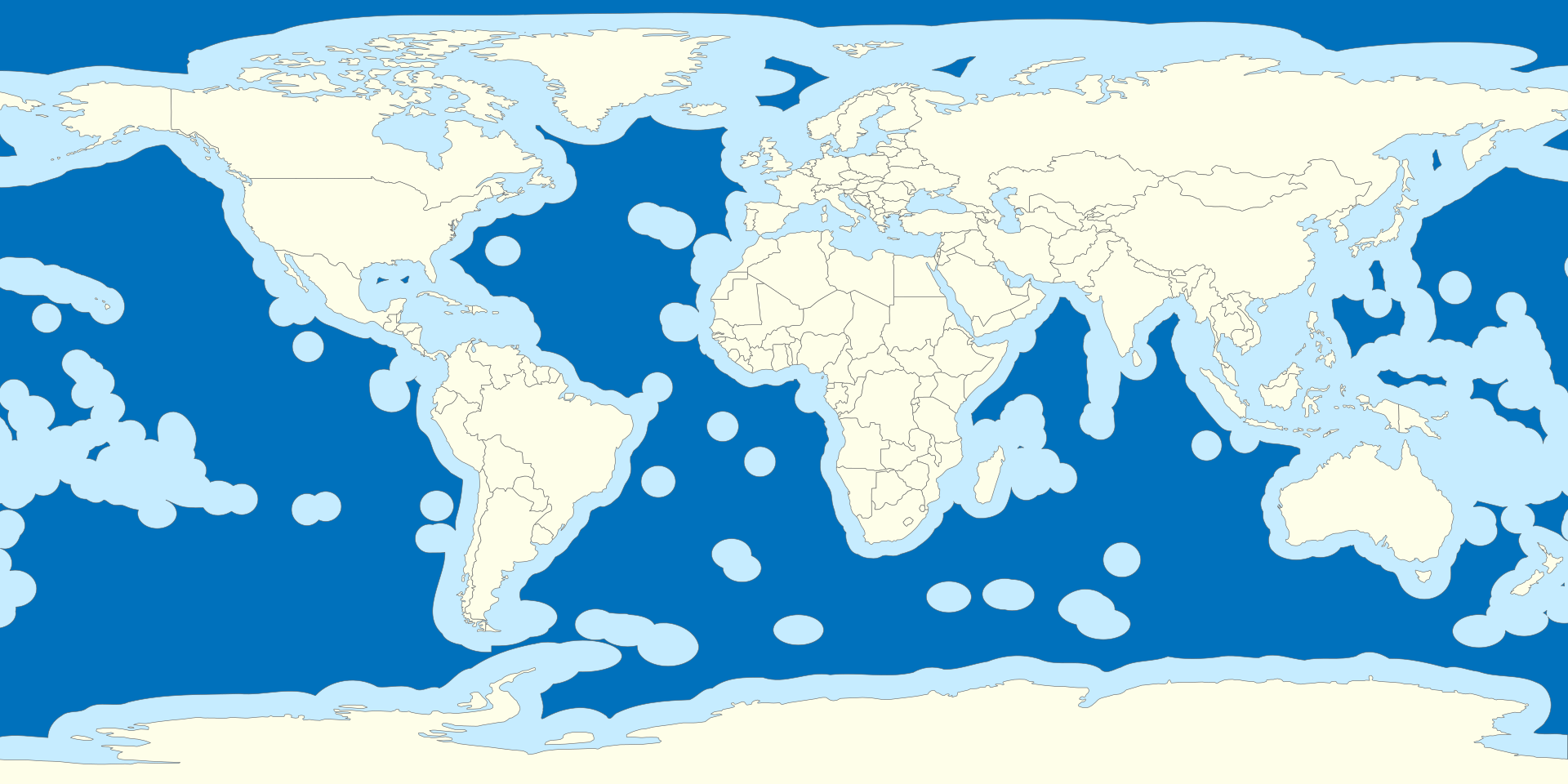
Recent policy developments, such as the Intergovernmental Oceanographic Commission (IOC) of UESCO Assembly Decision A33/3.4.2 and discussions at the Advisory Board for the Law of the Sea (ABLOS) Conference 2025, mark a shift toward operationalising data sharing commitments. This article broadens the perspective from areas under national jurisdiction to also encompass Areas Beyond National Jurisdiction (ABNJ), an expansion which is both timely and necessary by the entry into force of the Biodiversity Beyond National Jurisdiction (BBNJ) Agreement on the 17th of January 2026. This implementing agreement under the United Nations Convention on the Law of the Sea (UNCLOS) introduces new needs and obligations for transparency, data sharing, and international scientific cooperation in ABNJ (Fig. 1).
2 Data sharing imperatives
The ocean is monitored and sampled at a range of different scales, in both space and time. However, as the ocean is also an incredibly dynamic environment, each one of these observations is valuable. The value of an observation is increased if it is properly managed and curated, enriched with detailed information to aid the discoverability, accessibility, and reuse of the data associated with the observation. Holding observation data about the marine environment in inaccessible silos does not add value to those data and may mean that the return on investment for those data is lower. Cost-Benefit Analysis of the Marine Environmental Data and Information Network (MEDIN) in the UK and the Integrated Marine Observing System (IMOS) in Australia indicates that such data sharing initiatives are worth in the order of ten-times the investment on them to their local economy.
For an initiative such as the Kunming–Montreal 30 x 30 target, a complex set of inputs are required in the decision-making process as to which areas are the most sensitive or vulnerable, and therefore the most in need of protection. There are many different input datasets in a systematic conservation planning approach, from base data such as bathymetric charts and ecosystem type maps to the pressures on and types of human activities taking place at a location and to the location of other protected areas to ensure they act as a network (Harris et al, 2019). It can therefore be seen that the availability of appropriately formatted, easy to reuse data from across the wide variety of inputs required is vital in creating science-based, data-driven decisions in sustainable ocean planning and management.
However, IOC’s and the Ocean Decade’s work on advancing data sharing in national jurisdictions have shown that there is a variety of approaches to data sharing across the Member States of IOC. The current reality is that different countries have different policies and motivations around data sharing in their jurisdictions, and beyond national jurisdictions different actors (especially in the private sector) share in a range of motivations to engage (or not) in ocean data sharing.
Public and private sectors face several challenges relating to more and improved open data sharing. One particularly prominent issue at the time of writing is the at times real and at times perceived risks for national security, especially relating to bathymetry and the location of underwater infrastructure. Similarly, liability of data providers when data are put to downstream use in applications can be a concern for data holders although this can be mitigated using standard data licenses such as those from the Creative Commons suite which address liability.
Further issues, particularly faced by the private sector in terms of data sharing include who has data ownership and who has data responsibility, which will be defined hereafter. In ocean data sharing, data ownership refers to the legal or sovereign rights of states or organizations to control the terms under which data are shared, consistent with national jurisdiction and international law. Data responsibility, emphasised by the IOC Data Policy and Terms of Use (2023) and FAIR principles, focuses on the obligation to steward data so they are well‑documented, ethically managed, preserved, and made openly usable for the global good, while still respecting the right of Member States and data owners to determine the terms of metadata, data and products sharing.
Ultimately, the data sharing objective and message should be to “default to openness; and to justify restrictions.”
Maturing a global framework for data sharing requires addressing technical considerations as well as the organisational concerns outlined above. Through the International Oceanographic Data and Information Exchange (IODE) of IOC, the Ocean Data Information System (ODIS) has begun to provide a mechanism to exchange metadata (data about data) in a standardised way to enable the discovery of a wide range of ocean data sets. However, work needs to continue within ODIS to move to more actual data exchange which is the goal of the IOC Data Architecture approach adopted as a decision of the IOC Assembly in June 2025.
Conversations are ongoing across IOC and the Ocean Decade to facilitate the exchange of data, not least from the private sector. Strengthening the visibility and maturity of IOC’s network of National Oceanographic Data Centres (NODCs) to create local, secure marine data archives across the globe is a key priority. Connecting these Data Centres through an improved ODIS with data exchange will facilitate the creation of new, high impact global data products to achieve the objectives of the Ocean Decade’s and the outcomes of the 10 Decade Challenges. Providing clear, simple and actionable guidance for data providers to submit their data into this ecosystem is an ongoing process, as is evaluating the impact of such data submissions and providing appropriate credit and reward to data providers based on their sector and motivation for sharing data.
For example, for a research scientist the credit of citations for a dataset (analogous to citations for a paper) may be an appropriate form of reward. The ability to achieve this has been in place for almost 15 years (Leadbetter et al, 2013; the authors acknowledge that work is ongoing to increase adoption of this practice by journal publishers). However, such academic recognition provides little to no value to private sector companies. Similarly, private‑sector incentives for data sharing, such as the potential for improved ESG rating scoring, is of little to no value for academic researchers. Discussions are ongoing with leading ESG ratings agencies proposing the inclusion of demonstrated and measurable ocean data sharing activities by private sector companies as a recognised contribution towards the UN Sustainable Development Goals in their scoring methodologies. Such recognition would provide new incentives and further motivation for private sector participation in ocean science and sustainable development.
3 Legal and policy foundations for ocean data sharing
International ocean governance increasingly treats data accessibility as essential to effective management and protection. These insights shape the evolving frameworks including UNCLOS (UN, 1982) and its new implementing agreement, the BBNJ Agreement (UN, 2023), concerning state responsibilities in Areas Beyond National Jurisdiction (ABNJ). Private sector datasets remain underused despite their relevance to SOPM, Environmental Impact Assessments (EIAs), and hydrography.
The 12th Conference of the Advisory Board on the Law of the Sea (ABLOS), held in October 2025 in Doha, Qatar, brought together legal experts, hydrographers, scientists, and policymakers to examine the interface between maritime law and operational practice. A key theme was the growing importance of ocean data – how it is governed, how it should be shared, and how legal frameworks such as UNCLOS, BBNJ, and IOC policies can be meaningfully implemented in real-world operations. Increasing expectations placed on governments and industry alike need to ensure that data collected under licences, permits, and commercial operations contributes to global scientific and sustainability objectives.
This moment is particularly relevant. Hydrographic offices, scientific institutions, and seabed mapping specialists are facing rapid shifts in the legal and policy landscape. MSP, SOPM, and the Kunming-Montreal Global Biodiversity Framework, all require reliable, accessible, and interoperable ocean data. The call to protect 30 % of the ocean by 2030 (the “30 × 30” target) depends heavily on high-quality bathymetric and environmental data to ensure that potential conservation measures are ecologically representative, well-designed, and evidence based.
A key development for improving ocean data accessibility is IOC Decision A33/3.4.2, which endorses the Corporate Data Group’s recommendation for Advancing Ocean Data Sharing for Sustainable Development in Areas Within National Jurisdiction. The Decision calls on IOC Member States to integrate the IOC Data Policy and Terms of Use (2023) into offshore licensing and permitting so that data collected during licensed activities must be shared for national and global benefit. It addresses persistent barriers created by differing national approaches to private sector data sharing and promotes more consistent policies through close collaboration between governments, industry and research stakeholders. The Decision also establishes a dedicated working group to support implementation. Overall, it strengthens the foundations for open, interoperable ocean data systems and advances the goals of the Ocean Decade and Sustainable Development Goal 14 (SDG 14) – Life Below Water.
The new BBNJ Agreement’s four pillars – Environmental Impact Assessments (EIA), Marine Genetic Resources (MGR), Area Based Management Tools (ABMT) including Marine Protected Areas (MPAs), and Capacity Building and Transfer of Marine Technology (CBTMT) – also all heavily rely on data sharing as a prerequisite for success.Therefore, the BBNJ Agreement introduces binding obligations for States Parties to share environmental baselines, monitoring results and scientific information, and to promote capacity building and technology transfer. It requires that scientific data used for management proposals, environmental assessments, and related decision-making, be made publicly accessible through a central international mechanism (known as the Clearing House Mechanism). Because much high-resolution bathymetric, biodiversity, and operational data in ABNJ is generated by private sector operators, States must establish national procedures to ensure these privately collected, datasets are submitted. This is essential not only for transparency but a matter of fairness, enabling developing countries and Small Island Developing States (SIDS) – whose capacity to collect such data is structurally limited – to participate on equal scientific footing in ABNJ governance building and technology transfer.
Under UNCLOS, a Flag State is the country in which a vessel is registered, and it holds legal authority and responsibility for ensuring that vessels flying their flag comply with all applicable international and national laws. This includes applicable environmental and reporting obligations, including Environmental Impact Assessment (EIA), monitoring and communicating the results of these assessments. Contractual arrangements between (private) parties do not transfer or reduce the Flag State’s duties under the BBNJ Agreement; instead, they require the Flag State to ensure that operators acting on behalf of third parties comply fully with BBNJ procedures and any national conditions attached to the authorization. Effective Flag State oversight is therefore central to ensuring that privately generated ABNJ data is shared in accordance with international obligations.
International organizations such as the Intergovernmental Oceanographic Commission (IOC) of UNESCO are well positioned to support implementation by providing coordination, data standards and capacity development. Their involvement provides an important institutional link between treaty obligations, national implementation, and operational practices across sectors.
Effective implementation of ocean governance frameworks depends on clear operational tools, particularly well-designed contracts. These agreements must define data stewardship responsibilities, usage rights, delivery formats, and conditions for public release; without such clarity, privately collected ocean data may remain inaccessible. As most data from ABNJ are collected by technologically advanced States and well‑resourced industries, there is a risk that these actors could dominate how such information is used. To prevent this, the BBNJ Agreement places strong emphasis on equity: requiring for data‑governance systems that not only share information openly but also help build scientific and technical capacity in developing States, ensuring that the benefits of ocean data are distributed more fairly, rather than reinforcing existing global disparities. As countries prepare for the first BBNJ Conference of the Parties (COP) in January 2027, standardised guidance on data submission, repository use, interoperability, and the integration of privately collected information will be essential to implementing these equity commitments in practice.
With MSP, SOPM, global biodiversity commitments, and the 30 × 30 target all relying on high-quality, accessible data, the coming years offer a critical opportunity to embed data sharing requirements directly into contracts, permits, and operational frameworks, strengthening the scientific foundation of global ocean governance designed contracts. These agreements must define data stewardship responsibilities, usage rights, delivery formats, and conditions for public release; without such clarity, privately collected ocean data may remain inaccessible. Because technologically advanced States and industries generate most high-resolution ABNJ data, the BBNJ Agreement places strong emphasis on equity, requiring data governance systems that support global capacity development rather than reinforce existing disparities. As countries prepare for the first BBNJ quality, accessible data, the coming years offer a critical opportunity to embed datas haring requirements directly into contracts, permits, and operational frameworks.
4 Policy and contracting recommendations
Advancing ocean data sharing will only succeed if high level policy commitments are consistently translated into licensing conditions and contractual language. While the BBNJ Agreement and IOC policies provide a strong normative foundation, the practical reality is that most ocean data – particularly from the private sector – is governed by the terms set in offshore permits and commercial contracts. Clear and consistent contractual wording is therefore essential to ensure that valuable data does not remain locked in private archives.
A central development in this regard is the already mentioned IOC Assembly Decision A 33/3.4.2, which encourages Member States to integrate data sharing obligations into their offshore permitting regimes. As offshore energy, telecommunications, and marine infrastructure industries continue to collect data, embedding these expectations into offshore permits offers a scalable and efficient way to increase data availability.
The entry into force of the BBNJ Agreement extends similar expectations into Areas Beyond National Jurisdiction. States Parties must guarantee that environmental baselines, EIA results, and monitoring data are made accessible through international mechanisms. Because much of this information will be generated by privately operated vessels and platforms, States need to ensure that their national authorizations and contractual arrangements oblige operators to supply data and in formats that are interoperable and suitable for public release. This is equally a matter of equity: high resolution datasets generated by technologically advanced States and industries should serve the global community, including developing States and SIDS.
Contracts and permit conditions should clearly specify data stewardship responsibilities, define submission requirements, and set timelines for delivering both datasets and metadata. They should also indicate acceptable formats and standards, referencing IOC guidance, ODIS interoperability requirements, and National Oceanographic Data Centers’ practices. Where necessary, limited embargo periods may be included, but these should be specifically targeted to avoid unnecessary restrictions. Clarity around liability and licensing terms, often addressed through standard open data licences, helps reduce real and perceived risks for companies and increases confidence in sharing. For companies, adopting a consistent internal approach to data stewardship and including data sharing provisions in all subcontracting and partnership agreements is equally important and helps avoid gaps in compliance.
To operationalise these recommendations, clear responsibilities must be assigned to each actor in the ocean data ecosystem. Governments and regulators should integrate mandatory data‑submission clauses into all offshore permits and ABNJ authorisations, specifying timelines, required formats, and delivery to National Oceanographic Data Centres or the BBNJ Clearing‑House Mechanism. Private‑sector operators should ensure that all environmental, bathymetric, and monitoring data collected during operations are curated, quality‑controlled, and delivered with complete metadata. International organisations – Intergovernmental Coordination Group for the Ocean Observing System (ICO), the International Hydrographic Organization (IHO), and the various Ocean Decade Programmes and Projects – should develop and maintain standardised contractual clauses, and interoperability guidance to support States and operators. National Oceanographic Data Centres, International Oceanographic Data and Information Exchange (IODE) and the Ocean Data and Information System (ODIS) nodes should act as the receiving and verification points, providing clear data‑submission pathways and supporting industry in meeting compliance obligations while distributing data for global applications. By assigning concrete, actionable tasks to specific actors, these recommendations shift from high‑level principles to operational practice. Together, they create a predictable, scalable, and internationally coherent system for ocean‑data sharing across jurisdictions, including in ABNJ, thus advancing the Ocean Decade vision of a transparent, interoperable, and inclusive global ocean knowledge ecosystem.
Together, these measures help align legal obligations, operational practices, and global sustainability goals. Standardised but flexible clauses in offshore permits and contracts make data sharing a predictable and routine part of ocean activities rather than an exception. As States prepare for the first BBNJ COP towards the end of 2026 and as the Ocean Decade continues to advance, the widespread adoption of clear contractual language represents one of the most direct and practical ways to improve access to ocean data and strengthen the scientific foundations of marine governance.
References
Barzuna, C., Haugan, P., Barbière, J., Swift, A., Khan, M., Ansong, J. O., James, P. A. S., Scherer, M., Thiele, T., von Schuckmann, K., Abramic, A., Barrowclough, D., Cisneros Montemayor, A., Girón, A., Heaps, L., Koirala, S., Lyons, M., Paul, K., Priyanto, A. T., Randone, M., Rosado, S., Santos, C. F., Savoldelli, C., Spalding, A. K., Strand, M., Sumaila, U. R., Swaddling, A., Turner, J., Vestergaard, O. and Yulianto, I. (2025). Handbook on sustainable ocean plans: A practitioners’ guide. World Resources Institute. https://doi.org/10.69902/8a3c346d
Burger, P. and Meyer, L. (2025). Harnessing private sector data for the Ocean Decade: Challenges and solutions. The International Hydrographic Review, 31(1), 166–170. https://doi.org/10.58440/ihr-31-1-n04
CBD (2023). Kunming-Montreal global biodiversity framework. Convention on Biological Diversity. https://www.cbd.int/gbf (last accessed 29 March 2026).
Harris, L. R., Holness, S., Finke, G., Kirkman, S. and Sink, K. (2019). Systematic conservation planning as a tool to advance ecologically or biologically significant area and marine spatial planning processes. In J. Zaucha and K. Gee (Eds.), Maritime spatial planning (pp. 71–96). Palgrave Macmillan. https://doi.org/10.1007/978-3-319-98696-8_4
IUCN (2022). Governing areas beyond national jurisdiction. International Union for Conservation of Nature. https://iucn.org/resources/issues-brief/governing-areas-beyond-national-jurisdiction (last accessed 29 March 2026).
Leadbetter, A. M., Raymond, L., Chandler, C., Pikula, L., Pissierssens, P. and Urban, E. (2013). Ocean data publication cookbook (UNESCO IOC Manuals and Guides No. 64). UNESCO. https://unesdoc.unesco.org/ark:/48223/pf0000373775 (last accessed 29 March 2026).
ODCDG (2025). Advancing ocean data sharing for sustainable development in areas within national jurisdiction. Ocean Decade Corporate Data Group, UNESCO IOC. https://oceandecade.org/publications/advancing-ocean-data-sharing-for-sustainable-development-in-areas-within-national-jurisdiction/ (last accessed 29 March 2026).
Seabed 2030 (2017). Our mission. The Nippon Foundation-GEBCO Seabed 2030 Project. https://seabed2030.org/our-mission/ (last accessed 29 March 2026).
UN (1982). United Nations Convention on the Law of the Sea (adopted 10 December 1982, entered into force 16 November 1994). 1833 U.N.T.S. 397. United Nations, New York, USA. https://www.un.org/depts/los/convention_agreements/texts/unclos/unclos_e.pdf (last accessed 16 April 2025).
UN (2023). Agreement under the United Nations Convention on the Law of the Sea on the conservation and sustainable use of marine biological diversity of areas beyond national jurisdiction (adopted 19 June 2023, not yet in force). United Nations, New York, USA. https://www.un.org/bbnjagreement/en (last accessed 29 March 2026).
UNESCO-IOC (2024). Ocean Decade Bathymetry Data Sharing Guideline (The Ocean Decade Series, 58). UNESCO. https://oceandecade.org/publications/ocean-decade-bathymetry-data-sharing-guideline/ (last accessed 29 March 2026).