
It is a pleasure and an honour, in my capacity as Director of the International Hydrographic Organization (IHO) and as a member of the IHO delegation to the 12th Conference of the IHO–IAG Advisory Board on the Law of the Sea (ABLOS), to introduce this selection of conference contributions published in The International Hydrographic Review (IHR).
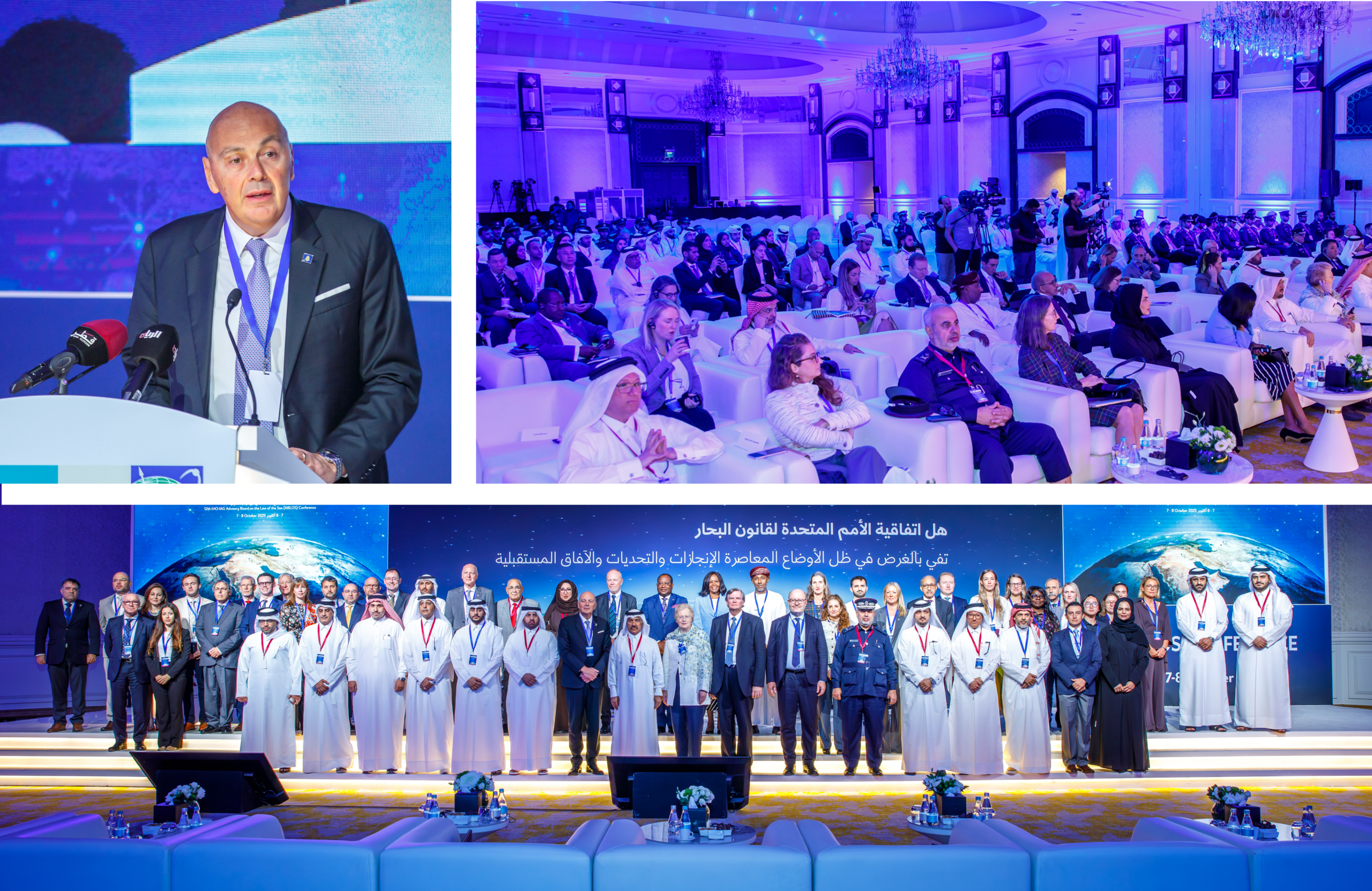
Held in Doha on 7–8 October 2025, and organised in association with the Qatari Standing Committee of the Convention on the Law of the Sea, the 12th ABLOS Conference convened under a unifying and timely theme: Is UNCLOS Fit for Purpose in Modern Times? Achievements, Challenges and Future Pathways. More than four decades after the adoption of the United Nations Convention on the Law of the Sea (UNCLOS), the conference provided an exceptional forum for reflecting on its continuing relevance, its adaptability, and the growing demands placed upon it by scientific, technological, environmental, and geopolitical change.
The breadth and depth of the conference programme reflected this reality, reaffirming UNCLOS as the foundational legal framework for ocean governance while engaging with its application across climate change, maritime security, emerging technologies and infrastructure as well as its social and cultural dimensions. These discussions highlighted both the resilience of the Convention and the growing complexity of its implementation in practice.
A strong emphasis was placed on the intersection between law, science, and technology, particularly in relation to the expanding ecosystem of ocean data and observation systems. Advances in hydrography, satellite systems, autonomous platforms, artificial intelligence, and data analytics are transforming how maritime spaces are observed, measured, and governed under UNCLOS. However, these innovations also bring forward important questions of data sharing, privacy, liability, and the need for harmonised international standards, especially as the interface between private sector data and public policy imperatives becomes more pronounced.
The conference also underscored the importance of robust regional and international cooperation frameworks in tackling these challenges, as illustrated by the work of institutions such as the ROPME Sea Area Hydrographic Commission and the CIESM in the Mediterranean and Black Sea, both present during the Conference.
A key message is the central role of technical considerations in the effective implementation of UNCLOS. Maritime delimitation, hydrographic standards, geospatial data integration, and the scientific understanding of ocean space are not ancillary elements but lie at the heart of the Convention’s practical operation. These developments nonetheless unfold within its legal framework, which governs how scientific findings are translated into legally relevant determinations, how maritime zones are established, and how ocean space and activities are regulated.
The selected papers published in this issue of IHR reflect these core themes and illustrate the vital contribution that hydrographic and oceanographic knowledge makes to contemporary Law of the Sea discourse.
Several contributions explore how data, its quality, governance, and legal treatment, has become central to modern ocean governance. Andrey Chernov’s analysis of evidence and monitoring requirements for alternative fuel bunkering highlights how decarbonisation policies depend on reliable ocean observation systems and clear accountability frameworks. Eva van Heukelom examines the growing tension between national legal protections for fisheries data and international cooperation obligations under UNCLOS, a challenge made sharper by the rapid expansion of AI driven monitoring tools. Laura Meyer, Adam Leadbetter, and Peter Burger focus on unlocking private sector ocean data as a global public good, identifying the BBNJ Agreement as an opportunity to extend data sharing practices from national waters to the High Seas.
Other papers underscore the importance of integrated observation and standards in protecting the marine environment. Emily Charry Tissier demonstrates how combining satellite technologies, biological monitoring, and emerging ocean standards can significantly strengthen the protection of marine megafauna across jurisdictions. Tihao Zeng addresses the so called “ocean observation paradox”, examining how UNCLOS obligations, climate change impacts, and the emerging plastics treaty converge around the need for coherent monitoring and reporting regimes.
The issue also highlights enduring legal, policy and regulatory challenges that demand both clarity and technical expertise. Tullio Scovazzi’s contribution reminds us of the synergies of implementation of UNCLOS with other international instruments and families of international law to ensure effective protection of underwater cultural heritage. Ayo Olugbode’s examination of Nigeria’s blue economy policy illustrates how national implementation of integrated ocean governance, supported by hydrographic capacity, marine spatial planning, and institutional coordination, remains key to translating international norms into practical national outcomes.
Taken together, these contributions exemplify the intellectual spirit of the 12th ABLOS Conference: critical yet constructive, interdisciplinary in approach, and firmly oriented toward practical solutions. They reinforce several key messages that emerged from the discussions in Doha. First, UNCLOS remains the foundational instrument underpinning the legal order for the seas and oceans, it must however be applied in an evolutive manner that reflects contemporary realities, including climate change and the expanding use of the underwater space. Second, authoritative, timely, and interoperable marine geospatial information is no longer optional – it is essential for legal certainty, environmental stewardship, maritime safety, and sustainable development. Third, cooperation across disciplines, sectors, and regions is indispensable if we are to avoid fragmentation, regulatory uncertainty, or unequal access to ocean knowledge.
For the IHO, these discussions closely align with our mission to support States in the provision of hydrographic services and standards that enable safe navigation, protect the marine environment, and underpin sound ocean governance. ABLOS, as a unique joint body of the IHO and the IAG, plays in this regard a crucial role in not only convening legal, technical, and scientific communities through conferences but also reflecting on the technical aspects of the Law of the Sea.
It is my hope that this collection in IHR will not only document the outcomes of the 12th ABLOS Conference but also serve as a resource and inspiration for policymakers, legal scholars, hydrographers, and scientists alike. By sustaining an open, informed, and inclusive exchange between law and ocean science, we can help ensure that UNCLOS and the broader system of ocean governance remain fit for purpose in the face of the unprecedented challenges of our time.

Director and Secretary-General Elect, IHO